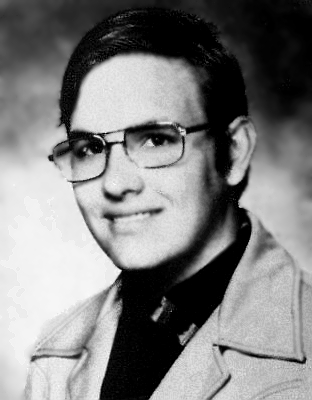
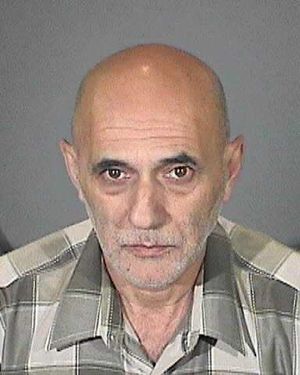
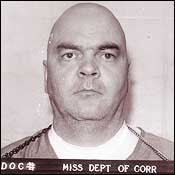
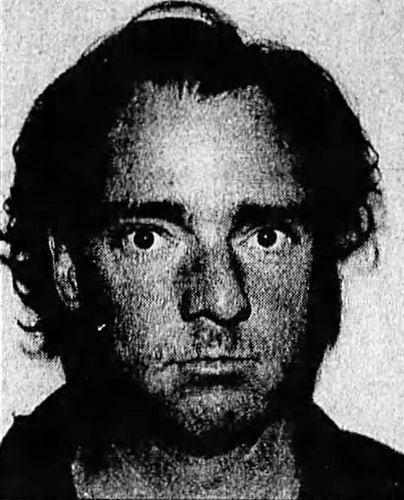
Richard Angelo – The “Angel of Death” Nurse
Background
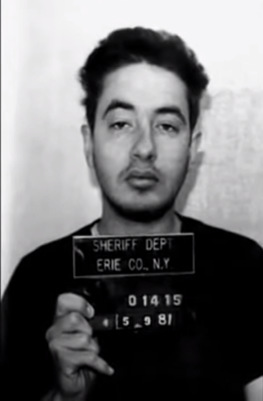
Richard Angelo was born on August 29, 1962, on Long Island, New York. He grew up in a family connected to education; his father worked as a high school guidance counselor and his mother was a teacher. Angelo graduated from St. John the Baptist Diocesan High School in 1980 and later studied nursing at Farmingdale State College. He performed well academically and eventually became a registered nurse.
After working at other medical facilities, Angelo joined Good Samaritan Hospital in West Islip, New York, in April 1987. He was assigned to the hospital's intensive-care and cardiac-care units, often working the overnight shift. Within months, patients under his care began suffering sudden and unexplained episodes of respiratory failure and cardiac arrest.
The Crimes at Good Samaritan Hospital
Angelo deliberately administered powerful neuromuscular-blocking drugs to hospitalized patients without medical authorization. The drugs associated with his crimes included Pavulon, the trade name for pancuronium bromide, and Anectine, or succinylcholine. These medications are used under carefully controlled medical circumstances because they temporarily paralyze muscles. In an improperly supported patient, paralysis of the muscles required for breathing can quickly create a life-threatening emergency.
Angelo injected patients through their intravenous lines and then waited for them to develop severe breathing difficulties or respiratory arrest. According to his subsequent statements and the evidence presented at trial, his purpose was not simply to make patients ill. He wanted to create emergencies in which he could participate in resuscitation efforts and appear competent, important, and heroic to his coworkers.
The scheme was extraordinarily dangerous because Angelo could not control how individual patients would react to the drugs. Many of the people in his care were already medically vulnerable. Once the drugs took effect, a patient could become incapable of breathing normally and could die if artificial ventilation and other emergency treatment were not provided quickly enough.
Confirmed Fatal Victims
Angelo was ultimately convicted of causing the deaths of four Good Samaritan Hospital patients. Although the legal degree of responsibility differed among the four cases, the jury concluded that Angelo's unauthorized injections were criminally responsible for their deaths.
- John Stanley Fisher, 75 – September 8, 1987 – Good Samaritan Hospital, West Islip, New York: Fisher was from Amityville, New York. He suffered respiratory failure after being subjected to an unauthorized injection while under Angelo's care. Fisher died on September 8, 1987. Angelo was ultimately convicted of second-degree manslaughter in connection with Fisher's death, as well as assault arising from the injection.
- Milton Poultney, 75 – September 16, 1987 – Good Samaritan Hospital, West Islip, New York: Poultney was a Lindenhurst resident who had undergone gallbladder surgery and was reportedly recovering when his condition suddenly deteriorated. He went into cardiac and respiratory distress and died on September 16, 1987. Testing conducted after his body was exhumed demonstrated the presence of Pavulon, and medical authorities determined that he had died from Pavulon poisoning. Angelo was convicted of second-degree murder in Poultney's death.
- Frederick J. LaGois, 60 – October 9, 1987 – Good Samaritan Hospital, West Islip, New York: LaGois, a West Babylon resident, had entered the hospital in connection with prostate surgery. He unexpectedly went into cardiac arrest and died on October 9, 1987. After his body was exhumed, Suffolk County medical examiners detected Pavulon and concluded that he had died from Pavulon poisoning. His death was classified as a homicide. Angelo was convicted of criminally negligent homicide in LaGois's death.
- Anthony Greene, 57 – October 16, 1987 – Good Samaritan Hospital, West Islip, New York: Greene was from North Babylon and suffered from chronic obstructive pulmonary disease. During the early morning hours of September 28, 1987, he suddenly went into respiratory arrest. Medical personnel were able to revive him, but Greene remained in a coma and died on October 16, 1987. Angelo was convicted of second-degree murder and assault in connection with Greene's poisoning and death.
Other Patients Connected to the Investigation
The investigation extended well beyond the four deaths for which Angelo was convicted. Authorities examined numerous suspicious deaths and medical emergencies that occurred while he was working. Seven patients became particularly important to the criminal prosecution, and investigators eventually exhumed dozens of former Good Samaritan patients in an attempt to determine whether neuromuscular-blocking drugs had been administered before their deaths.
- Joseph Francis O'Neill – September 21, 1987 – Good Samaritan Hospital, West Islip, New York: O'Neill died on September 21, 1987, and was among the patients examined during the investigation into Angelo. Evidence of an unauthorized injection was considered during the case, but prosecutors were unable to prove beyond a reasonable doubt that Angelo criminally caused O'Neill's death. Angelo was not convicted in connection with O'Neill.
- Joan Hayes, 53 – October 5, 1987 – Good Samaritan Hospital, West Islip, New York: Hayes died on October 5, 1987, and her death was also investigated in connection with the suspicious injections. Her case became part of the prosecution, but the jury did not find sufficient evidence to convict Angelo of the charges involving her.
- Gerolamo Kucich – October 11, 1987 – Good Samaritan Hospital, West Islip, New York: Kucich was a visitor from Yugoslavia who was staying in the Dix Hills area and had been hospitalized with cardiac complaints. Unlike the fatal victims, he survived. His experience became the crucial break in the investigation.
The Patient Who Exposed Angelo
On October 11, 1987, Gerolamo Kucich was in his hospital room when a bearded man wearing medical clothing approached him and injected a substance into his intravenous line. Kucich soon experienced severe weakness and difficulty breathing. He was still able to summon assistance before becoming completely incapacitated.
Medical personnel responded and Kucich survived the episode. More importantly, he remembered the man who had approached his bed. When investigators showed him a photograph of Richard Angelo, Kucich identified Angelo as the person he believed had administered the injection. Angelo was one of the few people working in the unit who matched the description Kucich had provided.
The hospital began investigating the incident on October 12. Angelo was suspended from duty, and the following day hospital personnel discovered that a vial of Pavulon was missing. Investigators also began reviewing previous unexplained respiratory arrests and deaths that had occurred while Angelo was working.
The Investigation Expands
What initially appeared to be an isolated assault quickly developed into a much larger investigation. Detectives and prosecutors reviewed hospital records to identify patients who had unexpectedly stopped breathing, required emergency resuscitation, or died while Angelo was on duty. Authorities became concerned that some apparently natural hospital deaths might actually have resulted from unauthorized injections.
Beginning in November 1987, court orders were obtained to exhume former patients. The investigation eventually involved more than 30 exhumations. Toxicologists faced considerable difficulties because some of the patients had been dead and embalmed for weeks or months, making detection of the drugs complicated. Nevertheless, Pavulon was discovered in the remains of multiple patients.
The findings in the body of Frederick LaGois were particularly significant. Suffolk County Chief Medical Examiner Dr. Charles Hirsch determined that testing conclusively demonstrated the presence of Pavulon in LaGois's organs and concluded that LaGois had died from Pavulon poisoning. Similar testing showed that Milton Poultney had also been poisoned with Pavulon.
Confession and Motive
Angelo was arrested on November 15, 1987, after authorities located him in Albany, New York. During questioning and while being returned to Suffolk County, he began admitting that he had deliberately administered drugs to patients. He subsequently gave investigators both written statements and a lengthy videotaped confession.
Angelo explained that he felt inadequate and wanted to demonstrate that he could successfully handle medical emergencies. By secretly creating those emergencies himself, he could then participate in saving the patient and receive recognition from other medical personnel. The motive became one of the most disturbing aspects of the case: the emergencies in which Angelo hoped to become a hero existed only because he had intentionally placed defenseless patients in mortal danger.
The strategy is sometimes described as a form of "hero syndrome," although that term is descriptive rather than a formal criminal diagnosis. Angelo's actions demonstrated a pattern in which the offender manufactured a dangerous situation and then attempted to obtain attention or admiration by responding to the emergency he had secretly created.
Indictments
On January 13, 1988, Angelo was indicted for murder in connection with the death of Frederick LaGois after toxicology testing established Pavulon poisoning. The investigation continued for nearly another year as additional bodies were examined and medical evidence was analyzed.
On December 22, 1988, prosecutors brought additional murder charges involving John Stanley Fisher, Milton Poultney, and Anthony Greene. Other charges concerned unauthorized injections involving additional patients, including those whose deaths prosecutors could not conclusively prove had resulted from the drugs.
The 1989 Trial
Angelo's trial began in Suffolk County Court in October 1989. Prosecutors argued that he had deliberately used hospitalized patients as unwilling subjects in a deadly attempt to improve his reputation among fellow medical professionals. The prosecution emphasized that the injections served no legitimate medical purpose and had not been ordered by physicians.
Angelo did not simply deny administering the drugs. His defense centered on his mental state and whether he possessed the level of awareness required for the most serious homicide charges. Defense psychological experts argued that he suffered from a dissociative disorder and had not fully appreciated the deadly risk created by his behavior. Prosecution experts disputed that interpretation and testified that Angelo was capable of understanding the consequences of what he was doing.
The testimony of surviving patient Gerolamo Kucich was especially significant because he could personally describe being approached, injected, becoming unable to control his muscles, and struggling to breathe. His survival provided investigators with something the deceased patients could not: a witness who could describe what happened immediately before an otherwise unexplained respiratory emergency.
Convictions
On December 14, 1989, after lengthy deliberations, the jury found Richard Angelo guilty of two counts of second-degree murder, one count of second-degree manslaughter, one count of criminally negligent homicide, and multiple assault charges.
- Milton Poultney: Second-degree murder and assault.
- Anthony Greene: Second-degree murder and assault.
- John Stanley Fisher: Second-degree manslaughter and assault.
- Frederick LaGois: Criminally negligent homicide.
- Gerolamo Kucich: Angelo was convicted of assault for the nonfatal injection that nearly caused Kucich's death.
The different homicide verdicts reflected the jury's conclusions about Angelo's state of mind and degree of criminal responsibility in each individual death. The verdict nevertheless established that four patients died as a result of his criminal actions.
Sentence
On January 24, 1990, Suffolk County Court Judge Alfred Tisch imposed consecutive sentences that mathematically totaled approximately 61 years to life. Under New York sentencing law, however, Angelo's effective maximum minimum term was capped at 50 years, producing a sentence generally described as 50 years to life.
The judge emphasized that hospitalized patients place extraordinary trust in nurses and other medical professionals and that Angelo had violated that trust by deliberately creating potentially fatal medical emergencies. Instead of protecting critically ill patients, he had secretly transformed their hospital rooms into scenes of deliberate poisoning.
Appeals
Angelo challenged his convictions through the New York appellate courts. His attorneys raised issues involving psychiatric testimony, evidence concerning a polygraph examination, and other aspects of the trial. The Appellate Division upheld the convictions, and on March 28, 1996, the New York Court of Appeals, the state's highest court, also affirmed the judgment.
Number of Possible Victims
The true number of people Angelo endangered remains uncertain. During the investigation, authorities examined a much larger group of suspicious deaths and emergency incidents than those eventually included in his convictions. Contemporary reports stated that investigators suspected dozens of patients may have received unauthorized injections, and more than 30 bodies were reportedly exhumed for toxicological testing.
That larger number should not be confused with the number of murders legally proven against Angelo. He was convicted of criminally causing four deaths. Other patients died under suspicious circumstances, and several showed evidence relevant to the poisoning investigation, but prosecutors could not establish beyond a reasonable doubt that every suspicious death was caused by Angelo. For that reason, claims that he murdered 20, 25, or more people remain allegations or suspicions rather than established homicide convictions.
Legacy of the Case
The Richard Angelo case became one of the most notorious examples of homicide committed by a medical professional. It was particularly frightening because his victims were already sick, hospitalized, and dependent upon the people caring for them. Their medical conditions could initially make sudden deterioration appear natural, allowing deliberately induced respiratory emergencies to blend into the normal risks associated with intensive-care medicine.
Angelo's crimes also demonstrated the importance of recognizing unexpected patterns in hospital emergencies. A single unexplained respiratory arrest might appear to be a tragic complication. Repeated unexplained arrests occurring during the same employee's shifts, however, can indicate a pattern requiring immediate investigation.
The surviving testimony of Gerolamo Kucich ultimately helped expose that pattern. What Angelo intended to be another secretly manufactured medical crisis instead produced a living witness who could describe the unauthorized injection. That incident led hospital officials, police, prosecutors, medical examiners, and toxicologists to reexamine months of unexplained emergencies and deaths, eventually uncovering the evidence that sent Richard Angelo to prison for life.