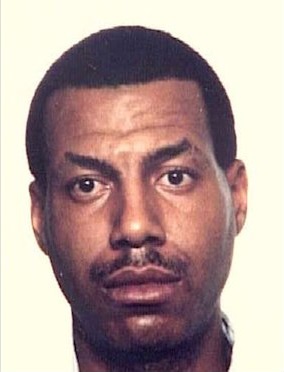
Vincent Darrell Groves: Denver Serial Killer
Vincent Darrell Groves was an American serial killer whose crimes stretched across the Denver, Colorado, metropolitan area during the late 1970s and 1980s. Born on April 19, 1954, Groves grew up in the Denver area and had once been a successful high-school basketball player. His later life was dramatically different. He became involved with drugs, prostitution, and violence, and investigators eventually connected him to a series of murders in which young women were strangled and their bodies left in homes, alleys, fields, culverts, and other isolated locations.
Groves was convicted during his lifetime of murdering three women. Years after his death, improvements in DNA testing linked him conclusively to several additional killings. In December 2025, authorities announced another major development when preserved DNA evidence identified Groves as the killer of Rhonda Marie Fisher, a woman found dead in Douglas County in 1987. Investigators have long believed that Groves may have been responsible for substantially more murders than those that could ultimately be proved.
Early Murder and Imprisonment
One of the most important crimes in establishing Groves as a violent killer was the murder of 17-year-old Tammy Sue Woodrum. On August 14, 1981, Groves left on a camping and fishing trip that included Woodrum. She was subsequently strangled. Groves eventually went to police but attempted to portray her death as the result of a drug overdose. The physical evidence contradicted that explanation. Investigators determined that Woodrum had been sexually assaulted and strangled and that the supposed drug overdose did not explain her death.
Groves was convicted of second-degree murder in 1982 and received a 12-year prison sentence. Despite the seriousness of the crime, he was paroled on February 13, 1987, after serving approximately five years. His release later became particularly significant because a new group of women began dying in the Denver metropolitan area during 1987 and 1988.
Murders After His Release
After returning to Denver, Groves again spent considerable time around areas associated with prostitution and drug activity. Investigators began noticing similarities among several killings. Women were disappearing or being found strangled in scattered locations around Denver and neighboring counties. Groves knew or had contact with a number of women in this environment, and investigators sometimes learned that he had been among the last people seen with a victim.
In 1988, authorities focused increasingly on Groves. Evidence from the murders of Juanita Lovato and Diane Montoya Mancera proved especially important. Both women were found outside central Denver, and forensic evidence eventually connected Groves to their deaths. He was arrested on September 1, 1988. The cluster of similar killings that investigators had been examining stopped after he was taken into custody.
Confirmed Victims
The following women are among the victims whose murders have been established through convictions, forensic evidence, or later DNA investigation. Where the exact date of death was not independently established with sufficient certainty, the verified date on which the victim was found is identified instead.
- Emma Jenefor, 25 — Death reported as March 23, 1979. Her body was discovered during a welfare check on March 26, 1979, at 178 Garfield Street, Apartment B, in Denver, Colorado. The case remained unsolved for decades before DNA testing connected Groves to her murder.
- Joyce Ramey, 23 — July 4, 1979. Ramey was found on a dirt road near East 56th Avenue and Havana Street in the Montbello Industrial Park area of Denver. Her death was eventually connected to Groves through DNA evidence.
- Peggy Cuff, 20 — November 3, 1979. Cuff was found in an alley near 1585 South Ogden Street, close to South Ogden Street and East Florida Avenue in Denver. She had been seen leaving her job the previous night. DNA analysis decades later identified Groves as her killer.
- Tammy Sue Woodrum, 17 — August 14, 1981. Woodrum was killed during a camping trip in Colorado. She had been sexually assaulted and strangled. Groves was convicted of second-degree murder for her death in 1982.
- Rhonda Marie Fisher, approximately 30 — Last seen alive on the night of March 31, 1987; her body was found April 1, 1987. She was discovered down an embankment in a culvert near the 3500 block of South Perry Park Road in the Larkspur/Sedalia area of Douglas County, Colorado. She had been strangled. In 2025, investigators announced that preserved DNA evidence connected Groves to her murder.
- Juanita "Becky" Lovato, 19 — April 29, 1988. Lovato was found in a rural area of Adams County east of Denver. Groves was prosecuted and convicted of first-degree murder in connection with her death and received a life sentence.
- Diane Montoya Mancera, 25 — July 25, 1988. Mancera was killed and her body was found near the Interstate 25 corridor at the Surrey Ridge area in Douglas County, south of Denver. Groves was convicted in connection with her strangulation and received an additional prison sentence.
- Pamela Montgomery, 35 — August 14, 1988. Montgomery was found in an alley in the 1700 block of the Locust/Leyden Street area of Denver. She had been strangled. Investigators suspected Groves at the time, but the case could not then be proved. Modern DNA testing later connected him conclusively to the murder.
The 1979 Cold Cases
The murders of Emma Jenefor, Joyce Ramey, and Peggy Cuff were especially important to the later understanding of Groves' criminal history. All three women died in 1979, years before the forensic technology existed to identify a killer through modern DNA profiling. Their cases remained unresolved for decades.
Denver cold-case investigators eventually returned to biological evidence preserved from the old investigations. Advances in forensic testing allowed the Denver Crime Laboratory to compare material from the crime scenes with Groves' known genetic profile. The results connected him to Jenefor, Ramey, and Cuff, demonstrating that his homicidal activity had begun considerably earlier than the murders for which he had originally been prosecuted.
The DNA findings also connected him to Pamela Montgomery's 1988 murder. Authorities publicly announced the resolution of these four cases in 2012, approximately sixteen years after Groves himself had died.
The Murder of Rhonda Fisher
The Fisher case provided another striking example of how carefully preserved evidence can solve a murder many decades later. Rhonda Fisher was last seen alive in Denver on the night before her body was discovered. On April 1, 1987, a passing motorist noticed her body down an embankment along South Perry Park Road in Douglas County. Investigators determined that she had been strangled.
Among the evidence preserved in the case were paper bags that investigators had placed over Fisher's hands to protect possible trace evidence. Nearly four decades later, forensic specialists were able to recover DNA associated with the evidence. In 2025, investigators reported a DNA connection between the Fisher evidence and evidence from murders associated with Vincent Groves. Douglas County authorities consequently identified Groves as Fisher's killer and marked the long-running homicide investigation as solved.
Possible Additional Victims
During the investigation of Groves, detectives examined many other deaths and disappearances from the Denver metropolitan area. Women including Jeanette Baca, Faye Johnson, Zabra Mason, and others were at various times investigated as possible victims. Some historical accounts placed the number of deaths examined in connection with Groves well into the teens, while investigators later suggested that the true total could have exceeded twenty.
Those suspicions should not be treated as equivalent to the murders established through convictions or DNA evidence. Some women initially investigated as possible Groves victims were later determined to have died from other causes or were otherwise excluded from his confirmed victim count. Other cases lacked enough surviving evidence to prove responsibility. Consequently, the precise number of people Groves murdered remains unknown.
Convictions and Death
Groves' first murder conviction came from the killing of Tammy Sue Woodrum. After his release from prison in 1987, investigators ultimately built cases against him for the 1988 murders of Juanita Lovato and Diane Montoya Mancera. The Lovato case resulted in a life sentence, while the Mancera case produced an additional prison term.
By the time investigators obtained the evidence needed to solve several additional murders, Groves could no longer be prosecuted. He died in custody on October 31, 1996, while serving his sentences. He never provided investigators with a complete accounting of the women he had killed.
Legacy of the Investigation
The Vincent Darrell Groves investigation became an important example of the value of cold-case review and DNA technology. Crimes that had remained unsolved since 1979 were eventually tied to the same offender more than thirty years later. The identification of Groves in the Fisher case in 2025 extended that process even further, showing how evidence preserved at a crime scene in 1987 could still produce a decisive result nearly four decades afterward.
Groves is now regarded as one of the most prolific known serial killers associated with Colorado. At least eight murders have been connected to him through convictions or later forensic findings, while investigators have considered the possibility that his actual number of victims was considerably higher. Because Groves died without confessing to a complete list of crimes, and because some evidence from the 1970s and 1980s was lost, degraded, or never collected, the full extent of his killings may never be known.