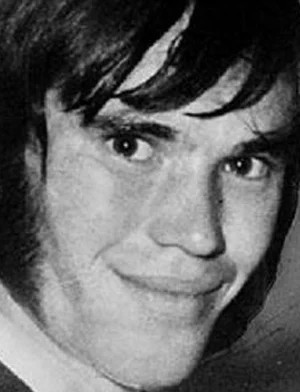
Brent Eugene Koster: The Teenage Accomplice
Overview
The summer of 1972 brought a wave of terror to Kalamazoo County, Michigan, as a series of abductions, rapes, and murders targeted young women. The man behind the crimes was Danny Arthur Ranes, a 28-year-old parolee. But he had a partner: a tall, lanky 15-year-old boy named Brent Eugene Koster. Under the sway of the older man, Koster actively participated in the brutal murders of three women over a one-month period.
Koster's eventual confession, driven by a guilty conscience, not only detailed his own involvement but also implicated Ranes as the architect of the crimes and solved an additional murder Ranes had committed alone. In a controversial deal, Koster agreed to testify against Ranes in exchange for pleading guilty to a single count of second-degree murder. He was sentenced to life with the possibility of parole. After serving 48 years, Koster was released in 2021, a decision that ignited a firestorm of protest from prosecutors, the community, and the families of his victims, raising profound questions about justice, rehabilitation, and the risk of releasing a confessed serial killer.
Early Life and A Fateful Meeting
Brent Eugene Koster was born on October 10, 1956, in Kalamazoo, Michigan. His childhood was reportedly unstable and difficult. His father was an alcoholic, and his mother suffered from schizophrenia. By his teenage years, he was seen as an impressionable and vulnerable youth.
In early 1972, Danny Ranes was released on parole after serving time for assault with intent to commit armed robbery. Ranes, who was 13 years older than Koster, took a job at a Clark gas station on the corner of West Main and Drake Road in Kalamazoo. It was there that he met Koster. Ranes offered the teenager a job and a place to stay, quickly establishing a powerful and manipulative influence over him. For Koster, Ranes represented an escape and a figure of authority, but this relationship would soon lead him down a path of unimaginable violence.
A Summer of Terror
The killing spree began just after the Fourth of July holiday. On July 5, 1972, two 19-year-old friends from the Chicago area, Linda Clark and Claudia Bidstrup, were traveling through Michigan. They stopped at the Clark gas station where Ranes and Koster worked. Ranes convinced the women to accompany him and Koster to a party. Instead, he directed them to a secluded, wooded area.
There, both men raped the two women. According to Koster’s later testimony, Ranes then declared that they couldn't let the women go. Ranes handed Koster a rope and instructed him to strangle one of the victims. Koster stated that he killed Linda Clark by himself while Ranes strangled Claudia Bidstrup. In some accounts, Koster claimed Ranes helped him with Clark's murder. After the women were dead, Ranes and Koster wrapped the bodies in a blanket and put them in the back of the women's car. Koster drove the vehicle to another remote spot near Galesburg, doused it with gasoline, and set it on fire to destroy the evidence. A motorcyclist discovered the charred vehicle and the victims' remains two weeks later, on July 19.
One month later, on the evening of August 5, 1972, Ranes and Koster were driving near the campus of Western Michigan University. They spotted 18-year-old Pamela Fearnow hitchhiking and offered her a ride. They drove her to a secluded location near Morrow Lake in Comstock Township. There, both Ranes and Koster raped her. Afterward, Ranes strangled her to death with his bare hands while Koster held her down. They left her body in the woods, where it was discovered the next day.
During his confession, Koster revealed that Ranes was responsible for another, earlier murder. On March 19, 1972, Ranes had abducted 28-year-old Patricia Howk from a Kalamazoo Township laundromat where she had been with her young son. Ranes raped and stabbed her to death, leaving her body in a field. This crime had remained unsolved until Koster provided the crucial information to investigators.
The Victims
- Patricia Ann Howk, 28 — March 19, 1972, Kalamazoo Township. A mother of two, she was abducted from a laundromat. Her murder was committed solely by Danny Ranes but was solved thanks to Koster's confession.
- Linda Clark, 19 — July 5, 1972, near Galesburg. A young woman from Chicago, she was traveling with her friend Claudia when they were lured to their deaths.
- Claudia Bidstrup, 19 — July 5, 1972, near Galesburg. A resident of the Chicago area, she was murdered alongside her friend Linda Clark during what was supposed to be a summer trip.
- Pamela Sue Fearnow, 18 — August 5, 1972, Comstock Township. A student at Western Michigan University, she was hitchhiking when she was abducted, assaulted, and murdered.
Investigation and Capture
The series of brutal murders had left the Kalamazoo community on edge. The breakthrough came not from a police lead, but from Brent Koster himself. By early September, less than a month after Pamela Fearnow's murder, the 15-year-old was overwhelmed by guilt. He began talking about the killings to several acquaintances.
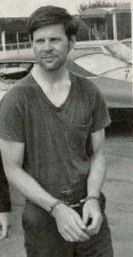
One of the people Koster confided in was a police informant. The informant relayed the shocking story to the Kalamazoo County Sheriff's Office. On September 5, 1972, investigators brought Koster in for questioning. He was arrested, and during interrogation, he gave a full and detailed confession. He admitted his role in the murders of Clark, Bidstrup, and Fearnow and unequivocally identified Danny Ranes as the primary perpetrator and the sole killer of Patricia Howk. Based on Koster's confession, police arrested Ranes later that same evening.
A Deal for Testimony
With Koster's confession and his agreement to be the star witness, the prosecution built a powerful case against Danny Ranes. In October 1972, Ranes was charged with four counts of murder.
Koster's testimony was the centerpiece of Ranes's trial. On the stand, he recounted the horrific details of the crimes, placing Ranes at the center of the planning and execution of the murders. On August 9, 1973, a jury found Danny Ranes guilty of the first-degree murder of Pamela Fearnow and second-degree murder in the death of Patricia Howk. He later pleaded no contest to two additional counts of second-degree murder for the deaths of Linda Clark and Claudia Bidstrup. Ranes was sentenced to four concurrent terms of life in prison, with no possibility of parole for the first-degree murder conviction.
In return for his crucial testimony, prosecutors offered Brent Koster a plea deal. He was allowed to plead guilty to a single count of second-degree murder in the death of Linda Clark. On July 21, 1975, at the age of 18, he was sentenced to life in prison. The sentence, however, included the possibility of parole. The judge at his sentencing expressed his disgust, reportedly telling Koster that he deserved to die in prison and that people like him were the reason he supported the death penalty.
Decades in Prison
Brent Koster spent the next 48 years incarcerated. According to the Michigan Department of Corrections, he was a model prisoner. He avoided misconduct citations, earned a paralegal degree, and participated in numerous rehabilitation programs, including sex offender and substance abuse therapy. He worked as a law clerk, assisting other prisoners with their legal cases.
Over the decades, Koster became eligible for parole and appeared before the parole board multiple times. Each time, his release was denied. The Kalamazoo County Prosecutor's Office consistently and vigorously opposed his parole, arguing that the heinous nature of his crimes and the terror he helped inflict on the community made him an ongoing threat. The families of his victims also fought to keep him behind bars.
A Controversial Parole
In 2020, Koster's case came before the Michigan Parole Board again. A public hearing was held on September 1, 2020, under the state's "lifer law," which allows for the parole of inmates serving life sentences for crimes committed as juveniles. The hearing was conducted via video conference due to the COVID-19 pandemic.
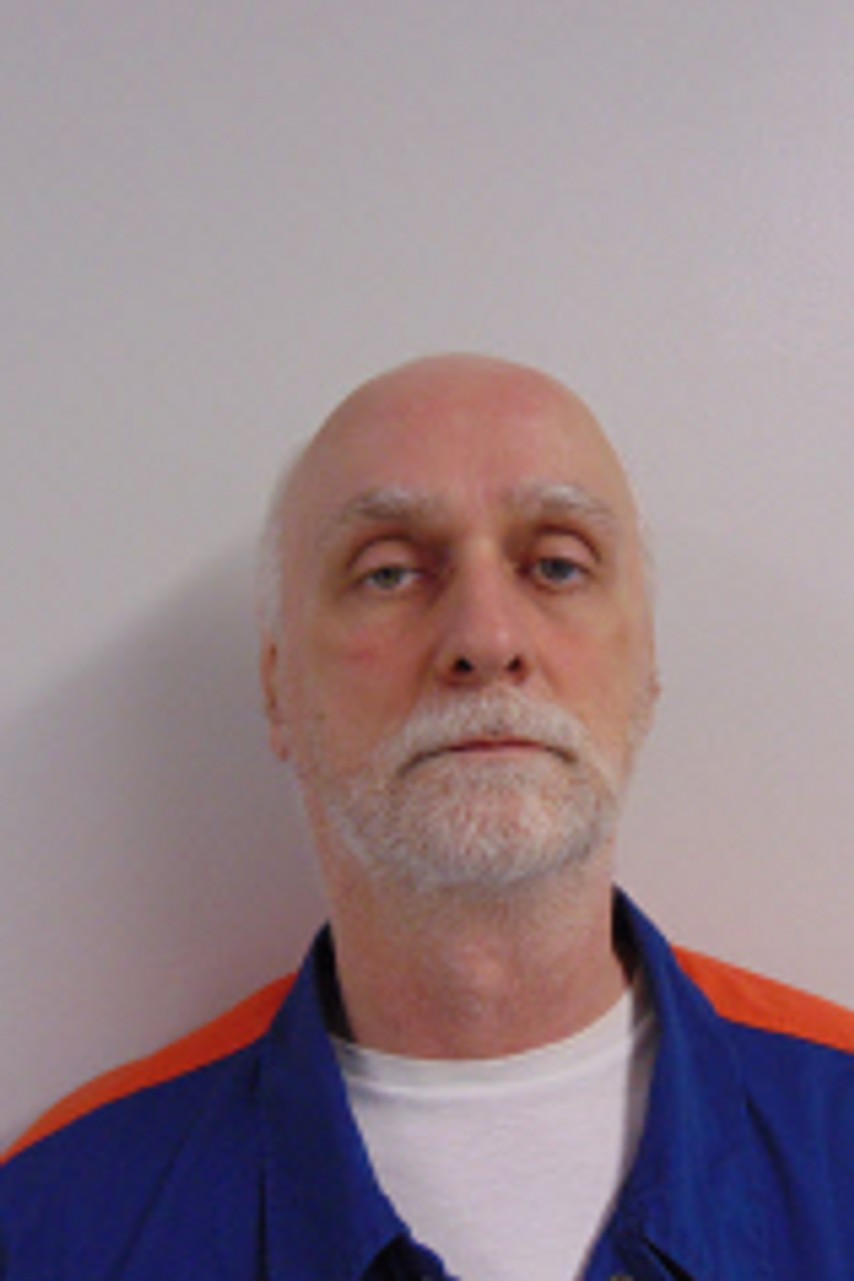
During the hearing, Koster, then 63, expressed deep remorse for his actions. "I was a monster," he said, describing his 15-year-old self. He spoke of being easily manipulated by the older, more sophisticated Danny Ranes. He claimed to have found religion and to have spent his decades in prison working to become a better person.
The Kalamazoo County Prosecutor's Office submitted a scathing letter in opposition to his release. The letter detailed the "horrific and terrifying" nature of the crimes and argued that Koster's participation was not that of a passive follower but an active killer. Prosecutor Jeff Getting called Koster an "unacceptable risk to society."
Despite this powerful opposition, the parole board voted to grant Koster parole. The board cited his clean prison record, his age at the time of the crimes, his expressions of remorse, and his participation in rehabilitation programs. The decision was finalized, and on January 26, 2021, Brent Koster was released from the Lakeland Correctional Facility.
Release and Public Outcry
The news of Koster's release was met with shock and outrage. Prosecutor Jeff Getting publicly condemned the decision, stating, "I'm very troubled by the Michigan Department of Corrections choosing to release an admitted serial rapist-serial murderer. In my opinion the risk to our community is simply unacceptable." The decision reignited the pain for the victims' families and spread fear throughout the Kalamazoo community.
In early 2024, the controversy surrounding Koster resurfaced. Now 67 years old, he had attempted to start a small business called "Brent's Your Independent Driver," offering rides and delivery services in the Kalamazoo area. When his criminal past was exposed on social media, public alarm grew. The Michigan Department of Corrections quickly intervened. As a condition of his parole, Koster was prohibited from having unsupervised contact with the public, particularly women and children. His parole officer ordered him to cease operating the business immediately, stating it was a violation of his parole conditions.
Aftermath and Legacy
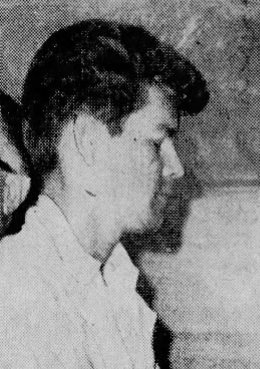
Danny Arthur Ranes, the man who orchestrated the 1972 murder spree, was never released from prison. He was denied parole in 2014 and died of natural causes at the Lakeland Correctional Facility on January 29, 2022. He was 78 years old. The Ranes family name was already notorious in Kalamazoo; Danny's older brother, Larry Ranes, was also a convicted serial killer, serving a life sentence for murdering four young women in 1964.
The case of Brent Koster remains a deeply divisive and troubling chapter in Michigan's criminal history. His release after 48 years forces a difficult conversation about the justice system's capacity to balance punishment, rehabilitation, and public safety, especially in cases involving heinous crimes committed by a juvenile. For the families of Linda Clark, Claudia Bidstrup, and Pamela Fearnow, and for a community that has never forgotten the summer of 1972, the release of the teenage accomplice serves as a painful reminder that some wounds never truly heal.