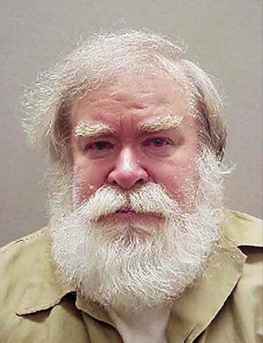
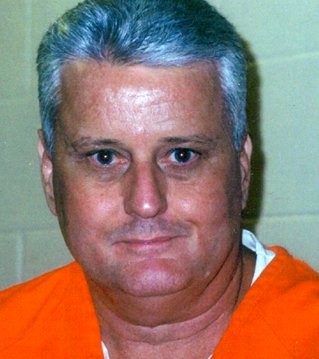
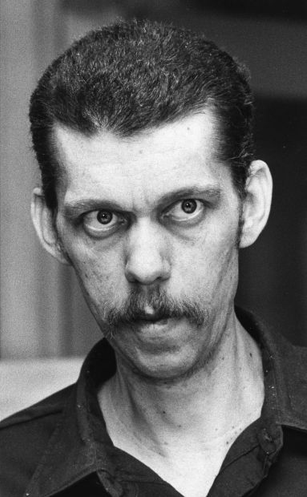
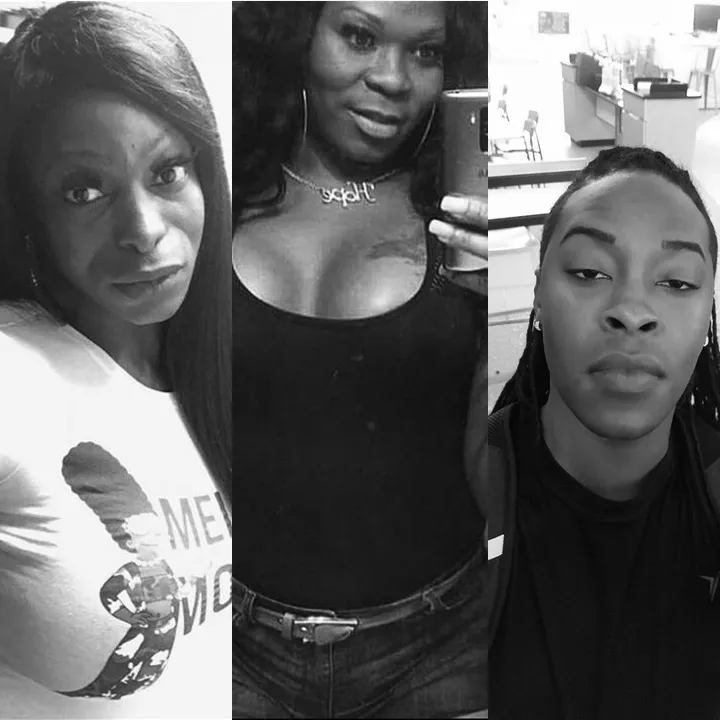
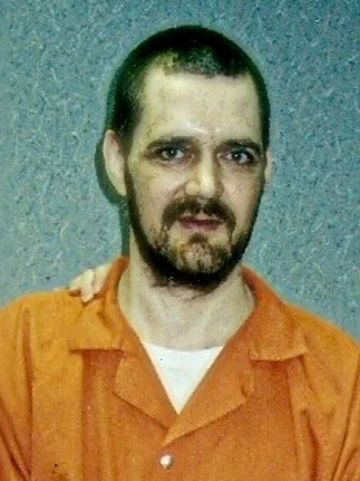
Richard Francis Cottingham: The Torso Killer and Times Square Ripper
Background and Double Life
Richard Francis Cottingham was born on November 25, 1946, in New York City and grew up primarily in New Jersey. To people around him, he appeared to live an ordinary suburban life. He worked for years as a computer operator, married in 1970, and became the father of three children. Behind that outwardly conventional existence, however, Cottingham was abducting, sexually assaulting, torturing, and murdering women and girls throughout the New York and New Jersey metropolitan area.
Cottingham eventually became known as the "Torso Killer," the "Times Square Ripper," and the "Times Square Killer." The nicknames came largely from his most notorious Manhattan crimes, in which victims were mutilated and portions of their bodies removed. His known crimes stretched from at least 1965 through his arrest in 1980, although Cottingham later claimed that his actual number of murders was far higher. He has said that he may have killed dozens of women, sometimes giving estimates approaching 100. Only a fraction of those claims have been independently substantiated.
Pattern of Violence
Cottingham did not follow one completely consistent method, which helped prevent investigators from immediately recognizing that numerous murders were connected. Some victims were teenagers walking alone or traveling to shopping centers. Others were adult women he encountered in public places, and several later victims were sex workers whom he met in Manhattan. He frequently transported victims between New York and New Jersey, creating additional jurisdictional complications for investigators.
Common elements eventually emerged. Cottingham often restrained women with handcuffs or other bindings, gagged them, sexually assaulted them, beat or cut them, and killed many by strangulation or suffocation. In some cases he used drugs to incapacitate victims. He sometimes removed jewelry or other possessions and kept personal items. His later murders became increasingly mutilative, particularly the killings committed in Manhattan hotels during the late 1970s and 1980.
Confirmed, Convicted, or Confession-Linked Murder Victims
- Alys Jean Eberhardt, 18 - September 24, 1965 - Fair Lawn, New Jersey: Eberhardt was a nursing student who returned to her family's home in Fair Lawn. Cottingham later admitted following her after seeing her near the Hackensack Hospital School of Nursing. She was attacked inside the house, struck in the head, cut numerous times, and stabbed. Her father discovered her body later that day. The case remained unsolved for approximately six decades before investigators obtained a detailed confession from Cottingham. The resolution was publicly announced in January 2026.
- Mary Ann Della Sala, 17 - January 24, 1967 - Hackensack/Hawthorne, New Jersey: Della Sala disappeared after finishing an evening shift at a ShopRite in Hackensack. She had chosen to walk home but never arrived. Her remains were eventually recovered from the Passaic River near Hawthorne. Because of the time between her disappearance and the recovery of her body, the precise medical date of death was not established; January 24 is treated as the date of her disappearance and killing. Decades later, Cottingham confessed to causing her death, allowing investigators to close the case.
- Nancy Schiava Vogel, 29 - October 1967 - Bergen County, New Jersey: Vogel, a married mother of two from Little Ferry, disappeared after leaving home. Her bound and strangled body was discovered on October 30 inside her own automobile in Ridgefield Park. Investigators determined that she had been killed before her body and car were left there. Cottingham confessed decades later, and in 2010 he formally pleaded guilty to Vogel's murder.
- Diane Martin Cusick, 23 - February 15-16, 1968 - Valley Stream, New York: Cusick, a dance instructor and mother, went to the Green Acres Mall to purchase dancing shoes. When she failed to return home, her parents went looking for her and found her Plymouth Valiant in the parking lot. Cusick was in the back seat, bound and with adhesive material over her mouth. She had been strangled and was pronounced dead during the early hours of February 16. More than half a century later, preserved forensic evidence produced a DNA profile matching Cottingham. He pleaded guilty to her murder in December 2022.
- Jacalyn "Jackie" Harp, 13 - July 17, 1968 - Midland Park, New Jersey: Harp was a young teenager returning from band practice when she encountered Cottingham. She tried to get away after he approached her, but he pursued and attacked her near a wooded area. She was strangled, and her body was discovered the following day. Cottingham later confessed to killing her, and authorities accepted the confession as a resolution of the long-unsolved case.
- Irene Blase, 18 - April 7, 1969 - Bergen County, New Jersey: Blase disappeared on April 7 and was found the following day in the Saddle River. She had been strangled. Cottingham later admitted encountering Blase in Hackensack, spending time with her, and then taking her to a secluded location where he assaulted and killed her. The confession came decades after her death.
- Denise Falasca, 15 - July 13-14, 1969 - Bergen County, New Jersey: Falasca left her Closter home on the evening of July 13 intending to meet friends in Westwood. She never returned. Her body was located the next day in Saddle Brook. Cottingham eventually described encountering her as she walked along the road, getting her into his vehicle, sexually assaulting her, and killing her. His confession resulted in the case being formally associated with him decades later.
- Lorraine Montalvo McGraw, 26 - February 27, 1970 - Rockland County, New York: McGraw disappeared on February 27. On March 1, hikers found her body in a wooded area near Tweed Boulevard in South Nyack. Evidence indicated that she had been strangled. Cottingham eventually confessed, and in 2022 investigators in Rockland County accepted his account after determining that details he supplied were consistent with the evidence.
- Mary Beth Heinz, 21 - May 1972 - Rockville Centre, New York: Heinz disappeared several days before her body was discovered on May 10 in a muddy stream near Maine Avenue in Rockville Centre. She had been strangled and suffered injuries to her face and neck. Cottingham later admitted killing Heinz and said he disposed of her body from the vicinity of the Peninsula Boulevard bridge. He formally acknowledged responsibility in court in 2022.
- Laverne Moye, 23 - July 1972 - Rockville Centre, New York: Moye, a mother of two from Queens, was found on July 20 in the same general creek area where Heinz had been discovered two months earlier. She had been strangled. Cottingham later confessed that he killed Moye and disposed of her body in essentially the same area. He admitted responsibility publicly in court in December 2022.
- Sheila Heiman, 33 - July 20, 1973 - North Woodmere, New York: Heiman was a married mother of three. Her husband left their home briefly on the morning of July 20 and returned to discover her dead in the bathroom. She had suffered severe blunt-force injuries as well as other wounds. For decades there was no publicly identified killer. Cottingham eventually admitted entering the home and killing Heiman, acknowledging the murder in court in 2022.
- Maria Emerita Rosado Nieves, 18 - December 27, 1973 - Jones Beach, New York: Nieves was found in a weeded area near Ocean Parkway at Jones Beach. Her body had been wrapped and concealed in vegetation near a bus-loading area. She had been strangled. Cottingham later admitted responsibility for her murder along with the other Nassau County cases he acknowledged in 2022.
- Mary Ann Pryor, 17 - August 11, 1974 - Bergen County, New Jersey: Pryor and her friend Lorraine Kelly disappeared on August 9 after leaving North Bergen with plans to travel to a Paramus shopping mall. The girls had been hitchhiking when they entered a vehicle driven by a man. Cottingham later admitted abducting the teenagers and holding and sexually assaulting them before drowning them in a motel bathtub on August 11. Their bodies were found in a wooded section of Montvale on August 14. Cottingham pleaded guilty to their murders in 2021.
- Lorraine Marie Kelly, 16 - August 11, 1974 - Bergen County, New Jersey: Kelly disappeared with Mary Ann Pryor during the same shopping trip. Cottingham held both teenagers captive, sexually assaulted them, and ultimately drowned them. Their disappearance and the discovery of their bodies five days later became one of Bergen County's most notorious unsolved double murders. The case remained open for more than four decades before Cottingham confessed and pleaded guilty.
- Rosalie Reisberg, 26 - October 21, 1975 - Manhattan, New York: Reisberg, a nurse, was found dead in her apartment at 327 West 87th Street. She had been strangled and her throat had been cut. Investigators found indications of a sexual assault but no obvious robbery or forced entry. Cottingham eventually confessed to the killing, and the cold case was closed in 2024.
- Maryann "Marzi" Carr, 26 - December 15-16, 1977 - Hasbrouck Heights/Little Ferry, New Jersey: Carr was an X-ray technician who disappeared after being seen near an apartment complex. Cottingham abducted her and took her to the Quality Inn in Hasbrouck Heights. She was restrained, beaten, sexually assaulted, cut, and strangled. Her body was discovered early on December 16 near the motel. Cottingham was convicted of murdering Carr in 1982.
- Deedeh Goodarzi, 22 - December 2, 1979 - Manhattan, New York: Goodarzi was one of two women found in Room 417 of the Travel Inn Motor Hotel on West 42nd Street. Firefighters entered after smoke was noticed and discovered two mutilated bodies on beds that had been set on fire. Both women had been tortured and sexually assaulted, and their heads and hands had been removed and taken from the room. Goodarzi was identified, but the second woman was not. Cottingham was convicted of the killings in 1984.
- Unidentified "Jane Doe" - December 2, 1979 - Manhattan, New York: The second woman discovered with Goodarzi has never been conclusively identified. She was a young woman, generally estimated to have been in her late teens or early twenties. Like Goodarzi, she had been beaten, sexually assaulted, mutilated, decapitated, and had her hands removed. The missing body parts were never recovered. Cottingham was nevertheless convicted of murdering her in 1984.
- Valerie Ann Street, 19 - May 4-5, 1980 - Hasbrouck Heights, New Jersey: Street accompanied Cottingham to the Quality Inn in Hasbrouck Heights. Her handcuffed body was later discovered beneath a bed. She had been gagged, beaten, bitten, cut, and strangled. Investigators recovered a fingerprint from the handcuffs that helped connect Cottingham to the crime. He was convicted of Street's murder in June 1981.
- Marianne Jean Ghedini Reyner, commonly reported as Jean Reyner - May 15, 1980 - Manhattan, New York: Reyner was found murdered in the Seville Hotel in Manhattan. She had been restrained, stabbed and cut, strangled, mutilated, and her body had been set on fire in an apparent attempt to destroy evidence. The crime bore similarities to the 1979 Travel Inn murders. Cottingham was convicted of Reyner's murder along with the Goodarzi and Jane Doe killings in 1984.
Women Who Survived Cottingham's Attacks
The homicide cases represent only part of Cottingham's known violence. Several women survived attacks later attributed to him, and their testimony became crucial when prosecutors finally brought him to trial.
- Karen Schilt - March 22-23, 1978: Schilt encountered Cottingham in Manhattan. He drugged and sexually assaulted her before abandoning her in New Jersey. She survived and later identified him.
- Susan Geiger - October 1978: Geiger met Cottingham in Manhattan and was later drugged and taken to a motel in South Hackensack, New Jersey. She was severely beaten and sexually assaulted but survived. She later helped identify Cottingham.
- Pamela Weisenfeld - May 12, 1980: Weisenfeld was found badly beaten in a parking area in Teaneck, New Jersey, after an encounter with Cottingham. Prosecutors included her case in the broader investigation, although Cottingham was ultimately acquitted of the charge involving her.
- Leslie Ann O'Dell, 18 - May 22, 1980: O'Dell's attack finally ended Cottingham's freedom. He took her to the Quality Inn in Hasbrouck Heights, where he restrained, sexually assaulted, beat, cut, and tortured her. O'Dell fought back and screamed loudly enough to attract the attention of motel employees. Police were summoned while Cottingham was still inside the room.
The Arrest That Ended the Killing Spree
Police arrived at the Quality Inn during the early morning of May 22, 1980, after employees reported hearing a woman screaming. Officers entered the room and found Leslie O'Dell alive but seriously injured. Cottingham attempted to escape but was arrested. The circumstances immediately suggested that investigators might have captured someone responsible for far more than a single assault.
Searches and subsequent investigative work uncovered items connected with women Cottingham had encountered. Detectives also began comparing the assault on O'Dell with earlier motel attacks and homicides. The May 1980 murder of Valerie Street at the same Quality Inn became especially important. A fingerprint recovered from a pair of handcuffs provided physical evidence linking Cottingham to Street's killing.
Trials and Original Murder Convictions
In 1981, a New Jersey jury convicted Cottingham of murdering Valerie Street as well as numerous charges arising from attacks on surviving women, including Karen Schilt, Susan Geiger, and Leslie O'Dell. He received a prison term totaling approximately 173 to 197 years. In 1982, he was convicted separately of murdering Maryann Carr and received an additional sentence to be served consecutively.
New York prosecutors then pursued Cottingham for the Manhattan hotel murders. In July 1984, he was convicted of murdering Deedeh Goodarzi, the still-unidentified woman found beside her, and Jean Reyner. Those convictions added another 75 years to life. At that point Cottingham was already certain to spend the rest of his life behind bars, but the full scope of his crimes was still unknown.
Decades of Cold-Case Confessions
Beginning years after his imprisonment, investigators repeatedly returned to Cottingham in an effort to solve older murders. Bergen County investigators, particularly cold-case detective Robert Anzilotti, developed a long-running relationship with him and gradually obtained admissions concerning killings that had gone unsolved for decades.
In 2010, Cottingham pleaded guilty to murdering Nancy Vogel. He subsequently confessed to the killings of Jacalyn Harp, Irene Blase, and Denise Falasca. In 2021, he pleaded guilty to the 1974 murders of Mary Ann Pryor and Lorraine Kelly. Those admissions demonstrated that his killing career reached much further back than the notorious Times Square murders that originally made him infamous.
The investigation then expanded into New York cold cases. In 2022, DNA evidence helped establish Cottingham's responsibility for Diane Cusick's 1968 murder. He pleaded guilty and, during the same proceedings, admitted killing Mary Beth Heinz, Laverne Moye, Sheila Heiman, and Maria Emerita Rosado Nieves. Investigators also accepted his confession to Lorraine McGraw's 1970 Rockland County murder.
Further confessions continued. Mary Ann Della Sala's 1967 disappearance and murder was attributed to Cottingham after he provided information about the crime. In December 2024, he confessed to killing Rosalie Reisberg in Manhattan in 1975. The continuing review of his history pushed his confirmed or confession-linked victim count steadily upward.
The 1965 Murder of Alys Eberhardt
One of the most significant developments came more than sixty years after 18-year-old nursing student Alys Eberhardt was killed in Fair Lawn. Her September 24, 1965 murder had remained an enduring cold case. Detectives reopened it in 2021 and conducted repeated interviews with Cottingham. Eventually, he described the killing in detail, including information investigators said had not been publicly released.
The Fair Lawn Police Department announced the resolution in January 2026. Eberhardt became Cottingham's earliest documented confirmed victim, placing the beginning of his known murder career in 1965, when Cottingham himself was only 18 years old. The confession also demonstrated that his murders began years before the crimes for which he was first prosecuted.
Possible Additional Victims
Cottingham has repeatedly claimed that the confirmed murders represent only a portion of his crimes. Over the years he has suggested that his true victim count could be somewhere between approximately 80 and 100. Investigators have treated such statements cautiously. A confession alone is not sufficient to establish responsibility unless Cottingham can provide information known only to the killer or other evidence independently supports his account.
Numerous unsolved murders from New York, New Jersey, and surrounding states have been examined for possible connections to Cottingham. Some cases display similarities to his established crimes, and he has reportedly discussed additional victims with investigators and researchers. However, similarity in victim type, location, strangulation, sexual assault, or mutilation does not by itself prove that Cottingham was responsible. For that reason, suspected cases should be kept separate from the murders that resulted in convictions, formal guilty pleas, accepted confessions, or official cold-case closures.
Legacy of the Investigation
Richard Cottingham's case illustrates how a serial murderer can remain unidentified when crimes cross jurisdictional boundaries and when an offender changes his methods. His known victims included children, young adults, mothers, nurses, students, and sex workers. Some were killed in suburban communities, some were taken from shopping areas or streets, and others were murdered in inexpensive hotels in and around Manhattan. The apparent differences between the crimes initially concealed the fact that one offender was responsible for many of them.
His case also demonstrates the value of preserving evidence for future forensic testing. The DNA evidence recovered in Diane Cusick's 1968 case was capable of identifying Cottingham more than five decades later. At the same time, persistent cold-case interviewing produced answers in murders for which little or no usable forensic evidence remained.
Imprisonment
Cottingham remains imprisoned in New Jersey under multiple life sentences and extraordinarily long consecutive prison terms. Because he was already incarcerated for life when many of his later confessions were obtained, prosecutors in several jurisdictions have sometimes chosen case closure or non-prosecution agreements rather than conducting costly new trials. In other cases, such as the murders of Nancy Vogel, Mary Ann Pryor, Lorraine Kelly, and Diane Cusick, formal guilty pleas were obtained.
By 2026, the historical picture of Richard Cottingham was dramatically different from the one known at the time of his arrest. Once prosecuted primarily for a cluster of brutal late-1970s and 1980 murders, he is now tied through convictions, guilty pleas, accepted confessions, and cold-case investigations to a killing career extending from 1965 to 1980. Investigators continue to regard the possibility of additional victims seriously, meaning that even after decades in prison, the complete extent of Cottingham's crimes may still not be known.