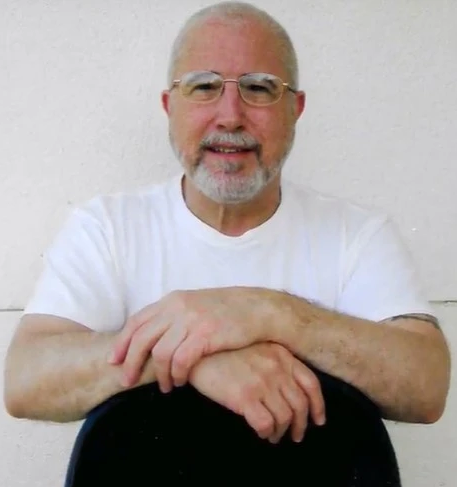
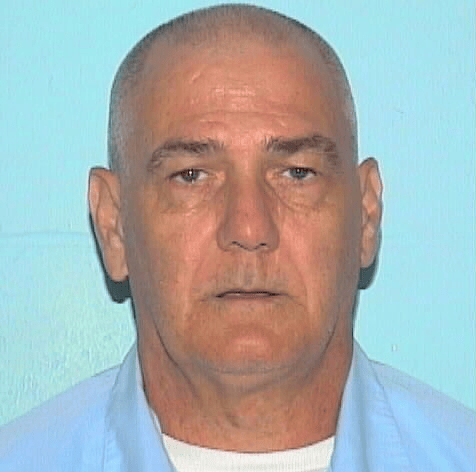
Kenneth Alessio Bianchi: The Hillside Strangler
Background
Kenneth Alessio Bianchi, born May 22, 1951, in Rochester, New York, became one of the two men responsible for the notorious series of murders known as the Hillside Strangler killings. Bianchi committed the Los Angeles murders with his older cousin, Angelo Buono Jr., before later killing two additional women on his own in Bellingham, Washington. Altogether, Bianchi has been linked to twelve confirmed murder victims between October 1977 and January 1979.
Bianchi moved from Rochester to the Los Angeles area in January 1976 and spent considerable time with Buono, who operated an automobile upholstery business from his property in Glendale. Bianchi wanted to work in law enforcement and applied to police agencies, but he was not hired as an officer. He nevertheless cultivated the image of someone connected with law enforcement, an interest that later became an important part of the crimes. Bianchi and Buono sometimes used fake badges and impersonated plainclothes police officers to gain control over victims.
The Hillside Strangler Murders Begin
The killings began in October 1977. Bianchi and Buono targeted girls and young women from different backgrounds, including students, waitresses, aspiring performers, and sex workers. The men sometimes approached victims while pretending to be police officers conducting an investigation or vice arrest. Once a victim believed she was dealing with law enforcement, the killers could order her into a vehicle or place her in handcuffs without immediately attracting attention.
Many of the victims were taken to Buono's Glendale residence and upholstery business. They were restrained, sexually assaulted, tortured, and ultimately killed, most commonly through strangulation. In several cases, investigators found evidence that different methods of torture or asphyxiation had been attempted. The bodies were then transported away from the murder location and abandoned along hillsides, roads, ravines, or freeway embankments throughout the Los Angeles area.
Because bodies repeatedly appeared on hillsides, newspapers and television reports began referring to the unidentified murderer as the "Hillside Strangler." Investigators eventually concluded that evidence suggested more than one person was involved, although the singular nickname had already become nationally recognized. The discovery of one victim after another during the final months of 1977 created widespread fear throughout Los Angeles.
Confirmed Victims of Kenneth Bianchi
- Yolanda Washington, 19 — October 17, 1977 — Los Angeles, California: Washington was the first confirmed victim of Bianchi and Buono. The men approached her while posing as police officers and took control of her using the appearance of official authority. She was sexually assaulted and strangled. Her body was left on a hillside near Forest Lawn Drive and the Ventura Freeway area of Los Angeles and was discovered the following day.
- Judith Lynn Miller, 15 — October 31, 1977 — Los Angeles/Glendale, California: Miller was approached in the Hollywood area and taken by Bianchi and Buono. She was brought to Buono's Glendale property, where she was sexually assaulted and strangled. Her body was subsequently abandoned along Alta Terrace in the La Crescenta area. Ligature evidence associated her death with the developing series of murders.
- Elissa Teresa "Lissa" Kastin, 21 — November 5, 1977 — Glendale, California: Kastin was a waitress and dancer who disappeared after leaving work. She was abducted, sexually assaulted, and strangled. Her body was discovered on November 6 near the Chevy Chase Country Club in the Glendale area. Her murder demonstrated that the killers were expanding beyond the types of victims they had initially targeted.
- Evelyn Jane King, 28 — November 9, 1977 — Los Angeles, California: King, an aspiring actress, disappeared after she was reportedly last seen waiting for transportation. Her badly decomposed body was discovered on November 23 near the Los Feliz Boulevard exit of the Golden State Freeway. She had been strangled. Her disappearance and the location of her remains were later connected to the Hillside Strangler investigation.
- Dolores Ann "Dolly" Cepeda, 12 — November 13, 1977 — Los Angeles, California: Cepeda and her friend Sonja Johnson were abducted after traveling by bus from the Eagle Rock Plaza area. Both girls were taken by Bianchi and Buono and killed the same day. Cepeda was sexually assaulted and strangled. Her body and Johnson's body were discovered together on November 20 in a trash-strewn hillside area near Elysian Park and Dodger Stadium.
- Sonja Marie Johnson, 14 — November 13, 1977 — Los Angeles, California: Johnson was with Dolores Cepeda when the two girls disappeared. Witness information concerning the girls approaching a vehicle containing two men became significant after the murders were connected to Bianchi and Buono. Johnson was sexually assaulted and strangled, and her remains were recovered with Cepeda's one week later.
- Kristina Weckler, 20 — November 20, 1977 — Los Angeles/Glendale, California: Weckler was an honors student at the Art Center College of Design in Pasadena and had lived in a Glendale apartment complex associated with Bianchi. She was restrained and subjected to particularly severe torture before her death. Investigators found evidence that cleaning fluid had been injected into her and that an attempt had been made to asphyxiate her with gas. Her body was discovered on a hillside between Glendale and Eagle Rock.
- Lauren Rae Wagner, 18 — November 28, 1977 — Los Angeles, California: Wagner was a business student who disappeared after returning to her family's home. Evidence indicated that she had been restrained and tortured before being strangled. Her body was left on a hillside in the Mount Washington/Glassell Park area of Los Angeles. Evidence recovered from Wagner later became important in connecting the murders to Buono's property.
- Kimberly Diane "Kim" Martin, 17 — December 13, 1977 — Los Angeles, California: Martin worked through an escort service and was sent to an address on Tamarind Avenue in Hollywood. The address was connected to Bianchi. She was sexually assaulted, tortured, and strangled. Her body was discovered the following day on a hillside in the Silver Lake area, not far from downtown Los Angeles.
- Cindy Lee Hudspeth, 20 — February 16, 1978 — Los Angeles County, California: Hudspeth encountered Buono while discussing work on her car at his upholstery business. She became the final confirmed victim killed by Bianchi and Buono together. Hudspeth was sexually assaulted and strangled. Her body was placed in the trunk of her Datsun, and the automobile was pushed down an embankment along Angeles Crest Highway. The car and her body were discovered on February 17.
- Karen Lauretta Mandic, 22 — January 11, 1979 — Bellingham, Washington: Mandic was a Western Washington University student and an employee at a Fred Meyer store where Bianchi had previously worked security. Bianchi offered Mandic and her roommate, Diane Wilder, money to perform what he described as a temporary security assignment at a residence on Bayside Road in Bellingham's Edgemoor neighborhood. Instead, he lured the women into the vacant house and strangled them. Their bodies were later placed in Mandic's automobile.
- Diane Amy Wilder, 27 — January 11, 1979 — Bellingham, Washington: Wilder, also a Western Washington University student, accompanied Mandic to the supposed security assignment. Bianchi strangled Wilder inside the residence and attempted to conceal evidence of the crime. The following afternoon, the bodies of Wilder and Mandic were discovered in the back seat of Mandic's green Mercury Bobcat at the end of Willow Court North in Bellingham.
The Pattern of the Los Angeles Crimes
The Los Angeles murders showed a deliberate effort to control both the victims and the investigation. Bianchi and Buono's impersonation of police officers was especially effective because a victim who believed she was being detained by legitimate officers might cooperate rather than immediately resist or call for help. Handcuffs, false identification, and their claims of conducting vice investigations reinforced the deception.
The killers also attempted to separate the places where victims were abducted, murdered, and ultimately discovered. Bodies were transported from enclosed locations to highly visible outdoor areas. The repeated abandonment of victims on hillsides helped investigators recognize a pattern while simultaneously making it difficult to identify the actual murder scenes.
By late 1977, Los Angeles law enforcement agencies were sharing information about the murders. Detectives from the Los Angeles Police Department, Los Angeles County Sheriff's Department, and Glendale Police Department became involved in the expanding investigation. Similar ligature evidence, sexual assaults, locations, fibers, and the manner in which victims had been transported and abandoned gradually strengthened the belief that the deaths were connected.
The Murders Suddenly Stop
After Cindy Hudspeth was killed in February 1978, the Los Angeles series abruptly stopped. Bianchi's personal circumstances were changing. His girlfriend, Kelli Boyd, moved with their young son to Bellingham, Washington, and Bianchi eventually followed her there in May 1978. With Bianchi hundreds of miles from Los Angeles, the partnership between him and Buono effectively ended.
In Bellingham, Bianchi again placed himself close to law enforcement. He found employment with Whatcom Security Agency and sought involvement with the Whatcom County Sheriff's Department reserve program. His position as a security guard gave him access to buildings and allowed him to present himself as someone familiar with police and security work.
The Bellingham Double Murder
On January 11, 1979, Bianchi arranged for Karen Mandic and Diane Wilder to meet him at a residence at 334 Bayside Road. The homeowners were away, and Bianchi told the women they would be paid to watch the residence temporarily while an alarm system was supposedly being repaired. Mandic told other people about the unusual job and identified Bianchi by name, leaving investigators an important trail when she and Wilder failed to return.
Both women were strangled. Bianchi then attempted to remove them from the house and conceal the crime by placing their bodies inside Mandic's car. On January 12, a Bellingham resident noticed the green Mercury Bobcat parked at the end of an isolated wooded cul-de-sac on Willow Court North. Police found Mandic and Wilder inside.
Evidence rapidly pointed toward Bianchi. Investigators learned that he had arranged the meeting, and his explanations concerning his whereabouts proved contradictory. Wilder's coat was found concealed near a security location associated with Bianchi, while physical evidence connected the victims, Bianchi, and the Bayside Road house. A note found in Mandic's car also contained the Bayside address, the time of the meeting, and Bianchi's first name.
Connection to the Hillside Strangler Investigation
Bellingham police took Bianchi into custody for questioning on January 12, 1979. The investigation took a dramatic turn when detectives noticed his California driver's license and contacted authorities in Los Angeles. The address associated with Bianchi immediately attracted the attention of investigators who had worked on the Hillside Strangler cases.
Bianchi had connections to locations associated with multiple victims. Kimberly Martin had been summoned to an apartment address where Bianchi had lived, while Kristina Weckler had lived in an apartment complex connected with him. A search of Bianchi's belongings also produced jewelry that investigators believed was associated with victims of the Los Angeles murders. Detectives now had a suspect whose movements could explain why the California murders had abruptly stopped.
The "Steve Walker" Defense
Once facing the possibility of the death penalty, Bianchi initially attempted to distance himself psychologically from the murders. During psychiatric examinations and hypnosis sessions, he claimed that an alternate personality called "Steve Walker" had committed the killings. The claim initially convinced some mental-health professionals that Bianchi might have a multiple-personality disorder.
Further examination seriously undermined the story. Investigators learned that Steve Walker was the name of an actual person whose academic credentials Bianchi had previously attempted to obtain while trying to portray himself as a psychologist. Specialists who examined Bianchi concluded that his supposed alternate personality was fabricated. The elaborate insanity defense eventually collapsed, and Bianchi was found competent to face prosecution.
Plea Agreements and Confessions
Facing murder prosecutions in both Washington and California and the possibility of capital punishment, Bianchi entered into negotiations with prosecutors. On October 19, 1979, he pleaded guilty to the first-degree murders of Karen Mandic and Diane Wilder in Washington. He received two consecutive life sentences.
As part of a broader agreement with prosecutors, Bianchi also agreed to plead guilty to five California murders and to cooperate in the prosecution of Angelo Buono. Although he was formally convicted of five of the Los Angeles murders rather than all ten, Bianchi provided investigators with information implicating himself and Buono in the complete series of ten recognized Hillside Strangler killings.
The Case Against Angelo Buono
Bianchi's statements transformed the investigation of Angelo Buono. Physical and circumstantial evidence collected during the original investigation was reexamined alongside Bianchi's account. Fibers and other trace evidence connected victims with Buono's Glendale residence and upholstery operation, while witness testimony supported the prosecution's contention that Bianchi and Buono had acted together.
Bianchi became a major prosecution witness during Buono's lengthy trial, although his credibility created serious difficulties. His stories changed repeatedly, and he sometimes claimed not to remember events that he had previously described. Prosecutors ultimately concluded that he had failed to testify completely and truthfully under the terms of his agreement.
Despite the problems surrounding Bianchi's testimony, the case against Buono continued. In 1983, Buono was convicted of nine of the Hillside Strangler murders. He received life imprisonment without the possibility of parole and remained incarcerated until his death in 2002.
Other Murder Investigations
Bianchi was also investigated as a possible suspect in the so-called Alphabet Murders, the killings of three young girls in the Rochester, New York, area between 1971 and 1973. Bianchi had lived in Rochester during that period and circumstances surrounding his employment and movements caused investigators to examine him. He was never charged with any of the Alphabet Murders, however, and no court has established that he was responsible for those crimes. They should therefore be considered separately from his twelve confirmed victims.
Several Los Angeles murders were also initially attributed by newspapers or investigators to the Hillside Strangler because of similarities in the circumstances. Later investigation established that some were unrelated. Most notably, Jill Barcomb, once considered a possible Hillside Strangler victim, was eventually proven to have been murdered by serial killer Rodney Alcala. Other deaths initially included in the public count were never proven to have been committed by Bianchi and Buono.
Convictions and Imprisonment
Bianchi's confirmed criminal record includes the murders of Karen Mandic and Diane Wilder in Washington and five murder convictions arising from the California Hillside Strangler cases, along with additional felony convictions connected with the California crimes. His Washington life sentences were ordered to run consecutively, while California retained its own sentences and a detainer against him.
Bianchi has spent decades attempting to challenge his convictions and sentences through appeals, personal-restraint petitions, and parole proceedings. Courts have repeatedly rejected his efforts to overturn the convictions. He remains incarcerated at the Washington State Penitentiary in Walla Walla. His attempts to obtain parole have also repeatedly been denied.
Legacy of the Hillside Strangler Case
The Hillside Strangler investigation remains one of the most infamous serial-murder cases in Los Angeles history. It began as a hunt for what authorities believed was a single killer and evolved into the discovery of two related offenders who had deliberately used the appearance of police authority to abduct victims. The case also demonstrated the importance of cooperation between different police jurisdictions as victims were found across Los Angeles, Glendale, and surrounding communities.
For Kenneth Bianchi, the murders in Bellingham ultimately exposed what the Los Angeles investigation had been unable to prove while the killings were occurring. His connection to Mandic and Wilder led Washington detectives to him within hours of the discovery of their bodies, and the routine examination of his California history opened the door to the Hillside Strangler investigation. The resulting evidence, confessions, and prosecutions revealed that Bianchi and Angelo Buono had murdered ten girls and young women in California before Bianchi continued killing alone in Washington.
Behind the notorious nickname were twelve individual victims: Yolanda Washington, Judith Lynn Miller, Elissa Kastin, Evelyn Jane King, Dolores Cepeda, Sonja Johnson, Kristina Weckler, Lauren Wagner, Kimberly Martin, Cindy Lee Hudspeth, Karen Mandic, and Diane Wilder. Their deaths between October 17, 1977, and January 11, 1979, remain the central record of the crimes for which Kenneth Alessio Bianchi became one of America's most notorious convicted serial killers.