Jeffrey Lionel Dahmer
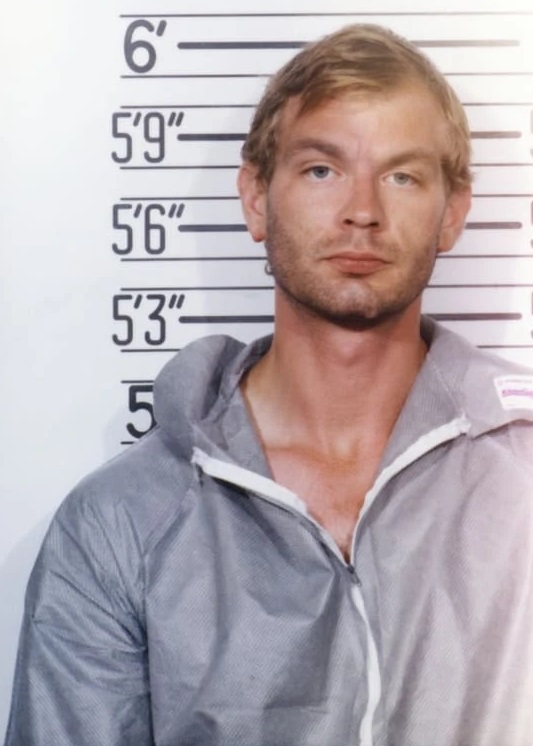
Jeffrey Lionel Dahmer, born May 21, 1960, in Milwaukee, Wisconsin, was an American serial killer responsible for the murders of 17 men and boys between 1978 and 1991. Most of his killings occurred in Wisconsin, particularly in Milwaukee and the nearby city of West Allis, although his first known murder took place at his family's home in Bath Township, Ohio. Dahmer became one of the most notorious serial killers in American history because of the prolonged period over which he offended, the mutilation and preservation of victims' remains, acts of necrophilia and cannibalism, and the repeated opportunities authorities had to discover his crimes before his eventual arrest.
Dahmer's known pattern generally involved approaching young men or teenage boys and persuading them to accompany him to a residence or hotel room. He commonly offered money for photographs, companionship or sexual activity, and frequently gave victims drinks containing sedatives. Many victims were strangled after becoming unconscious. Dahmer then photographed and dismembered bodies and disposed of or attempted to preserve portions of the remains. With some later victims, he admitted eating portions of their bodies. During 1991, he also conducted disturbing experiments intended to render victims permanently compliant by drilling into their skulls and introducing liquids into the openings. These acts resulted in severe injury and death rather than the submissive state he claimed he was attempting to create.
The First Murder: Steven Hicks
Dahmer committed his first acknowledged murder shortly after graduating from high school. On June 18, 1978, he encountered Steven Mark Hicks, who was hitchhiking to a concert at Chippewa Lake Park in Ohio. Dahmer offered Hicks a ride and invited him to the Dahmer family residence in Bath Township, where the two drank alcohol.
When Hicks eventually wanted to leave, Dahmer attacked him. Hicks was struck and strangled. Dahmer subsequently dismembered the body and concealed the remains on the family's property. He later crushed portions of the bones and scattered them in the wooded area behind the residence. Hicks remained missing for more than 13 years. After Dahmer's arrest in Wisconsin in 1991, he confessed to the murder and investigators recovered human bone fragments from the Ohio property.
A Long Gap and the Murder of Steven Tuomi
Dahmer did not acknowledge another murder until 1987. On November 20, 1987, he met Steven Walter Tuomi in Milwaukee and rented a room at the Ambassador Hotel. Dahmer later claimed that he had intended to drug Tuomi but had not consciously planned to kill him. After the two spent the night in the hotel, Dahmer said he awakened the following morning and discovered that Tuomi was dead and that he himself had injuries to his hands and arm consistent with having beaten someone.
Because Dahmer claimed to have no memory of the actual killing, Tuomi's precise time of death is uncertain and is best described as the night of November 20-21, 1987. Dahmer transported Tuomi's body in a large suitcase to the West Allis home of his grandmother, Catherine Dahmer. There he dismembered the body and ultimately disposed of the remains. Tuomi's remains were never recovered, leaving investigators dependent largely upon Dahmer's confession.
Murders at His Grandmother's Home
After the Tuomi murder, Dahmer's killings became more deliberate. While living at his grandmother's house at 2357 South 57th Street in West Allis, he began approaching young men and boys in and around Milwaukee and bringing them to the residence. Sedatives and strangulation became recurring elements of his crimes.
James Edward Doxtator was killed in January 1988 after Dahmer encountered the teenager in Milwaukee and offered him money to accompany him. Richard Guerrero disappeared later that year and was also killed at the West Allis residence. Anthony Sears became Dahmer's next known victim in March 1989. With Sears, Dahmer began more deliberately preserving portions of a victim's remains, a practice that became increasingly important to his later criminal behavior.
The 1988 Sexual Assault Case
Dahmer's violence was not completely hidden from law enforcement during this period. In September 1988, he drugged and sexually assaulted 13-year-old Somsack Sinthasomphone after bringing the boy to his Milwaukee apartment. Dahmer pleaded guilty on January 30, 1989, to second-degree sexual assault and enticing a child for immoral purposes. On May 23, 1989, he received a sentence that included one year in the Milwaukee House of Correction with work-release privileges and five years of probation.
Dahmer was released after serving approximately ten months. The case later became especially significant because one of Dahmer's future murder victims, Konerak Sinthasomphone, was Somsack's younger brother. Dahmer remained under supervision for the earlier sexual assault while committing many of his subsequent murders.
The Oxford Apartments
In 1990, Dahmer moved into Apartment 213 at 924 North 25th Street in Milwaukee, part of the Oxford Apartments. The apartment became the principal location of his remaining murders. Neighbors occasionally complained about unpleasant odors coming from the apartment, but Dahmer offered explanations involving spoiled food or problems with appliances.
Inside the apartment, his crimes became increasingly organized. He kept photographic records of victims, attempted to preserve skulls and skeletal remains, stored human remains, and used chemicals to dispose of other evidence. Investigators later concluded that most of his victims from 1990 and 1991 were killed inside Apartment 213.
Victims and Verified Chronology
The following list contains Dahmer's 17 acknowledged murder victims. Some frequently published timelines use a victim's last-seen date as the date of death. Where contemporary investigative or court records show that the exact day is uncertain or differs from commonly repeated dates, that uncertainty is noted.
- Steven Mark Hicks — June 18, 1978 — Bath Township, Ohio. Dahmer picked Hicks up while he was hitchhiking and brought him to the Dahmer family home. Hicks was attacked after indicating that he wanted to leave. Dahmer killed him and later dismembered and concealed his remains on the property.
- Steven Walter Tuomi — night of November 20-21, 1987 — Ambassador Hotel, Milwaukee, Wisconsin. Dahmer met Tuomi in Milwaukee and took him to a hotel room. Dahmer said he awoke the next morning to find Tuomi dead and claimed that he could not remember the fatal attack. He transported the body to his grandmother's West Allis residence for disposal.
- James Edward "Jamie" Doxtator — January 16, 1988 — West Allis, Wisconsin. Dahmer encountered Doxtator in Milwaukee and offered him money to accompany him to his grandmother's home. He drugged and strangled Doxtator and subsequently destroyed and discarded the remains.
- Richard Guerrero — late March 1988, commonly dated March 24 — West Allis, Wisconsin. Guerrero disappeared after encountering Dahmer. Dahmer later admitted killing him at his grandmother's residence. Guerrero's remains were never recovered.
- Anthony Lee Sears — March 25-26, 1989 — West Allis, Wisconsin. Sears met Dahmer on the night of March 25. The Wisconsin criminal complaint placed the homicide on or about March 26 at 2357 South 57th Street. Dahmer drugged and strangled Sears and retained portions of his remains, which were eventually discovered after Dahmer's arrest.
- Raymond Lamont Smith, also known as Ricky Beeks — spring or early summer 1990 — 924 North 25th Street, Milwaukee, Wisconsin. Many later chronologies identify May 20, 1990, although the original Wisconsin charging document did not establish an exact day. Smith was the first known victim killed after Dahmer moved into Apartment 213. Dahmer drugged and strangled him and retained his skull.
- Edward Warren Smith — June 1990 — 924 North 25th Street, Milwaukee, Wisconsin. The killing is frequently dated June 14, 1990, although early FBI records listed Smith as missing beginning June 23. Dahmer admitted drugging and strangling him in Apartment 213. No identifiable remains were ultimately recovered.
- Ernest Miller — on or about September 3, 1990 — 924 North 25th Street, Milwaukee, Wisconsin. Miller had traveled from Chicago to Milwaukee for the Labor Day weekend. Dahmer brought him to the apartment, drugged him and killed him. The Wisconsin criminal complaint dated the death to approximately September 3.
- David Courtney Thomas — September 24, 1990 — 924 North 25th Street, Milwaukee, Wisconsin. Dahmer encountered Thomas around the Grand Avenue Mall area and persuaded him to come to his apartment. After drugging Thomas, Dahmer killed him despite later saying that he had decided Thomas was not the type of person he was seeking. Photographs connected Thomas to Dahmer, although his remains were not recovered.
- Curtis Straughter — February 18, 1991 — 924 North 25th Street, Milwaukee, Wisconsin. Dahmer approached Straughter near a bus stop and offered him money for photographs. Straughter was brought to Apartment 213, drugged and strangled. Identifiable remains were subsequently recovered from Dahmer's apartment.
- Errol Lindsey — April 7, 1991 — 924 North 25th Street, Milwaukee, Wisconsin. Lindsey was killed after being brought to Dahmer's apartment. During this period Dahmer had begun experimenting with attempts to cause permanent brain injury while keeping a victim alive and compliant. Lindsey did not survive the attack.
- Anthony "Tony" Hughes — May 24, 1991 — 924 North 25th Street, Milwaukee, Wisconsin. Hughes, who was deaf, encountered Dahmer in Milwaukee. He disappeared on May 24 and was killed in Dahmer's apartment. Portions of his remains were later identified after the apartment was searched.
- Konerak Sinthasomphone — May 27, 1991 — 924 North 25th Street, Milwaukee, Wisconsin. Konerak was the younger brother of the boy Dahmer had sexually assaulted in 1988. After being drugged and seriously injured, Konerak escaped from the apartment and was encountered outside by concerned neighborhood residents. Police were called, but Dahmer falsely represented the 14-year-old as an adult romantic partner involved in a domestic disagreement. Officers returned Konerak to Dahmer's custody. After the police left, Dahmer killed him.
- Matt Turner, also known as Donald Montrell — June 30, 1991 — 924 North 25th Street, Milwaukee, Wisconsin. Dahmer met Turner in Chicago and persuaded him to travel with him to Milwaukee. Turner was killed in Apartment 213, and investigators later identified his remains through fingerprints and other evidence.
- Jeremiah "Jeremy" Weinberger — on or about July 7, 1991 — 924 North 25th Street, Milwaukee, Wisconsin. Weinberger met Dahmer in Chicago during the first week of July and voluntarily accompanied him to Milwaukee. He remained at the apartment for approximately two days. Although July 5 is sometimes listed as his death date because it was associated with their initial encounter, the Wisconsin criminal complaint placed the homicide on or about July 7.
- Oliver Lacy — on or about July 15, 1991 — 924 North 25th Street, Milwaukee, Wisconsin. Lacy had been missing since approximately July 12. Dahmer kept him at the apartment before killing him. His remains were among those identified following the search of Apartment 213.
- Joseph Bradehoft — July 19, 1991 — 924 North 25th Street, Milwaukee, Wisconsin. Bradehoft was Dahmer's final known murder victim. He was killed only three days before Dahmer's arrest, and identifiable remains were still inside the apartment when police entered on July 22.
The Konerak Sinthasomphone Incident
The events surrounding Konerak Sinthasomphone became one of the most scrutinized aspects of the Dahmer case. In the early morning of May 27, 1991, the severely impaired teenager made it out of Apartment 213 and onto the street. Neighborhood residents attempted to help him and contacted police.
Dahmer arrived and told responding officers that Konerak was an adult and that the incident was merely a disagreement between two partners. Despite the boy's condition and the concerns raised by witnesses, police accepted Dahmer's account. Konerak was returned to the apartment. The officers did not discover that Dahmer was a convicted sex offender on probation for sexually assaulting Konerak's brother. After they departed, Dahmer murdered Konerak.
The incident later generated intense criticism of the Milwaukee Police Department and became central to broader discussions about how social prejudice, assumptions about gay relationships, and failures to investigate vulnerable victims contributed to Dahmer remaining free.
Escalation During the Summer of 1991
Dahmer's behavior accelerated dramatically during his final months of freedom. Between February and July 1991, he killed eight known victims. Three of the final four murders occurred between June 30 and July 19. His apartment increasingly contained physical evidence that was difficult to conceal, including photographs, chemicals, preserved remains and the belongings of victims.
Dahmer later acknowledged that his ability to control his behavior had deteriorated. The frequency of the killings, combined with his attempts to preserve remains and conduct experiments on victims, meant that discovery was becoming increasingly likely.
Tracy Edwards and Dahmer's Arrest
On July 22, 1991, Dahmer approached Tracy Edwards and persuaded him to come to Apartment 213. Once inside, Edwards became suspicious of Dahmer's behavior and realized that he was in danger. Dahmer placed a handcuff around one of Edwards's wrists, but Edwards managed to remain calm long enough to find an opportunity to escape.
Edwards fled the apartment and encountered Milwaukee police officers. With part of the handcuff still attached to him, he told the officers that a man had threatened him. Police accompanied Edwards back to Apartment 213. Dahmer initially attempted to act as though nothing serious had occurred.
While attempting to locate the key to the handcuffs, an officer discovered Polaroid photographs showing dismembered victims. Police realized that the photographs had been taken inside the apartment. Dahmer attempted to resist but was subdued and arrested. A search of the residence revealed extensive physical evidence connecting him to multiple disappearances and murders.
The Investigation and Confession
After his arrest, Dahmer began providing investigators with an extraordinarily detailed confession. He eventually acknowledged 17 murders stretching from Steven Hicks in 1978 through Joseph Bradehoft in July 1991. Detectives used his statements together with fingerprints, dental records, identification documents, photographs and physical remains recovered from his apartment to identify victims.
Some victims could be identified from remains still present in Apartment 213. Others, including several of the earlier victims, had been completely disposed of, forcing investigators to rely upon combinations of missing-person records, photographs and Dahmer's descriptions. His confession also led authorities back to the former Dahmer family property in Ohio, where investigators searched for evidence connected to Steven Hicks.
Dahmer's confession revealed that the murders had not been committed primarily for financial gain, revenge or efforts to conceal another crime. He described a compulsive desire to possess and control his victims completely. His use of sedatives, his preservation of remains and his later attempts to render living victims permanently passive were all connected to this desire for control.
Trial and Sentencing
Dahmer did not contest that he had committed the Wisconsin murders for which he was charged. In January 1992, he entered guilty pleas to 15 murder counts while asserting that mental disease should relieve him of legal responsibility. The central issue presented to the jury was therefore his mental state and whether he was legally responsible for his actions.
After extensive psychiatric testimony, the jury determined on February 15, 1992, that Dahmer was legally sane and criminally responsible. On February 17, Milwaukee County Circuit Judge Laurence Gram Jr. sentenced him to 15 consecutive life terms. The structure of the sentence ensured that Dahmer had no realistic possibility of ever returning to society.
Ohio authorities separately prosecuted him for the murder of Steven Hicks. On May 1, 1992, Dahmer pleaded guilty in Summit County to aggravated murder and received another life sentence, consecutive to his Wisconsin sentences.
Death in Prison
Dahmer was incarcerated at Columbia Correctional Institution in Portage, Wisconsin. On November 28, 1994, he was working on a cleaning detail with fellow inmates Christopher Scarver and Jesse Anderson when Scarver attacked both men. Dahmer suffered fatal head injuries and died that morning. Anderson died from his injuries several days later.
Dahmer's death ended his imprisonment less than three years after his Wisconsin sentencing, but it did not end public examination of his crimes. The case continued to be studied because of the extraordinary brutality involved, the psychology behind his conduct, the failures surrounding Konerak Sinthasomphone, and the repeated disappearance of vulnerable young men whose cases initially received limited attention.
The Victims and the Lasting Significance of the Case
Although Dahmer became internationally notorious, the central human cost of the case was the loss of 17 individual lives: Steven Hicks, Steven Tuomi, James Doxtator, Richard Guerrero, Anthony Sears, Raymond Smith, Edward Smith, Ernest Miller, David Thomas, Curtis Straughter, Errol Lindsey, Tony Hughes, Konerak Sinthasomphone, Matt Turner, Jeremiah Weinberger, Oliver Lacy and Joseph Bradehoft. Their families experienced months or years of uncertainty before learning what had happened, and in several cases no recoverable remains were available for burial.
The investigation also exposed significant shortcomings in the way missing and vulnerable people were treated. Many of Dahmer's victims were young men from minority communities, several were gay or associated with Milwaukee's gay social scene, and some lived transient or economically vulnerable lives. These circumstances made it easier for disappearances to remain disconnected from one another and allowed Dahmer to continue offending in a relatively small geographic area.
Jeffrey Dahmer's confirmed series began with the murder of Steven Hicks on June 18, 1978, and ended with Joseph Bradehoft on July 19, 1991. His arrest three days later brought an end to a murder series lasting more than thirteen years. The physical evidence found in Apartment 213, his detailed confessions and the subsequent criminal proceedings established him as the killer of 17 men and boys and left one of the most extensively documented serial murder cases in modern American criminal history.