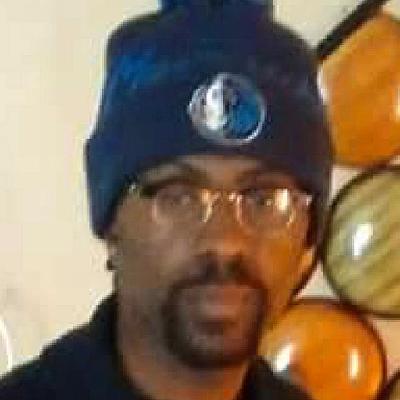
Errol Lindsey was a 19-year-old Black/African American man from Milwaukee, Wisconsin, whose life ended on April 7, 1991, after he crossed paths with Jeffrey Dahmer. According to the criminal complaint later filed in Milwaukee County, Lindsey’s sister said she last saw him that day when he left to go to a store. Dahmer told investigators that he encountered Lindsey near the intersection of 27th Street and Kilbourn Avenue and offered him money to accompany him to Dahmer’s apartment at 924
North 25th Street.
Once inside the apartment, Dahmer gave Lindsey a drink containing sedatives. Investigative accounts later revealed that Dahmer was experimenting with a method intended to leave his victims alive but permanently submissive. While Lindsey was incapacitated, Dahmer drilled a hole into his skull and introduced hydrochloric acid in an attempt to damage his brain. Lindsey unexpectedly regained consciousness after the procedure. Dahmer then administered additional drugs and ultimately strangled him.
After the killing, Dahmer dismembered Lindsey’s body. He later admitted retaining Lindsey’s skull, and accounts of the crime state that he removed Lindsey’s skin and kept portions of it for a period of time before disposing of them. Lindsey’s disappearance remained unresolved for months while Dahmer continued killing other victims in Milwaukee.
The case finally broke open on July 22, 1991, when Tracy Edwards escaped from Dahmer’s apartment while partially restrained and flagged down Milwaukee police officers. Officers returned to the apartment with Edwards and discovered photographs and human remains, setting off an extensive investigation. Dahmer was arrested, and investigators ultimately connected him to 17 killings. Eleven victims’ remains were recovered from the apartment.
As authorities worked to identify the remains, Lindsey was among the victims positively identified. Milwaukee investigators and the medical examiner used dental records to establish his identity. His identification was publicly reported on July 26, 1991, more than three months after his disappearance.
Prosecutors formally charged Dahmer with first-degree intentional homicide for Lindsey’s killing. The charging document alleged that on or about April 7, 1991, at Dahmer’s North 25th Street apartment, Dahmer intentionally caused Lindsey’s death. Lindsey’s killing became one of the 15 Wisconsin homicide cases ultimately prosecuted against Dahmer.
On January 13, 1992, Dahmer changed his pleas and admitted guilt in the 15 Milwaukee-area murders. Because he asserted that he was not criminally responsible because of mental disease or defect, the court proceeding moved directly to a separate sanity phase rather than a conventional trial over whether he committed the killings. For several weeks, psychiatrists and other witnesses testified about Dahmer’s mental condition and whether he understood that his actions were wrong or could control his conduct.
On February 15, 1992, the jury rejected Dahmer’s insanity defense and determined that he was legally responsible for the murders. Two days later, Judge Laurence Gram Jr. sentenced him to 15 consecutive life terms in prison. Wisconsin did not have the death penalty, and the consecutive sentences ensured that he would remain imprisoned for the rest of his life.
Lindsey’s family was given an opportunity to address the court before sentencing. His sister, Rita Isbell, delivered an intensely emotional victim-impact statement, expressing the anger and devastation the murder had caused her family. Her confrontation with Dahmer became one of the most widely remembered moments of the sentencing hearing and underscored the lasting harm behind a case that was otherwise often discussed in terms of Dahmer’s crimes rather than the people whose lives he had taken.
Dahmer remained imprisoned following his convictions and later received another life sentence in Ohio for an earlier murder. On November 28, 1994, he was killed by another inmate at Columbia Correctional Institution in Wisconsin. Lindsey’s murder therefore ended with an identified offender, a formal homicide charge, an admission of guilt, rejection of the insanity defense, and a life sentence imposed as part of the prosecution of Dahmer’s Milwaukee killings.