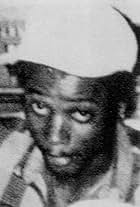
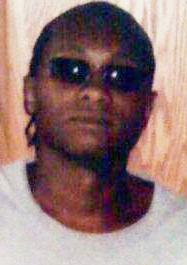
Raymond Lamont Smith, a 32-year-old Black man who was also known as Ricky Beeks, was killed in Milwaukee in 1990 after crossing paths with Jeffrey Dahmer. Although some records have circulated with different dates, historical accounts generally identify May 20, 1990 as the date Smith was killed. The amended Milwaukee County criminal complaint was less specific, placing his death during the spring or early summer of 1990.
Smith was the first known victim Dahmer killed after moving into Apartment 213 at the Oxford Apartments, 924 North 25th Street.
According to Dahmer's account to investigators, he encountered Smith at the 219 Club in Milwaukee and offered him money to come back to his apartment to pose for photographs, have a drink, and watch videos. Smith accepted and accompanied him to the apartment. Once there, Dahmer prepared a drink containing drugs. After Smith became unconscious, Dahmer strangled him. The criminal complaint states that Dahmer later identified photographs of Raymond Lamont Smith as the person he had killed.
Dahmer subsequently dismembered Smith's body inside the apartment. Investigators later learned that he disposed of most of the remains but retained Smith's skull, which he painted and kept with remains from other victims. Later accounts also described Dahmer photographing Smith's body after the killing and using chemicals and other methods to dispose of the remains. Smith's death became part of a pattern that remained hidden from authorities while Dahmer continued bringing victims to the North 25th Street apartment.
The truth about what had happened to Smith did not emerge until July 1991. On July 22, Tracy Edwards escaped from Dahmer's apartment while partially restrained and encountered Milwaukee police officers. Officers returned with Edwards to the apartment, where the investigation quickly uncovered photographs and human remains. Dahmer was arrested, and during extensive questioning he began admitting to a series of killings. The discovery transformed what initially appeared to be an encounter involving one endangered individual into an investigation involving numerous homicide victims.
Smith was among the victims whose identity could be established through physical evidence. Dr. L.T. Johnson, a forensic odontologist, compared one of the painted human skulls recovered from Dahmer's apartment with Smith's known dental records and determined that the skull belonged to Raymond Smith. FBI laboratory records subsequently listed Raymond Smith as a homicide victim associated with the Dahmer investigation, and evidence connected with Smith, including material from the skull and teeth, was submitted for laboratory examination.
On August 6, 1991, Milwaukee County prosecutors filed homicide charges against Dahmer involving a dozen victims then sufficiently documented for prosecution. Smith, identified in the case as Raymond Smith, also known as Ricky Beeks, was specifically included among those victims. The amended criminal complaint charged Dahmer with first-degree intentional homicide for Smith's killing. Additional charges followed as investigators completed identifications and assembled evidence involving other victims.
Dahmer ultimately admitted responsibility for the Wisconsin killings and entered pleas of guilty but insane to 15 homicide counts. Because the killings themselves were admitted, the major courtroom issue became whether he was legally responsible for his actions under Wisconsin law. On February 15, 1992, a Milwaukee County jury found him legally sane in connection with all 15 murders before it, meaning he would be imprisoned rather than committed to a mental institution. Smith's murder was among the killings for which Dahmer was held criminally responsible.
Two days later, on February 17, 1992, Judge Laurence C. Gram Jr. sentenced Dahmer to 15 consecutive life prison terms. The sentences were structured to ensure that he would never realistically be released. The prosecution of Raymond Smith's death therefore ended with an identified offender, a first-degree intentional-homicide charge, an admission of responsibility, a jury determination of legal sanity, and a life sentence imposed as part of the broader Milwaukee serial-murder case. No additional person was charged as an accomplice in Smith's killing; the criminal case attributed the murder to Jeffrey Dahmer.