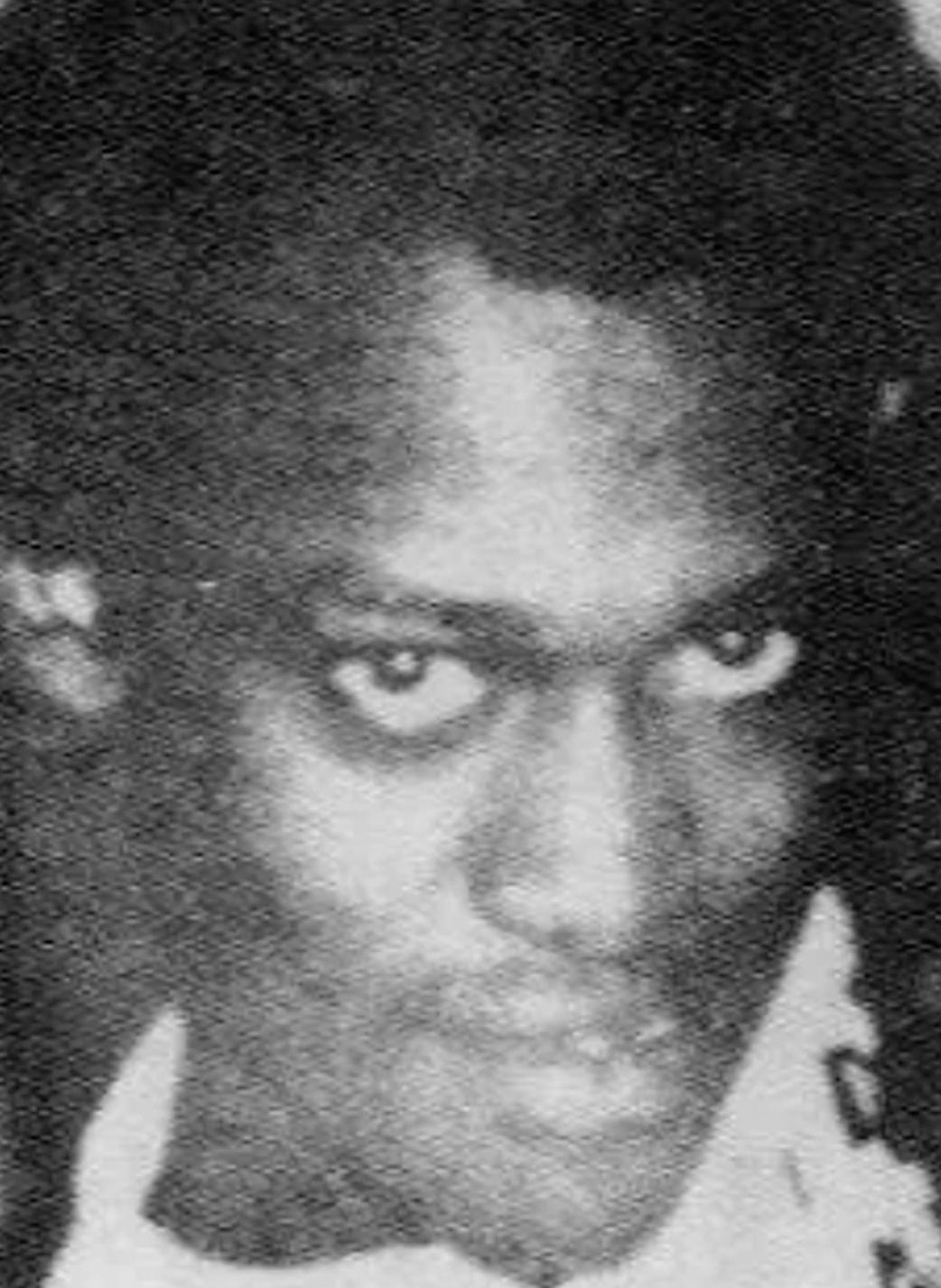
David C. Thomas was a 23-year-old Black man from Milwaukee whose life ended on or about September 24, 1990, after he encountered Jeffrey Lionel Dahmer in downtown Milwaukee. Thomas was also a father; he left behind a young daughter, Courtia Beanland, who was approximately two years old when he disappeared. People close to Thomas remembered him as fun-loving, and his disappearance left his family with years of grief and uncertainty before the circumstances of his death became known.
According to the criminal case later filed against Dahmer, he encountered Thomas in the vicinity of Second Street and Wisconsin Avenue in Milwaukee during the fall of 1990. Dahmer offered Thomas money to accompany him to his apartment at 924 North 25th Street. Once inside the apartment, the two drank and talked. Dahmer later admitted that he placed a sleeping drug in Thomas's drink. After Thomas became incapacitated, Dahmer killed him, explaining to investigators that he feared Thomas might become angry when he awakened. Prosecutors ultimately alleged that Dahmer intentionally killed Thomas at the apartment on or about September 24, 1990.
After the killing, Dahmer dismembered Thomas's body and photographed portions of the process. Unlike with some of his other victims, Dahmer said he did not preserve Thomas's remains. No identifiable remains belonging to Thomas were ever recovered. Those photographs would later become particularly important because investigators had no body from which to establish his identity or build a conventional homicide case.
Thomas's girlfriend, Chandra Beanland, reported him missing to the Milwaukee Police Department on September 24, 1990. Although Thomas was reportedly known to sometimes be away for extended periods, his continued absence eventually became part of a much larger mystery. For months, his loved ones had no definitive explanation for what had happened to him. The truth did not emerge until the investigation of Dahmer in the summer of 1991.
Dahmer was arrested on July 22, 1991, after another man, Tracy Edwards, escaped from his apartment and brought Milwaukee police officers back to the residence. The ensuing search uncovered photographs and extensive evidence linking Dahmer to numerous killings. During questioning, Dahmer confessed to a series of murders, including the killing of Thomas. Investigators discovered a photograph depicting Thomas after his death, and the evidence, Dahmer's confession and identification by those who knew Thomas allowed authorities to establish that he had been one of Dahmer's victims despite the absence of his remains. Thomas's family was formally notified of his death in late July 1991.
Prosecutors faced an unusual difficulty in Thomas's case because there was no body to present as physical proof of the homicide. Milwaukee County District Attorney E. Michael McCann acknowledged publicly that prosecuting a murder without a body presented a legal challenge, but authorities believed the confession, photographs and identification evidence were sufficient to proceed. In the amended criminal complaint against Dahmer, Thomas's death was charged as Count Four, first-degree intentional homicide. The charge alleged that Dahmer intentionally caused Thomas's death at 924 North 25th Street on or about September 24, 1990.
Dahmer eventually admitted responsibility for 15 Wisconsin murders prosecuted in Milwaukee County and entered pleas of guilty but insane. Because guilt had effectively been acknowledged, the major question at his 1992 trial became whether he was legally responsible for his actions or should be found not guilty by reason of mental disease or defect. On February 15, 1992, the jury rejected the insanity defense and found him legally sane and responsible for each of the 15 killings before it, including Thomas's murder.
Two days later, on February 17, 1992, Judge Laurence C. Gram Jr. sentenced Dahmer to 15 consecutive life sentences. Members of several victims' families addressed the court before sentencing. Thomas's mother, Inez Thomas, spoke about the loss of her son and the pain suffered by his young daughter, who had been left wondering why her father never returned. The sentencing ensured that Dahmer would spend the remainder of his life in prison; he was later killed by another inmate at Columbia Correctional Institution in Wisconsin in November 1994.
Although the criminal proceedings established what happened to Thomas and held his killer legally accountable, his case carried an especially painful element for his family because his remains were never recovered. For more than ten months after his disappearance, those who loved him had been left without answers, and even after Dahmer's arrest there was no body to return to them. The photographs recovered from Dahmer's apartment, his confession and the subsequent prosecution finally established that Thomas had been murdered and transformed what had begun as a missing-person investigation into one of the homicide cases for which Dahmer was convicted.