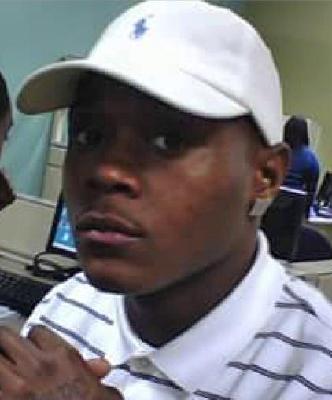
Phillip G. Clark, a 65-year-old Black man from Milwaukee, was fatally shot inside his home on North 50th Street on July 31, 2026. The shooting occurred in the 4600 block of North 50th Street, near West Hampton Avenue in Milwaukee’s Wahl Park neighborhood. Authorities later identified Clark through the Milwaukee County Medical Examiner’s Office, which reported that he had been shot in the abdomen following an argument. His death was ultimately ruled a homicide.
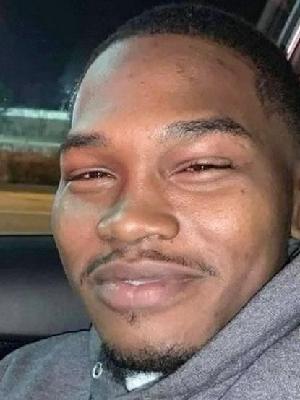
The investigation quickly focused on Clark’s son, Phillip Jeffrey Clark Jr. According to the criminal complaint, Clark Jr.’s aunt, who lived in the residence with him and his father, contacted 911 after returning home from work and encountering Clark Jr. behaving erratically. She told investigators that he pointed a black handgun at her, manipulated or cocked the weapon several times and acted as though he was preparing to shoot her. Police were dispatched to the residence, and Clark Jr. eventually came outside with his hands raised. Officers immediately detained him.
Police then entered the house to determine whether anyone else had been injured. An officer located a black handgun sitting on the kitchen counter. Continuing through the residence, officers entered a bedroom and found Phillip Clark unresponsive. He had suffered a gunshot wound to his abdomen. Paramedics were unable to save him, and he was pronounced dead at the residence. An autopsy later showed that the bullet had damaged several internal organs.
Investigators found physical evidence inside the bedroom that prosecutors say connected the handgun recovered from the kitchen to the fatal shooting. A spent 9mm cartridge casing was discovered beneath Clark’s bed. When a homicide detective examined the handgun, a cartridge was found partially lodged in its ejection port, suggesting that the firearm had malfunctioned or jammed after being fired. Preliminary forensic examination indicated that the spent casing recovered under the bed had been fired from the gun found on the kitchen counter.
Witness accounts described unusual behavior by Clark Jr. in the period immediately surrounding the shooting. An upstairs neighbor told detectives that Clark Jr. entered the neighbor’s apartment shortly before police arrived, went into the bathroom while the neighbor was bathing and opened the shower curtain. According to the criminal complaint, Clark Jr. made a statement questioning why people had told him to do something, laughed and walked away. Another witness reportedly told investigators that Clark Jr. entered the upstairs apartment several times that evening and had to be told to leave the bathroom. Authorities did not publicly attribute that behavior to any specific medical, psychological or intoxicating condition, so the circumstances behind it remain unclear.
During questioning, investigators said Clark Jr. acknowledged that he had shot his father, although he reportedly claimed that portions of what happened were difficult for him to remember. He described some type of confrontation while his father was standing in the doorway of his bedroom. According to the complaint, Clark Jr. admitted firing the gun and told detectives that the weapon jammed after the shot, an account that appeared consistent with investigators finding a cartridge caught in the gun’s ejection mechanism.
The case was further complicated by allegations involving Clark Jr.’s aunt. Prosecutors accused him of pointing the same handgun at her during the incident, conduct that contributed to an additional weapons-related charge. Her 911 call played an important role in bringing officers to the house and resulted in Clark Jr. being taken into custody at the scene rather than becoming the subject of a later manhunt.
Milwaukee County prosecutors subsequently charged Phillip Jeffrey Clark Jr. with first-degree reckless homicide while using a dangerous weapon, pointing or endangering safety through the use of a firearm, and felony bail jumping. Prosecutors alleged that Clark Jr. was already free on bond in a separate felony case when his father was killed, which formed the basis for the bail-jumping allegation. CBS 58 reported that the charges together exposed him to a potential maximum sentence approaching 75 years if convicted on every count.
As of the most recently available reporting in August 2026, Clark Jr. had been arrested and formally charged, but the case had not progressed to a trial or conviction. The allegations against him therefore remained accusations to be resolved through the criminal court process. What began as an apparent argument inside a family home ended with Phillip Clark dead in his bedroom, a handgun recovered only a short distance away, and his son facing one of Wisconsin’s most serious homicide charges.