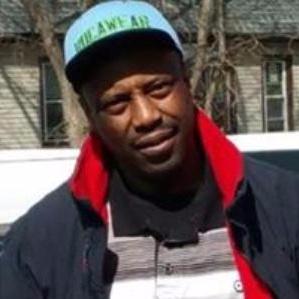
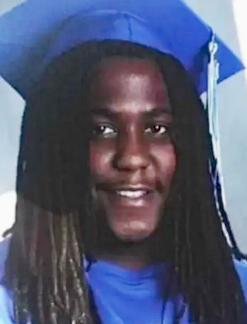
Steven Walter Tuomi, a 24-year-old White man, disappeared in Milwaukee in 1987 and was later identified by serial killer Jeffrey Dahmer as one of his victims. Federal records list Tuomi’s date of birth as December 19, 1962, making him 24 at the time of the events later described by Dahmer. Records from the investigation state that Tuomi had last been seen in Milwaukee on September 15, 1987 and had not contacted his family afterward.
He had originally come from Ontonagon, Michigan, and had been working at a restaurant in Milwaukee. His family eventually reported him missing after being unable to locate him.
The precise timeline of Tuomi’s final days remains uncertain because the documented September disappearance date does not match the account Dahmer later gave investigators. According to Dahmer’s confession and testimony presented during later court proceedings, he encountered Tuomi in Milwaukee in November 1987 and brought him to the Ambassador Hotel. Dahmer said the two had been drinking and that he had intended to drug Tuomi rather than kill him. After becoming heavily intoxicated, Dahmer claimed that he lost consciousness or experienced an alcoholic blackout. When he awoke the following morning, Tuomi was dead. Dahmer said he could not remember the actual killing.
Dahmer’s account described a violent scene. He said Tuomi’s body showed extensive bruising and injuries consistent with a severe beating, while Dahmer himself noticed injuries to his hands and arm. From the condition of Tuomi’s body and his own injuries, Dahmer concluded that he had beaten Tuomi to death during the night. Because no independent witness saw the killing and Tuomi’s remains were never recovered, much of what is known about the circumstances inside the hotel room ultimately came from Dahmer himself.
Dahmer said that after discovering Tuomi dead, he went out and obtained a large suitcase or similar piece of luggage. He placed the body inside and arranged transportation from the hotel to his grandmother’s residence in West Allis, where he was living at the time. There, Dahmer concealed the body before dismembering it. He later told investigators that he separated and disposed of the remains so thoroughly that authorities were never able to recover or positively identify any remains belonging to Tuomi. The absence of a body or physical evidence connecting Dahmer to the killing would later become one of the most significant obstacles to bringing a homicide charge in Tuomi’s case.
Tuomi’s disappearance remained unresolved until Dahmer was arrested in Milwaukee in July 1991 and investigators began uncovering the extent of his crimes. During questioning, Dahmer confessed to a series of killings and identified Tuomi as one of his victims. Milwaukee detectives already had Tuomi listed as a missing person and subsequently investigated whether his disappearance corresponded with Dahmer’s account. FBI communications from the period show investigators considered Tuomi a probable victim while working to identify and confirm the people Dahmer claimed to have killed.
Despite Dahmer’s confession, prosecutors did not charge him with Tuomi’s homicide. Milwaukee County District Attorney E. Michael McCann said there was not enough evidence to bring that particular case to court with a reasonable likelihood of success. Contemporary court records likewise noted that Dahmer was prosecuted for 15 Milwaukee County homicides committed from 1988 through 1991 but was not charged with Tuomi’s 1987 death because Tuomi’s body had never been found.
Dahmer nevertheless faced prosecution for the other killings investigators could substantiate. He pleaded guilty to the Wisconsin homicide charges while asserting that he was not legally responsible because of mental disease or defect. After a highly publicized 1992 proceeding examining his mental state, a jury found him legally sane, and he received multiple life sentences. His conviction and imprisonment therefore resulted from the other murders rather than a separate charge, trial, or conviction for Tuomi’s death.
Tuomi’s case remains unusual among Dahmer’s known victims because there was never a recovered body and never a homicide prosecution specifically addressing his death. The conclusion that Dahmer killed him rests heavily on Dahmer’s confession, the circumstances of Tuomi’s unexplained disappearance, and investigators’ comparison of that account with the missing-person record. Although the November 1987 hotel encounter has become the widely reported account of Tuomi’s death, the difference between that chronology and the official September 1987 last-seen date leaves an unresolved discrepancy in the public record.