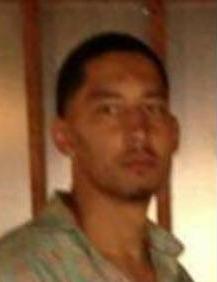
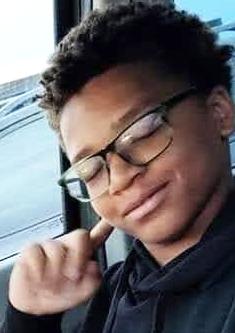
James Edward Doxtator was 14 years old, a Native American male whose disappearance in January 1988 would not be fully explained until more than three years later. His death is commonly recorded as January 16, 1988, although some accounts based on Jeffrey Dahmer’s later statements place their encounter during the early morning hours of January 17. Doxtator was associated with the West Allis area and was reported missing after he vanished that January.
At the time, investigators had no body and no clear evidence revealing what had happened to him.
According to the account Dahmer later gave investigators, he encountered Doxtator while the teenager was waiting for a bus near the 219 Club in Milwaukee. Dahmer approached him and offered him money to accompany him home, telling him he could earn money by posing for photographs or in the nude, watching videos and having drinks. Doxtator agreed and went with him to the West Allis home of Dahmer’s grandmother at 2357 South 57th Street, where Dahmer was then living.
Once inside the house, Dahmer gave Doxtator a drink containing a drug intended to make him unconscious. After the teenager became incapacitated, Dahmer strangled him. Dahmer later admitted that he dismembered Doxtator’s body and destroyed the remains, including crushing bones before disposing of them. No identifiable remains belonging to Doxtator were ever recovered, a fact that complicated efforts to establish what had happened to him before Dahmer's eventual confession.
For years, Doxtator's disappearance remained unresolved. The major break came in July 1991, after Milwaukee police arrested Jeffrey Dahmer and discovered evidence in his apartment connecting him to numerous killings. During extensive questioning, Dahmer confessed to a series of murders dating back to 1978. As investigators attempted to identify victims whose remains were missing or could not be identified through physical evidence, Dahmer described a teenage boy he had met and killed in early 1988 at his grandmother's West Allis residence.
Police subsequently investigated whether that victim was Doxtator. Dahmer was shown photographs and identified him as the teenager he had killed. In August 1991, authorities publicly announced that Doxtator had been identified as one of Dahmer's victims. Federal investigative records also listed James E. Doxtator among the additional victims connected to Dahmer, noting that no physical remains had been recovered to permit identification through conventional forensic methods.
Milwaukee County prosecutors then formally charged Dahmer with Doxtator's murder. An amended criminal complaint alleged that in January 1988, at the South 57th Street residence in West Allis, Dahmer intentionally caused Doxtator's death. His murder became one of several additional homicide counts filed after investigators expanded the case beyond the victims whose remains had initially been discovered in Dahmer's Milwaukee apartment.
Dahmer ultimately admitted responsibility for killing Doxtator and numerous other young men and boys. In January 1992, he entered guilty pleas while asserting that he was not legally responsible because of mental disease or defect, leaving a jury to determine his criminal responsibility. After weeks of psychiatric testimony, the jury found in February 1992 that Dahmer was legally sane and criminally responsible for each of the 15 Wisconsin murders before the court, including Doxtator's.
On February 17, 1992, Milwaukee County Circuit Judge Laurence Gram Jr. sentenced Dahmer to 15 consecutive life terms in prison, effectively ensuring he would never be released. The conviction and sentencing finally provided a legal resolution to the disappearance that had begun more than four years earlier, but Doxtator's family was never able to recover his remains. His case became particularly significant because investigators were able to establish his identity and prosecute his killer largely through Dahmer's confession, photographic identification, the circumstances he described, and the connection between the disappearance and the West Allis residence where Dahmer admitted committing the murder.