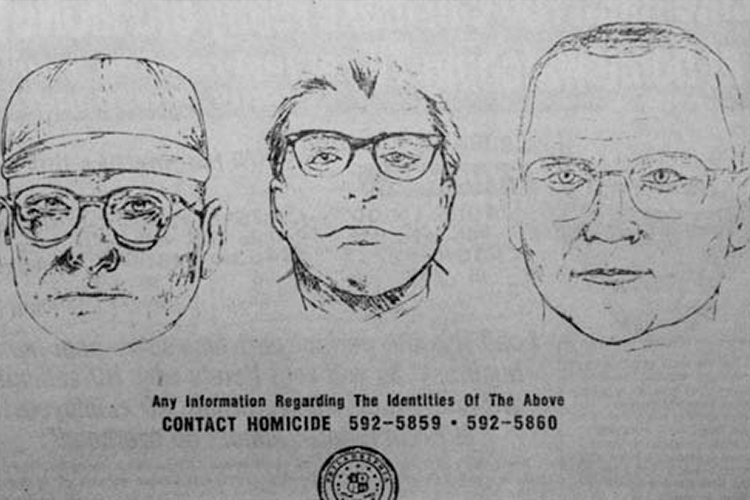
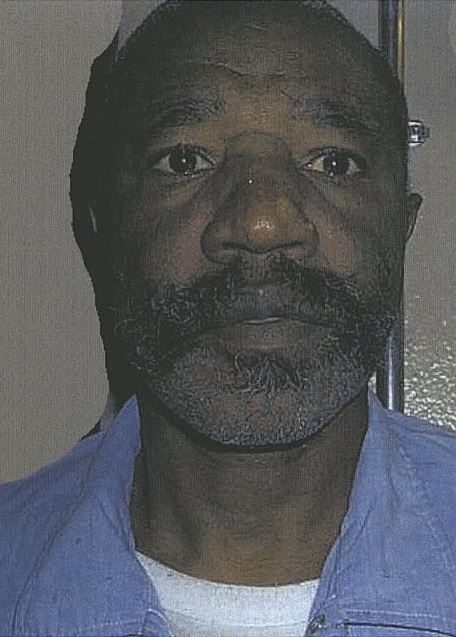
Lawrence Dalton
Lawrence N. Dalton, born April 12, 1945, is an American murderer and sexual offender whose crimes were committed in Wisconsin and Illinois during the late 1970s. He has frequently been described as a serial killer, although later retellings of his case have created considerable confusion about how many murders can actually be attributed to him. Some older crime references list four victims, but court records conclusively establish Dalton's responsibility for two separate murders: the August 1977 killing of Blanchie "Blanche" Penna in Wisconsin and the May 1978 rape and murder of Debra Sue Baker in Illinois. Other killings once investigated in connection with Dalton were either subsequently solved with another offender or cannot be reliably connected to him.
The Murder of Blanchie Penna
Blanchie Penna, whose first name also appears as Blanche in court documents, was a 23-year-old woman from Racine, Wisconsin. Records concerning Dalton's later Illinois case identify Penna's murder as occurring in August 1977. The surviving Wisconsin appellate decision does not state the precise day in August, so a more exact date should not be assigned to her death without additional documentation.
Penna knew Dalton and people within his complicated household. On the day she was killed, Dalton and his wife Karen arrived at the Penna family's Racine home. Karen had arranged for Dalton to take Blanchie to an unemployment compensation office. Instead of taking her directly there, Dalton eventually brought Penna to the Kenosha-area residence he shared with Barbara Filipski.
The circumstances described during Dalton's trial showed that his actions were planned around isolating Penna. An adjoining trailer had previously been modified with particle board in an apparent effort to reduce the amount of sound that could be heard from outside. Dalton had even tested the structure by having Filipski scream from inside while he listened from outdoors. He had also told Filipski that he intended to keep a girl confined in the trailer bathroom.
Once Penna was at the residence, Dalton called her into a bedroom. He placed handcuffs on her, put a sock in her mouth and wrapped duct tape around her head and mouth. Dalton later attempted to characterize some of these actions as a joke, but medical evidence showed that the tape had been applied tightly. Dalton then sexually assaulted Penna.
Afterward, Dalton told Filipski that because he had assaulted Penna, he could not simply release her and allow her to tell authorities what had happened. Filipski entered the bedroom and saw Penna still alive, restrained and gagged. Shortly afterward, Filipski heard sounds of a struggle coming from the room. Dalton emerged and indicated that he believed Penna was dead. He subsequently admitted that he had choked and killed her.
Dalton wrapped Penna's body in a sheet, placed it in the trunk of his automobile and eventually buried her near the property. Her remains remained concealed until investigators unearthed them in 1979. The discovery transformed what had been a disappearance into a homicide investigation and placed Dalton at the center of a widening inquiry involving crimes in both Wisconsin and Illinois.
The Murder of Debra Sue Baker
The second murder conclusively tied to Dalton occurred in Chicago in May 1978. The victim was Debra Sue Baker. Court records do not establish a precise day on which Baker was killed, but they clearly place the homicide in May 1978 and establish that her body was discovered on May 24, 1978.
Baker was sexually assaulted and murdered by Dalton inside an apartment at 1067 West Argyle Street in Chicago. After killing her, Dalton concealed her body inside a trunk and hid the trunk behind a false wall in the apartment. He later removed the trunk and disposed of it in the Fox River.
The trunk containing Baker's body was discovered on May 24, 1978. Investigators initially did not know the victim's identity. Her remains went unidentified for nearly a year, leaving police with a murdered young woman but no name and therefore few obvious connections through which to reconstruct her final movements.
The investigation eventually connected the unidentified victim to Dalton. She was identified as Debra Sue Baker, and Dalton was formally prosecuted in Cook County for her rape and murder. The Baker homicide was also the Chicago killing that had surfaced during proceedings surrounding Dalton's Wisconsin prosecution.
Confirmed Victims
- Blanchie "Blanche" Penna, 23 — Killed in August 1977 in the Kenosha, Wisconsin area after being taken from Racine. Dalton sexually assaulted, restrained and killed Penna before concealing her body on property connected to his residence. Her remains were discovered in 1979. Available court records verify August 1977 as the month and year of death but do not provide a reliable exact day.
- Debra Sue Baker — Killed in May 1978 at an apartment at 1067 West Argyle Street in Chicago, Illinois. Dalton sexually assaulted and murdered Baker, concealed her body inside a trunk and later disposed of the trunk in the Fox River. The trunk was recovered on May 24, 1978. The surviving court record identifies May 1978 as the period of the murder but does not establish the exact day on which Baker died.
Investigation and Arrest
By April 1979, investigators were examining Dalton in connection with multiple serious offenses. After Penna's remains were unearthed near a Kenosha property that Dalton had occupied, authorities sought him on murder charges. Dalton was located and arrested in Cleveland, Ohio, on April 23, 1979.
Dalton made a series of damaging admissions. He admitted to police officers that he had choked and killed Penna and made a substantially similar admission to another jail inmate. When he eventually testified in his Wisconsin trial, he did not deny killing Penna. Instead, his defense attempted to challenge whether he possessed the legally required intent for first-degree murder.
The evidence against him was substantial. Testimony described his efforts to isolate Penna, his previous statements about confining a woman, the restraints used during the assault, his statement that he could not release Penna because she could report him, and his subsequent concealment of her body.
Wisconsin Conviction
Dalton was tried in Kenosha County for the Penna case. On October 31, 1979, he was convicted of first-degree murder, kidnapping by deceit and first-degree sexual assault. He received a life sentence with the possibility of parole.
Dalton appealed his convictions, arguing among other things that he had not intended to kill Penna. The Wisconsin Court of Appeals rejected his arguments in 1980. The court found overwhelming evidence supporting the conviction, including Dalton's own admissions and the circumstances surrounding Penna's restraint, sexual assault and death.
Illinois Prosecution for Debra Sue Baker
The separate Chicago investigation continued while Dalton was serving his Wisconsin sentence. Cook County authorities ultimately charged him with the rape and murder of Debra Sue Baker. On November 20, 1981, Dalton pleaded guilty to Baker's murder and rape.
He received a 70-year sentence for murder and a 30-year sentence for rape, with the Illinois sentences ordered to run concurrently with one another and with his Wisconsin life sentence.
Some older accounts state that Dalton pleaded guilty to three murders in Illinois. That description can be misleading. His Illinois charging documents contained three murder counts arising from the death of the same victim, Debra Sue Baker. In 2015, an Illinois appellate court ordered two of those three murder convictions vacated because only one person had been murdered. Dalton's Illinois case therefore represented one murder victim, not three separate victims.
Lisa Slusser and Other Questioned Attributions
Dalton has often been listed as having four victims, largely because investigators initially examined him in connection with additional unsolved killings. One of the most important examples is 12-year-old Lisa Ann Slusser of Waukegan, Illinois. Slusser disappeared in August 1977 and was murdered, and Dalton was at one time publicly investigated as a possible suspect.
Dalton, however, was not responsible for the Slusser murder. The case was eventually solved after Gary Kerpan confessed. Kerpan was returned to Illinois and pleaded guilty to Slusser's murder in 1991, receiving a 30-year prison sentence. Lisa Slusser therefore should not be included among Dalton's confirmed victims despite her continued appearance on some older serial-killer lists.
Some secondary databases also name a woman identified as Shirley Taylor and an unidentified "Jane Doe" as Dalton victims. Reliable court records do not establish Shirley Taylor as one of Dalton's murder victims. The unidentified woman described in some early accounts may also reflect confusion created while Debra Sue Baker remained unidentified after her body was recovered in 1978. For that reason, those names should not be presented as additional confirmed Dalton murders without stronger case documentation.
Criminal Pattern
The two murders proven against Dalton share significant characteristics. Both involved young women, sexual violence, efforts to isolate the victim and attempts to prevent discovery of the crime. In Penna's case, Dalton used deception to bring her to a residence, restrained and sexually assaulted her, killed her and buried her body. In Baker's case, he murdered her inside a Chicago apartment, hid her body in a trunk behind a false wall and eventually transported the trunk away from the apartment for disposal in the Fox River.
The concealment of both victims demonstrates that Dalton did not merely act violently and leave the scene. He took deliberate steps after the killings to hide what had happened. Penna was buried on property associated with him, while Baker was placed inside a container, hidden inside the apartment and later moved to a river. In both cases, those actions delayed identification or discovery and complicated the subsequent investigations.
Legacy of the Case
Lawrence Dalton's case illustrates the importance of distinguishing between murders initially attributed to a suspect and crimes ultimately established through court proceedings. Early investigators understandably considered Dalton in several unsolved cases after discovering Penna's remains and learning of his violent sexual offenses. Over time, however, later investigations resolved some of those cases independently.
The strongest documented record establishes two separate murder victims: Blanchie Penna in Wisconsin in August 1977 and Debra Sue Baker in Illinois in May 1978. Dalton was convicted of Penna's murder after trial and admitted his responsibility for Baker's murder through a guilty plea. Those two killings, committed in separate states and at separate times, form the verified foundation for describing Lawrence Dalton as a serial murderer, while additional historical claims should be treated as suspected, disproven or unverified rather than presented as established fact.