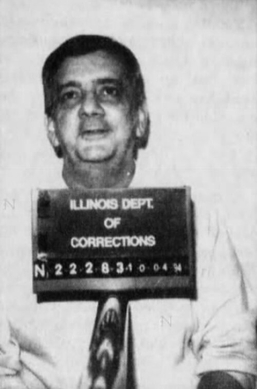
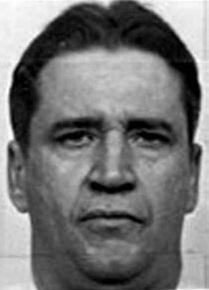
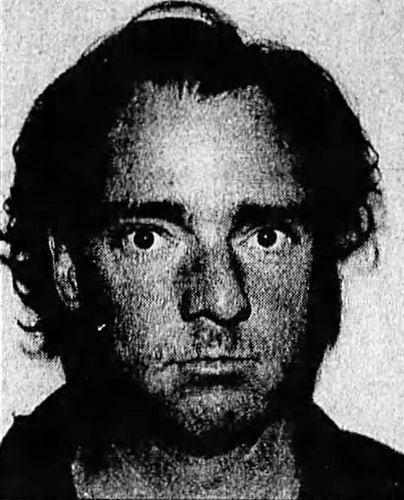
Fernando Eros Caro: The Fresno County Predator
Overview
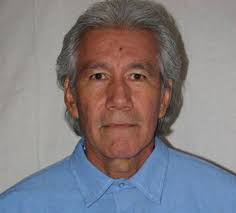
Fernando Eros Caro was a serial killer, kidnapper, and rapist responsible for the murders of at least three children and teenagers in California's Central Valley between 1979 and 1980. A former U.S. Marine officer and helicopter pilot, Caro's clean-cut image masked a brutal predator who targeted young people. He was convicted and sentenced to death for the 1980 murders of two teenage cousins, Mark Hatcher and Mary Booher, but his sentence was later commuted to life in prison. Decades later, DNA evidence definitively linked him to the 1979 murder of eight-year-old Victoria DeSantiago. He was a prime suspect in at least two other slayings. Caro died in San Quentin State Prison in 2017 before he could be tried for DeSantiago's murder.
Early Life and Background
Fernando Eros Caro Jr. was born on December 3, 1949, in Brawley, California, the eldest of eight children of migrant farm workers. His heritage was described as Mexican-Aztec and Yaqui. Caro's childhood was one of extreme poverty and hardship. He spent much of his youth working in agricultural fields alongside his parents, where he was chronically exposed to toxic pesticides. This exposure was so constant that he was nicknamed "Stinky" in school due to the chemical odor that clung to him.
His home life was marked by severe physical abuse. Court testimony and family declarations revealed that both of Caro's parents beat him frequently and severely with fists, sticks, belts, tools, and work boots. He also suffered several significant head injuries as a child, including a lump on his head from a forceps delivery, being struck by a car, and having a water cooler fall on his head.
Despite these challenges, Caro was a successful student and athlete in high school. He earned a scholarship to study engineering at San Diego State University but later dropped out and enlisted in the Marine Corps. He became an officer and flew attack helicopters before being honorably discharged. His turn toward violent crime became apparent in 1976 when he kidnapped and raped a law clerk in San Diego. He was convicted and served two years in prison for this crime, being paroled in 1978.
The Murder of Victoria DeSantiago
On February 3, 1979, in Fresno, eight-year-old Victoria "Toria" DeSantiago went to a local store to buy bread with her three-year-old sister, Eva Marie. When their dog ran off, the girls began to search for it. Fernando Caro approached them and offered to help them look for the dog in his truck. Instead, he kidnapped both children.
Hours later, Caro released the younger sister miles from her home, but he kept Victoria. He drove her to a field, where he sexually assaulted and beat her to death. Her small, battered body was discovered three days later in a dry creek bed. The murder shocked the Fresno community, but the case went cold for three decades. It was not until 2009 that DNA evidence collected from the scene was matched to Caro, who was by then already on death row.
The Murders of Mark Hatcher and Mary Booher
On the evening of August 20, 1980, 15-year-old cousins Mark Hatcher and Mary Helen Booher went for a bike ride near a peach orchard in Fowler, a rural town near Fresno. Mark was a freshman at Fowler High School, and Mary was visiting from Hawthorne. As they rode, they were stopped by Caro, who was driving a pickup truck.
Without warning, Caro pulled out a gun and shot Mark Hatcher, killing him instantly. He then forced Mary Booher and the two bicycles into his truck and sped away. A short time later, Caro's truck collided with a car occupied by two men, Rick Donner and Jack Lucchesi. When the men got out to exchange insurance information, Caro opened fire on them. He shot Lucchesi and Donner multiple times, severely wounding both men, who miraculously survived.
Caro fled the scene of the collision. Later that night, he drove to an orange grove outside Fresno, where he took Mary Booher from his truck and shot her once in the head, execution-style. Her body was not found until five days later, after Caro's arrest.
Suspected Murders
Caro was the primary suspect in the murders of two teenage girls whose bodies were found in an almond orchard near Shafter in Kern County on April 9, 1980. The victims had been shot, and one appeared to have been sexually assaulted. Ballistics tests showed that a bullet found at the scene matched a gun belonging to Caro. Testimony about these murders was presented during the penalty phase of his trial for the Hatcher and Booher killings.
The victims remained unidentified for 13 years. In February 1993, a police detective, acting on a tip, was able to identify them as 15-year-old Charlena Marie Simon and 16-year-old Robin Denise Snead. The two friends had run away from their homes in Pomona in March 1980. Because they were believed to be runaways, their disappearances did not spark a major investigation at the time. Although Kern County prosecutors never formally charged Caro with the murders, law enforcement considered the case solved with his arrest.
The Victims
- Victoria Ann DeSantiago, 8 — February 3, 1979, Fresno. Known as "Toria," she was a young girl who was kidnapped while looking for her lost dog with her little sister. Her murder remained unsolved for 30 years until DNA identified her killer.
- Mark Hatcher, 15 — August 20, 1980, Fowler. A high school freshman, he was enjoying a summer evening bike ride with his cousin when he was senselessly shot and killed.
- Mary Helen Booher, 15 — August 20, 1980, near Fresno. Visiting from out of town, she was kidnapped after witnessing her cousin's murder and was later killed herself. She and Mark were buried next to each other.
Investigation and Capture
The key to Caro's capture came from the survivors of his roadside shooting, Rick Donner and Jack Lucchesi. Despite their severe injuries, they were able to provide police with a description of their assailant and his vehicle. One of the men also recalled a partial license plate number.
This information led investigators to the FMC Corporation chemical plant in Fresno, where Caro worked as a maintenance man. On August 25, 1980, when authorities approached Caro at his job, he attempted to flee but was quickly apprehended. His arrest stunned his coworkers, who knew him as a quiet and unassuming man. A search of his apartment uncovered the murder weapon used to kill Mark Hatcher. Following his arrest, police located the body of Mary Booher.
Trial and Sentence
Due to extensive media coverage in Fresno County, a change of venue was granted, and Fernando Caro's trial for the murders of Mark Hatcher and Mary Booher was moved to San Jose. On October 16, 1981, a jury convicted him of two counts of first-degree murder with special circumstances, one count of kidnapping, and two counts of assault with intent to commit murder for the attacks on Donner and Lucchesi.
During the penalty phase, prosecutors presented evidence linking Caro to the murders of Charlena Simon and Robin Snead. Caro's defense attorneys presented mitigating evidence about his deprived and abusive childhood, his success in the military, and his struggles with "suppressed rage." On December 10, 1981, the jury returned a verdict of death.
Caro spent decades on death row at San Quentin State Prison. His lawyers filed numerous appeals, arguing that his horrific childhood, multiple head injuries, and chronic exposure to neurotoxic pesticides had resulted in organic brain damage that impaired his judgment. In 2002, the Ninth U.S. Circuit Court of Appeals overturned his death sentence, finding that his trial lawyers had been ineffective for failing to investigate and present evidence of his brain damage. The court ordered a new sentencing hearing. However, before a new sentence was formally imposed, he was linked by DNA to the DeSantiago murder in 2009, and prosecutors announced their intent to seek the death penalty in that case. As a result, he remained on death row awaiting this new trial.
Aftermath and Death
Fernando Caro remained on California's death row for 35 years. During his time in prison, he became an accomplished painter, and his artwork was sold to buyers around the world.
On January 28, 2017, Caro was found dead in his cell at San Quentin State Prison. He was 67 years old. The California Department of Corrections and Rehabilitation announced the death but stated the cause was pending the results of an autopsy. His death brought an end to the long legal saga, leaving the families of his victims without the finality of his execution or a trial for the murder of Victoria DeSantiago.