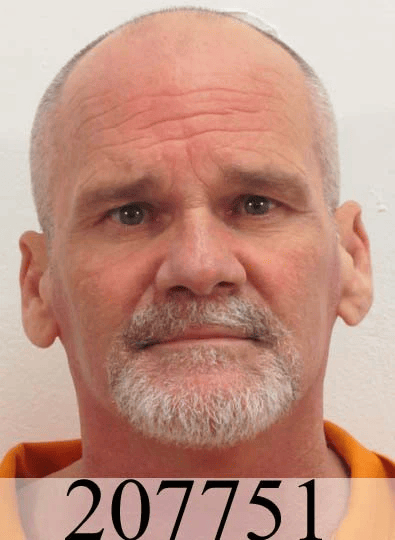
Todd Alan Reed: The Forest Park Killer
Background and Early Criminal History
Todd Alan Reed, born Todd Alan Thomas on May 22, 1967, in Portland, Oregon, became known as the “Forest Park Killer” after three women were sexually assaulted, strangled and abandoned in Portland’s Forest Park during the spring of 1999. Reed was convicted of three aggravated murders, but investigators also examined his possible involvement in two unresolved killings committed in Gresham, Oregon, in 1987.
Reed displayed sexually dangerous behavior long before the Forest Park murders. By the age of fourteen, he had been classified as a sex offender and placed in a residential treatment program. Authorities did not consider him sufficiently dangerous to remain confined, and he eventually returned to the community. During the following years, he accumulated a criminal record that included burglary and a violent attack on a woman involved in prostitution. In that earlier assault, Reed attempted to strangle the victim, foreshadowing the method he later used in the Forest Park murders.
Despite his history, Reed was able to present an outwardly ordinary appearance. He married Gail Bennett in 1988, became a father and held steady employment, including work for a Portland produce distributor. Coworkers reportedly viewed him as dependable and quiet. Beneath that appearance, however, Reed was familiar with Portland’s West Burnside Street area, where homeless women and women engaged in street-level prostitution were especially vulnerable to violence.
The Forest Park Murders
In the spring of 1999, the bodies of three young women were discovered within a relatively small section of Forest Park, a large wooded area northwest of downtown Portland. Each victim had experienced homelessness or instability, and each had spent time around West Burnside Street. All three had been sexually assaulted and strangled before their bodies were concealed or discarded in the forest.
The similarities were too strong for investigators to dismiss as coincidence. The victims were young, physically similar and connected to the same part of Portland. Their bodies were found within approximately one-quarter of a mile of one another. Detectives concluded that a single predator was selecting women whom he believed could disappear without immediately attracting widespread attention.
Confirmed Victims
- Lilla Faye Moler, age 28 — recorded date of death: May 7, 1999 — Forest Park, Portland, Oregon: Moler had disappeared during April 1999. A couple walking a dog discovered her body in Forest Park on May 7. Her remains had been covered with leaves and tree branches in an apparent effort to prevent discovery. Investigators determined that she had been sexually assaulted and strangled. Her condition indicated that she may have been killed several weeks before she was found, meaning May 7 was the recorded death date rather than a certain forensic date of the attack. A discarded condom containing biological evidence was located approximately twenty-eight feet from her body. The DNA recovered from that evidence became an important part of the case against Reed.
- Stephanie Lynn Russell, age 26 — recorded date of death: May 8, 1999 — Forest Park, Portland, Oregon: Russell was an acquaintance of Moler and had also experienced homelessness and substance dependency. Police found her body on May 8 while searching the forest near the place where Moler had been discovered. Russell was located approximately one-quarter of a mile from Moler. She had also been sexually assaulted and strangled. Investigators believed she had been dead for a much shorter period than Moler, possibly less than a week. Evidence associated with Russell’s murder further supported the conclusion that the same offender had killed both women.
- Alexandria Nicole “Alex” Ison, age 17 — recorded date of death: June 2, 1999 — Forest Park, Portland, Oregon: Ison was a teenage runaway who was known by the street name “Tomorrow.” A hiker discovered her body on June 2 down a steep slope beside a Forest Park trail. The location was roughly one-quarter of a mile from the other victims, but it had not been included in the intensive search conducted after the first two bodies were found. Like Moler and Russell, Ison had been sexually assaulted and strangled. Her death confirmed investigators’ fear that the killer remained active even after the earlier discoveries had received extensive publicity.
The Investigation and Undercover Operation
After Ison was found, Portland police publicly acknowledged that they were probably searching for a serial killer. Detectives studied the victims’ appearances, movements and associations. They concentrated on West Burnside Street, believing that the murderer was approaching women there before transporting them to Forest Park.
Investigators developed an undercover operation using a female police officer who physically resembled the victims. On July 7, 1999, the officer posed as a woman engaged in prostitution along West Burnside Street while surveillance officers watched from nearby positions. Reed attracted attention when he appeared to follow and observe the undercover officer. One of the officers recognized him from his earlier criminal history, including the prior attack in which he had attempted to strangle a woman.
Police began examining Reed’s background and movements more closely. Investigators obtained a sample of his DNA and compared it with biological evidence recovered during the Forest Park investigation. The resulting match connected Reed to the crime scenes and provided investigators with the physical evidence needed to arrest him.
Arrest, Guilty Plea and Sentence
Todd Alan Reed was arrested at his workplace on July 18, 1999. Prosecutors charged him with aggravated murder in the deaths of Lilla Faye Moler, Stephanie Lynn Russell and Alexandria Nicole Ison. Oregon law permitted prosecutors to seek the death penalty because the case involved multiple intentional murders committed as part of the same criminal pattern.
On February 23, 2001, Reed pleaded guilty to all three murders. The plea agreement allowed him to avoid a possible death sentence. He received three consecutive life sentences without the possibility of parole, one sentence for each victim. By entering guilty pleas, Reed formally accepted criminal responsibility for the three Forest Park killings, although he did not provide a complete public explanation of his motives or a detailed account of every encounter.
Suspected Victims from 1987
Following Reed’s arrest, detectives in Gresham reconsidered two killings from 1987. Reed had previously been investigated in connection with the cases, and both victims had reportedly been seen with Gail Bennett, who was Reed’s girlfriend at the time and later became his wife. Reed also resembled a composite description of a young man seen around the time one of the girls disappeared. No criminal charge has ever been filed against Reed in either case, and the actual dates on which the girls were killed cannot be established with certainty.
- Jennifer Lynn Tchir, age 15 — disappeared July 3, 1987 — Gresham, Oregon: Jennifer left home on July 3 and was reportedly seen that day near the Mount Hood Community College area. Witnesses said that a young man appeared to recognize her and called her by name near a convenience store. More than a year later, on July 18, 1988, a biology student discovered portions of human remains in brush-covered fields southeast of Gresham. Additional bones were recovered during subsequent searches, and the remains were identified as Jennifer’s. Her cause of death was determined to be asphyxiation. July 3, 1987, is listed in death records as her date of death, although it primarily represents the day she disappeared and the precise time of her killing remains uncertain.
- Mindi Colleen Thomas, age 12 — disappeared August 3, 1987; remains discovered October 24, 1987 — Gresham, Oregon: Mindi disappeared from her apartment complex in Gresham and was reportedly last seen with Bennett. Her remains were found that October near a hiking trail in the vicinity of Mount Hood Community College. She had been strangled. October 24, 1987, is recorded as her death date in available burial and death records, but it was the date associated with the discovery of her remains; investigators could not establish the exact day she was killed.
At the time of the 1987 investigation, witnesses described a possible male suspect as being in his late teens or early twenties, with very dark short hair, thick eyebrows, sparse facial hair, metal-framed military-style glasses and a stud earring. The man was reportedly associated with a metallic-blue Dodge Charger from the 1970s. After Reed was identified as the Forest Park killer, investigators noted that his age and appearance in 1987 were consistent with important portions of that description.
Gresham detectives retrieved preserved evidence from the Tchir and Thomas investigations and considered whether modern DNA testing could connect Reed to the crimes. However, the available physical evidence was insufficient to support charges. Reed has therefore remained a suspect rather than a convicted offender in those two killings.
Pattern and Selection of Victims
Reed’s confirmed murders demonstrated a calculated pattern of targeting vulnerable women. Moler, Russell and Ison were living on the margins of society and dealing with combinations of homelessness, addiction, mental illness or family separation. Reed appears to have selected victims whose disappearances might initially be interpreted as voluntary movement or another episode of instability.
Forest Park gave Reed a location that was wooded, steep and expansive while remaining close to Portland. He could leave bodies in heavy vegetation only a short drive from the city streets where he encountered his victims. The placement of the three women in the same general section of the park suggests familiarity with the terrain and confidence that the landscape would conceal his crimes.
The DNA evidence left near Moler’s body ultimately destroyed that sense of security. Once investigators recognized the murders as a connected series, they combined forensic evidence, surveillance and Reed’s earlier criminal record to identify him. His attention toward the undercover officer further strengthened their suspicion that he was deliberately hunting women who resembled his previous victims.
Legacy of the Case
The Forest Park murders exposed how easily violence against homeless women could remain hidden until several deaths revealed a clear pattern. Moler, Russell and Ison had families who cared about them, even though addiction, mental illness and life on the streets had created distance between them and their relatives. Their circumstances made them vulnerable, but those circumstances did not make their lives less important.
Reed’s conviction ended the immediate series of killings in Portland, but unanswered questions remain. Investigators have considered whether he committed additional murders beyond the three to which he pleaded guilty. The deaths of Jennifer Tchir and Mindi Thomas remain unresolved, and Reed has never been prosecuted for either case.
Todd Alan Reed was ultimately sentenced to spend the remainder of his life in prison. His crimes are remembered not only because three women were murdered in one of Portland’s best-known natural areas, but also because the case demonstrated the importance of taking violence against socially isolated victims seriously. The discovery of the Forest Park victims, the undercover operation and the use of DNA evidence transformed what initially appeared to be separate deaths into a successful serial-murder investigation.