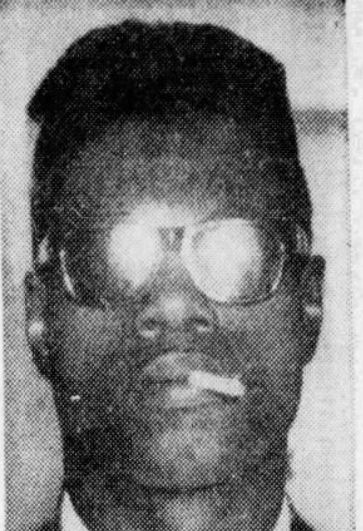
Lyndon Fitzgerald Pace: The Vine City Serial Killer
A Series of Predatory Attacks in Atlanta
Lyndon Fitzgerald Pace is an American serial killer, rapist, and burglar convicted of murdering four women inside their Atlanta, Georgia, homes between August 1988 and March 1989. His crimes were concentrated largely in and around Vine City, a historic neighborhood west of downtown Atlanta. Three of the four women were elderly, and all four were attacked where they should have felt safest: inside their own bedrooms during the early morning hours.
Pace followed a recognizable pattern. He entered residences through windows, sexually assaulted the women, strangled them, and searched their homes for valuables. Investigators found signs of forced entry and disorder at the crime scenes, including removed screens, damaged windows, and ransacked rooms. The intimate nature of the assaults, the consistent method of entry, and the repeated use of improvised ligatures eventually convinced detectives that one offender was responsible.
The Confirmed Victims
- Lula Bell McAfee — August 28, 1988 — Atlanta, Georgia: McAfee, 86, was found dead inside her Atlanta home by a roommate. She was lying face down on her bed and had been sexually assaulted. Her bra and a strip of cloth were tangled around her neck, and an autopsy established that she had been strangled. Investigators found an open bathroom window with its screen removed, while McAfee’s bedroom had been thoroughly ransacked. Money, car keys, and a briefcase were reported missing. McAfee had known Pace since he was a child, making the attack especially disturbing.
- Mattie Mae McLendon — September 10, 1988 — Vine City, Atlanta, Georgia: McLendon, 78, was discovered dead on her bed with bloodstained sheets pulled over her body. Evidence indicated that someone had entered through her bathroom window after damaging the screen from outside. A tree limb near the window had also been broken. Although no ligature was recovered, medical findings showed that McLendon had been sexually assaulted and suffocated or strangled.
- Johnnie Mae Martin — February 4, 1989 — Atlanta, Georgia: Martin, 79, was found on her bed, partially undressed. She had been sexually assaulted and strangled with a shoelace. Her killer had entered through a window and searched the residence after the attack. Martin was a retired practical nurse and a respected neighborhood resident. Her death, occurring several months after the first two murders, demonstrated that the killer remained active and willing to continue targeting women living in the same general area.
- Annie Kate Britt — March 4, 1989 — Atlanta, Georgia: Britt, 42, was found dead by her brother-in-law inside her home. She had been sexually assaulted and strangled with a sock that remained knotted around her neck. As in the other cases, the killer entered through a window and disturbed the contents of the residence. Britt’s murder was the fourth confirmed killing in approximately seven months.
A Repeated Method of Entry and Attack
The four killings had striking similarities. Each woman was attacked in her own Atlanta residence, and each intrusion occurred during the early morning hours. The offender gained access by climbing through a window rather than confronting the victim at the front door. Once inside, he sexually assaulted the woman, strangled her, and searched the home.
The murder weapons were ordinary objects found in or near the victims’ bedrooms. A strip of cloth was used against McAfee, a shoelace was used against Martin, and a sock was used against Britt. No ligature was recovered in McLendon’s case, but the evidence showed that she had also been killed by asphyxiation. The use of items readily available at the scenes suggested that Pace did not need to arrive carrying a specialized murder weapon. Instead, he relied on physical control, surprise, and objects he could quickly turn into ligatures.
The sexual evidence was equally important. Medical examinations revealed injuries consistent with rape, and sperm was recovered from each victim. Two of the women had also been sodomized. Samples collected during the autopsies were preserved and submitted for laboratory examination, creating the scientific foundation that would eventually identify the killer.
The Investigation and DNA Breakthrough
Although detectives recognized similarities among the murders, the investigation initially lacked the evidence needed to identify a specific offender. The attacks occurred before DNA databases and forensic technology had reached their later level of sophistication. Investigators could establish that the same person was probably responsible, but connecting that biological evidence to a named suspect required obtaining a comparison sample.
The crucial break came in September 1992, more than three years after Britt’s murder. At approximately 3:00 a.m. on September 24, 69-year-old Sarah Grogan discovered an intruder in her kitchen. Grogan managed to obtain a firearm and fired a shot, forcing the man to flee. Police determined that the intruder had entered through a window, and technicians recovered fingerprints from the kitchen.
Six days later, during the early morning hours of September 30, an elderly woman named Susie Sublett awakened and found a man stealing money from her purse inside her bedroom. The intruder threatened to shoot her, but Sublett fought back and escaped to a neighbor’s house. Investigators again determined that the offender had climbed through a window. Fingerprints recovered from the window screen and from the earlier Grogan intrusion matched Pace’s known fingerprints.
Pace was arrested on October 2, 1992, in connection with the Sublett attack. He agreed to provide blood and hair samples while police were investigating whether he might be responsible for the separate murder of an elderly woman named Mary Hudson. Although laboratory testing did not link Pace to Hudson’s death, his samples were compared with evidence preserved from the four killings committed in 1988 and 1989.
The results connected him to all four women. Pace’s DNA profile matched the profile developed from semen recovered in the McAfee, McLendon, Martin, and Britt cases. A forensic expert testified that the probability of an unrelated person having the same profile was approximately one in 500 million in three of the cases and one in 150 million in the fourth. Pubic hairs associated with the Martin and Britt crime scenes were also found to be consistent with Pace’s hair.
Burglary as Part of Pace’s Criminal Pattern
Pace’s history of breaking into homes helped investigators understand how the murders fit within his broader behavior. He had prior experience committing burglaries and targeting residences in Atlanta neighborhoods. His crimes demonstrated a willingness to enter occupied homes while the residents were present, particularly during hours when they were sleeping and vulnerable.
One of Pace’s most widely reported burglary victims was Coretta Scott King, the widow of civil rights leader Dr. Martin Luther King Jr. Pace burglarized her Vine City home in December 1990 and stole property, including a radio. He pleaded guilty to charges connected to the burglary in February 1991 and served time in prison. Evidence of that break-in was later introduced during the penalty phase of his murder trial as part of the prosecution’s description of his criminal history.
Pace was released from prison in July 1991, reportedly because of overcrowding. The later home invasions involving Grogan and Sublett showed that his pattern of entering the residences of older women continued after his release. Those surviving women resisted him, escaped, and provided investigators with the physical evidence that led to his identification.
Indictment and Capital Murder Trial
A Fulton County grand jury indicted Pace on June 22, 1993. The charges included four counts of malice murder, four counts of felony murder, four counts of rape, and two counts of aggravated sodomy. Prosecutors announced that they would seek the death penalty.
Pace’s trial began in January 1996. The prosecution presented the similarities among the four crime scenes, the evidence of forced entry through windows, the sexual assaults, and the consistent use of strangulation. Most importantly, prosecutors introduced the DNA evidence linking Pace to biological material recovered from every victim.
The defense challenged the reliability and significance of the scientific evidence, but the prosecution argued that the probability figures made an accidental match extraordinarily unlikely. Hair evidence from the Martin and Britt scenes further supported the state’s case. Prosecutors also demonstrated that Pace’s fingerprints were recovered after the later home invasions, incidents that closely resembled the method used to enter the murder victims’ residences.
On March 5, 1996, the jury convicted Pace of all charged offenses. The felony-murder counts were later vacated under Georgia law because the same deaths supported the malice-murder convictions, but the four malice-murder verdicts remained in place. He was also convicted of four rapes and two acts of aggravated sodomy.
Four Death Sentences
During the sentencing phase, prosecutors described the killings as calculated attacks on defenseless women. The jury found 19 statutory aggravating circumstances and recommended a death sentence for each murder. On March 7, 1996, Pace received four death sentences. He was additionally sentenced to six consecutive life terms for the rape and aggravated-sodomy convictions.
The Supreme Court of Georgia affirmed Pace’s convictions and sentences in December 1999. Subsequent appeals and habeas corpus proceedings continued for many years. In May 2023, the United States Court of Appeals for the Eleventh Circuit affirmed the denial of his federal habeas corpus petition, rejecting his challenges to his legal representation, the prosecution’s sentencing argument, and other aspects of the trial.
The Question of an Additional Victim
Pace was investigated in connection with the September 1992 murder of Mary Hudson, an elderly Atlanta woman whose death initially appeared similar to the earlier killings. Hudson was beaten and strangled inside her residence, and the crime occurred in the same broader section of Atlanta where Pace had committed burglaries and where the four confirmed victims had lived.
However, laboratory testing did not connect Pace’s DNA or hair to evidence from Hudson’s murder. She was also found clothed, and investigators did not establish the same pattern of sexual assault seen in the four confirmed cases. Pace was never charged with killing Hudson, and she should therefore be regarded only as a possible or suspected victim rather than part of his proven murder count.
A Community Terrorized Inside Its Own Homes
The crimes attributed to Lyndon Fitzgerald Pace were terrifying because they transformed familiar homes into scenes of calculated violence. His victims were not attacked in isolated public places. They were asleep or resting inside residences where they had every reason to believe they were secure. Pace exploited windows, darkness, age, and physical vulnerability to gain control before the women could summon help.
The eventual identification of Pace demonstrated the growing importance of forensic DNA evidence in serial murder investigations. Biological samples preserved from the victims remained useful years after the crimes, and once investigators obtained Pace’s blood and hair, the apparently separate murders became part of one provable case. Fingerprints from two surviving women’s homes provided the immediate path to Pace, while DNA established his connection to the four women who had been unable to escape.
Lula Bell McAfee, Mattie Mae McLendon, Johnnie Mae Martin, and Annie Kate Britt were four individuals whose lives were reduced in court records to a series of dates, injuries, and laboratory findings. Yet each had a home, relatives, neighbors, and a place within the Atlanta community. Their murders left families grieving and residents fearful that another woman might be attacked. Pace’s convictions brought legal accountability, but they could not undo the devastation caused during seven months of violence in Atlanta.