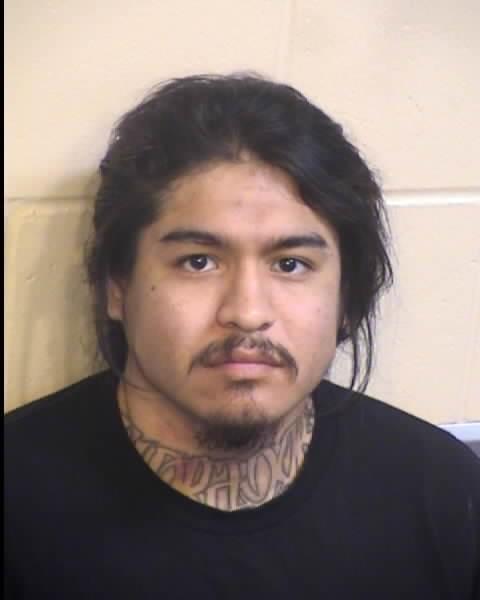
Jeffrey Mailhot: The Rhode Island Ripper
Overview
Jeffrey S. Mailhot, a machinist from Woonsocket, Rhode Island, led a double life that concealed a monstrous secret. To neighbors and coworkers, he was a quiet, polite, and obsessively neat man with no criminal history. But between February 2003 and July 2004, he became the "Rhode Island Ripper," a serial killer who targeted and murdered three vulnerable women. His victims were all involved in sex work and struggled with drug addiction, a fact Mailhot exploited, believing no one would miss them.
He lured the women to his first-floor apartment on Cato Street, where he strangled them. In a gruesome ritual inspired by an episode of the TV show "The Sopranos," he dismembered their bodies in his bathtub with a hand saw, placed the remains in garbage bags, and discarded them in various dumpsters across the city. For seventeen months, the disappearances baffled police, who suspected a serial predator was at work but had no leads. The reign of terror ended only after two women survived his attacks and bravely came forward. Their detailed descriptions of Mailhot and his apartment led police to his door. Arrested on July 17, 2004, Mailhot confessed to the three murders, admitting to an "uncontrollable urge" to kill and expressing relief at being caught because he knew he couldn't stop. In 2006, he pleaded guilty and was sentenced to two consecutive life sentences, ensuring he would likely never be free again.
Early Life and Background
Jeffrey S. Mailhot was born on November 9, 1970, in Woonsocket, Rhode Island, the city where he would later commit his horrific crimes. He grew up in the area and graduated from Woonsocket High School. His early life was marked by tragedy; both of his parents died of cancer by the time he was twenty-two.
As an adult, Mailhot secured a steady job as a machinist at a paper mill and lived a solitary, seemingly unremarkable life. He settled into a first-floor apartment at 221 Cato Street, a multifamily house in downtown Woonsocket. Those who knew him described him as quiet, polite, clean-cut, and an enthusiast of motorcycles and 80s rock music. His meticulous nature was extreme; his apartment was described by investigators as "super orderly," with items size-coded, color-coded, and alphabetized. His cupboards were perfectly arranged, and even the dollar bills in his wallet were kept facing the same direction. This obsessive cleanliness stood in stark contrast to the grim secret hidden within his bathroom. Prior to his arrest for murder, Mailhot had no criminal record, making his brutal crimes all the more shocking to the community that thought they knew him.
The Murders
Mailhot's killing spree began in the winter of 2003. He trawled the streets of Woonsocket, primarily areas like Arnold Street known for sex work, looking for women he perceived as vulnerable.
His first victim was Audrey L. Harris, 33, whom he encountered outside a laundromat on February 9, 2003. He drove her to his Cato Street apartment. Almost immediately after the door closed behind them, he strangled her to death. Unsure what to do with her body, Mailhot kept it in his apartment for a day and a half. He later told police he found a solution after watching an episode of "The Sopranos" in which a character was murdered and dismembered in a bathtub. Inspired, Mailhot went to a Lowe's hardware store, where he was captured on surveillance video purchasing a bow saw. He returned home, placed Harris's body in his tub, and dismembered it. He then put the body parts into trash bags and disposed of them in various dumpsters around Woonsocket and neighboring communities.
Fourteen months passed before he killed again. In April 2004, he picked up 42-year-old Christine M. Dumont. He followed the same horrific pattern: he brought her to his apartment, strangled her, dismembered her body in the bathtub, and discarded her remains in the trash. Mailhot later told investigators that he no longer tried to tell himself the deaths were accidental; he simply had "an urge." When asked what provided the biggest rush, he said it was "the actual getting them into my place," and the finality of the door shutting behind them.
His third and final murder occurred in early July 2004. He met 24-year-old Stacie L. Goulet after a Fourth of July fireworks display at a local park. He took her back to his apartment, where he strangled and dismembered her. Like the others, her remains were bagged and thrown into dumpsters.
The Victims
The three women Jeffrey Mailhot murdered were not anonymous figures. They were mothers, daughters, and sisters whose lives, though complicated by addiction and hardship, were cherished by their families. Mailhot targeted them because he wrongly believed their "high risk" lifestyles meant they would not be missed.
- Audrey L. Harris, 33 — Disappeared on February 9, 2003. A mother of three, Audrey was last seen on Arnold Street. On the day she vanished, she had spoken to her mother, Claudette, and expressed a desire to enter a drug rehabilitation program. When Audrey didn't show up for a planned visit, her mother knew something was wrong. Claudette tirelessly posted missing person flyers across Woonsocket, refusing to let her daughter be forgotten.
- Christine M. Dumont, 42 — Last seen on April 23, 2004. Christine was reported missing by her sister on May 3, 2004. At the time of her disappearance, she was a key witness in an assault case against another man, which initially complicated the investigation into her whereabouts. Her family reported her missing after disability checks went uncashed, a sign that was out of character for her.
- Stacie L. Goulet, 24 — Murdered in early July 2004. Stacie, who was pregnant at the time of her death, was reported missing by her boyfriend on July 4. Her dismembered remains were the only ones ever recovered by investigators. They were found on July 27, 2004, after a painstaking ten-day search of a landfill in Johnston, Rhode Island.
Investigation and Capture
For seventeen months, the disappearances of Harris, Dumont, and Goulet were treated as separate missing person cases, though detectives feared a serial killer was active. The victims' lifestyles made the investigations difficult, and with no bodies and no crime scenes, police had few leads. At one point, another man, Timothy Scanlon, was investigated for a series of separate assaults on women in the same area, briefly diverting attention.
The break in the case came from two women who survived Mailhot's violence. In February 2004, a woman named Teese Morris reported that a man had taken her to his apartment and choked her from behind before she fought him off and escaped. Then, in June 2004, Jocelin Martel, 27, had a nearly identical experience. After being picked up by Mailhot, she was attacked from behind in his apartment. She fought back fiercely, headbutting him and jabbing her thumb in his eye, which allowed her to flee.
Initially, Martel did not report the incident. However, an anonymous male tipster called police and suggested they talk to her. When interviewed, Martel provided a clear description of her attacker and his meticulously neat apartment. Police connected her story with Morris's earlier report. Based on the apartment's description, they identified its resident as Jeffrey Mailhot. Both survivors positively identified Mailhot from a photo array.
Armed with arrest and search warrants for the assaults, police apprehended Jeffrey Mailhot on the steps of his home on July 17, 2004. The search of his apartment revealed a jarring contrast: while most of the home was immaculate, the bathtub was grimy and stained. Forensic testing with Luminol revealed significant blood evidence that had seeped into the grout of the bathroom floor, evidence of Mailhot's attempts to clean up after the dismemberments.
During interrogation, Mailhot was initially calm and denied knowing anything about murder. The turning point came when detectives presented him with photos of the three missing women. When they mentioned the women might have been killed, Mailhot slipped, saying, "I never killed anybody," even though the police had not used that word. His composure crumbled. He began to sob and, over the next few hours, confessed to all three murders in chilling detail. He told them about the strangulations, the influence of "The Sopranos," the saws, and the dumpsters. He claimed he was glad he was caught, stating, "he knew he wasn't going to be able to stop."
Trial and Sentence
Following his detailed confession, Jeffrey Mailhot was charged with three counts of first-degree murder for the deaths of Audrey Harris, Christine Dumont, and Stacie Goulet. He was also charged with one count of assault with intent to commit murder and one count of felony assault for the attacks on Jocelin Martel and Teese Morris.
On February 16, 2006, Mailhot appeared in Providence Superior Court and, as part of a plea agreement, pleaded guilty to all five counts. During the hearing, he sobbed as family members of his victims read emotional impact statements. His defense attorney, Robert B. Mann, stated that Mailhot knew an apology was insufficient but that pleading guilty was the only thing he could do to offer some form of accountability.
The judge sentenced him to two consecutive life sentences for the murders, plus an additional ten years for the assaults. He is incarcerated at the Rhode Island Maximum Security Prison in Cranston. Under the terms of his sentence, Jeffrey Mailhot will not be eligible for parole until 2047, when he is 77 years old.
Aftermath and Legacy
The arrest and conviction of Jeffrey Mailhot brought an end to a period of fear in Woonsocket and provided answers, if not peace, to the victims' families. The case cast a harsh light on the dangers faced by marginalized women, whose vulnerabilities are often exploited by predators. The initial difficulty in connecting the disappearances highlighted the challenges law enforcement faces when victims live on the fringes of society.
The search for the victims' remains was a massive undertaking. For ten days, about 30 officers scoured a football-field-sized section of a landfill in Johnston before a cadet discovered the partial remains of Stacie Goulet. Despite Mailhot's confession, the bodies of Audrey Harris and Christine Dumont have never been found, denying their families the closure of a proper burial. In November 2004, Audrey Harris's mother, Claudette, held a memorial service for her daughter, a testament to a family's love in the absence of a final resting place.
The case is also remembered for the immense bravery of Jocelin Martel and Teese Morris. By fighting back and providing police with the information needed to identify their attacker, they saved their own lives and undoubtedly prevented Mailhot from killing again. Their courage was instrumental in stopping a serial killer who had confessed he had no intention of ever stopping on his own.