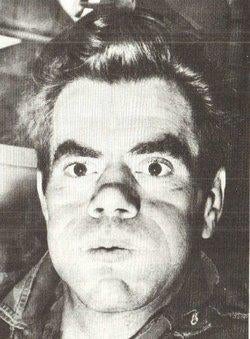
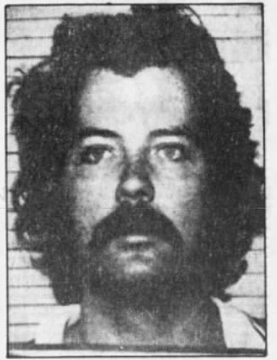
Garcia Glen White: The Houston Killer Linked to Five Murders
Early Life and Descent into Violence
Garcia Glen White was born on February 4, 1963, in Houston, Texas. During his youth, he displayed considerable athletic ability and became a talented football player at Wheatley High School. He later attended Lubbock Christian University, where he hoped to continue playing football. A serious knee injury ended those ambitions, and White eventually left school. He worked a succession of manual and service jobs, including as a cook, house painter and sandblaster.
As White entered adulthood, his life became increasingly dominated by crack cocaine and criminal activity. His substance abuse placed him in Houston locations where drugs were bought, sold and consumed. Prosecutors later argued that his addiction did not merely provide the setting for his violence; it intensified his aggression and repeatedly brought him into contact with vulnerable people. Between 1989 and 1995, White killed or confessed to killing five people in Houston. Three were members of the same family, while the other two were killed in separate attacks.
The Killing of Greta Williams
White’s earliest known victim was 27-year-old Greta Williams. On June 19, 1989, Williams was beaten to death in Houston after encountering White at a location associated with crack cocaine use. White was not immediately identified as her killer, and the case remained unresolved for years.
After his eventual arrest in an unrelated murder, White admitted that he had killed Williams during an argument. According to accounts of the case, the confrontation escalated until White violently beat her to death. He was never separately tried for Williams’s murder, but prosecutors introduced information about the killing during the punishment phase of his capital murder trial. Her death helped establish that the later murders of the Edwards family were not an isolated eruption of violence.
The Edwards Family Murders
On November 30, 1989, White went to an apartment in northeast Houston occupied by Bonita Edwards and her twin daughters, Annette and Bernette Edwards. Bonita was a mother who knew White through Houston’s drug community. Her daughters had reportedly become frightened by the dangerous people and drug activity surrounding the apartment and had considered staying elsewhere.
White later admitted that he went to the apartment to consume crack cocaine and have sex with Bonita. An argument developed inside the residence. White claimed that Bonita obtained a knife during the confrontation, but he took control of the weapon and repeatedly stabbed her. The commotion alerted Annette and Bernette, who emerged from their room to investigate what was happening to their mother.
White then turned his attack toward the 16-year-old girls. Evidence presented in the case indicated that Annette was sexually assaulted before she was stabbed in the chest and suffered a fatal wound to her throat. Bernette attempted to escape or conceal herself in the bathroom, but White followed her and killed her with the same weapon. The apartment contained extensive blood evidence, and investigators found signs of a desperate and violent struggle in several rooms.
After killing Bonita and her daughters, White left the apartment and made no attempt to report what had happened. The bodies were not discovered until December 2, 1989, when Bonita’s concerned boyfriend went to check on the family. After receiving no response, he obtained assistance entering the apartment and encountered the devastating crime scene. Police found no clear evidence of forced entry into the apartment itself, suggesting that the killer had been admitted by someone who knew him.
The murders shocked the surrounding community, but investigators initially had no suspect they could conclusively connect to the crime. Blood, semen and other biological evidence were collected, yet forensic technology at the time was not sufficient to immediately identify White. The triple homicide remained unsolved for approximately six years.
The Murder of Hai Van Pham
On July 2, 1995, 55-year-old Hai Van Pham was fatally attacked during a robbery at his Houston business. Pham had immigrated to the United States from Vietnam and was working to support his wife and children. His killing brought White’s years of concealed violence to an end.
White and an acquaintance, Tecumseh Manuel, were arrested in connection with the robbery and Pham’s death. During questioning, Manuel told investigators that White had previously spoken about killing a Houston woman and her twin daughters. That information immediately drew the attention of detectives familiar with the unsolved Edwards family murders.
Pham’s death was therefore significant not only because it was another brutal killing, but also because the investigation finally exposed White’s connection to crimes committed years earlier. White admitted his involvement in Pham’s death, although he was not separately tried for that murder after prosecutors obtained a death sentence in the Edwards case.
Victims Associated with Garcia Glen White
- Greta Williams, 27 — Killed on June 19, 1989, in Houston, Texas. White admitted that he beat Williams to death during an argument at a location associated with drug use.
- Bonita Edwards — Killed on November 30, 1989, inside her apartment in northeast Houston, Texas. White repeatedly stabbed her after an argument involving drugs and sex.
- Annette Edwards, 16 — Killed on November 30, 1989, in the family’s Houston apartment. Evidence indicated that she was sexually assaulted and then fatally stabbed.
- Bernette Edwards, 16 — Killed on November 30, 1989, in the same Houston apartment. She was attacked after becoming aware that her mother and twin sister were in danger.
- Hai Van Pham, 55 — Killed on July 2, 1995, during a robbery at his business in Houston, Texas. The investigation into Pham’s death led detectives to White’s involvement in the Edwards family murders.
Confession and Forensic Evidence
When detectives questioned White about the Edwards murders, he initially attempted to shift responsibility to another man named Terrence Moore. White claimed that Moore had participated in or committed the stabbings. Investigators quickly discovered a fatal flaw in that story: Moore had died several months before the Edwards family was murdered. Confronted with this fact, White abandoned the false account and admitted that he alone was responsible.
White provided investigators with details about the apartment, the victims and the sequence of the attacks. His admissions were supported by physical evidence collected from the crime scene. Serological testing and later DNA analysis linked White to biological material found inside the residence. Prosecutors argued that the combination of his confession, the forensic evidence and his knowledge of the crime scene established his guilt beyond a reasonable doubt.
The forensic evidence became the subject of later legal challenges because of concerns involving the Houston Police Department crime laboratory. White’s attorneys argued that portions of the testing were unreliable and that some evidence could suggest the presence of another person. Courts repeatedly reviewed those claims but concluded that they did not undermine the evidence supporting White’s conviction.
Capital Murder Trial
White was indicted in May 1996 for the murders of Annette and Bernette Edwards. The state pursued the case as capital murder because the twins were killed during the same criminal episode. Although Bonita Edwards was also murdered, the prosecution focused the capital charge on the deaths of her daughters.
At trial, the prosecution presented White’s confession, testimony from investigators and forensic evidence connecting him to the apartment. Jurors also heard about the sexual assault and the extreme violence inflicted upon the victims. In July 1996, White was found guilty of capital murder.
During the punishment phase, prosecutors presented evidence linking White to the deaths of Greta Williams and Hai Van Pham. This evidence was used to demonstrate that White remained a continuing danger and had committed multiple lethal acts over a period of years. The jury imposed a death sentence, which was formally entered in September 1996.
Years of Appeals
White remained on Texas death row for approximately 28 years. His attorneys filed numerous appeals challenging his confession, the handling of biological evidence and the reliability of testing conducted by the Houston police crime laboratory. They also argued that he had significant intellectual limitations and a history of childhood trauma that should prevent his execution.
An execution was originally scheduled for January 28, 2015. The Texas Court of Criminal Appeals issued a stay one day before White was to be put to death, allowing additional review of his claims concerning forensic evidence and intellectual functioning. The stay delayed the execution but did not overturn his conviction or sentence.
After further state and federal proceedings, the courts again rejected White’s requests for relief. A new execution date was eventually set for October 1, 2024. His attorneys continued filing appeals until the final hours, but the United States Supreme Court declined to intervene.
Execution and Final Statement
Garcia Glen White was executed by lethal injection at the Texas State Penitentiary in Huntsville on October 1, 2024. He was 61 years old. Members of the victims’ families attended the execution after waiting decades for the sentence to be carried out.
In his final statement, White apologized for the pain he had caused and specifically addressed the Edwards family. He thanked relatives, friends and prison employees before singing portions of a religious hymn. The lethal injection was administered, and he was pronounced dead at 6:56 p.m.
Legacy of the Case
Garcia Glen White was convicted of killing Annette and Bernette Edwards, admitted killing their mother, Bonita, and was linked by his own confessions and trial evidence to the murders of Greta Williams and Hai Van Pham. Although he was not prosecuted in separate trials for every death, the five killings occurred in distinct incidents across six years, leading White to be widely described as a serial killer.
The case also demonstrated how an unrelated arrest can revive a cold investigation. The Edwards family murders might have remained unsolved without the information uncovered after Pham’s death. White’s false effort to blame a man who had already died further damaged his credibility, while advances in forensic testing strengthened the case against him.
For the families of the victims, the legal process lasted far longer than the criminal investigation itself. White spent almost three decades under a death sentence while courts examined repeated challenges to his conviction. His execution brought the proceedings to an end, but the lasting focus of the case remains on Greta Williams, Bonita Edwards, Annette Edwards, Bernette Edwards and Hai Van Pham—the five people whose lives were taken during White’s years of violence.