Vickie Dawn Carson Jackson: The Serial Killer Nurse of Nocona, Texas
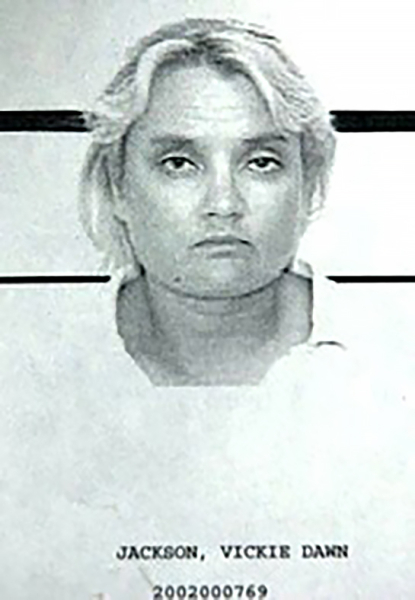
Vickie Dawn Carson Jackson is an American serial killer and former licensed vocational nurse who was convicted of murdering ten patients at Nocona General Hospital in Nocona, Texas. Her crimes occurred during a disturbing series of unexpected patient deaths between December 2000 and February 2001.
Jackson worked in a position that required patients and their families to place complete trust in her. Instead of protecting the vulnerable people under her care, prosecutors alleged that she secretly injected selected patients with a powerful muscle-paralyzing medication. Many of the victims were elderly, but several had been admitted with conditions that were considered treatable or stable. Their sudden deaths created fear inside the small community and eventually led to a lengthy investigation involving local police, the Texas Rangers and the FBI.
Early Life and Nursing Career
Vickie Dawn Carson was born on February 13, 1966, in Montague County, Texas. She later married and became known as Vickie Dawn Jackson. Publicly available information about her childhood and early family life is limited.
Jackson became a licensed vocational nurse in 1989. Over the following years, she worked at hospitals and a nursing home in North Texas. As a vocational nurse, she was responsible for monitoring patients, administering medications, assisting with treatments and responding when a patient’s condition changed.
She eventually began working at Nocona General Hospital, a small medical facility serving Nocona and the surrounding rural communities. The hospital had only a few dozen beds and treated many elderly patients. In such a close-knit setting, nurses frequently knew their patients and their patients’ families personally.
The Deaths at Nocona General Hospital
Between December 2000 and February 2001, hospital employees noticed a troubling increase in patient deaths. Some of the patients were elderly and had existing medical conditions, but the number and sudden nature of the deaths appeared unusual.
Several patients reportedly suffered abrupt respiratory emergencies. A patient who had been resting or speaking normally could suddenly become unable to breathe. Hospital personnel would then begin emergency resuscitation efforts, often without understanding what had caused the crisis.
Investigators eventually focused on a medication called mivacurium chloride, commonly sold under the brand name Mivacron. Mivacurium is a neuromuscular-blocking drug used during certain medical procedures. It temporarily paralyzes the muscles, including those needed for breathing. A person given the drug must receive respiratory support until its effects wear off.
The medication does not necessarily cause unconsciousness or relieve pain. A conscious patient who received it without proper anesthesia and mechanical ventilation could remain aware while becoming physically unable to move or breathe. Prosecutors maintained that Jackson deliberately administered the drug to patients who had no medical reason to receive it.
Confirmed Victims
Jackson faced capital murder charges involving ten patients. All ten died at Nocona General Hospital in Nocona, Montague County, Texas. The verified dates below are the dates on which the victims died.
- Donna Alice Jennings — Died December 11, 2000, at Nocona General Hospital in Nocona, Texas. Jennings was 100 years old. She was the first victim named in the series of murders for which Jackson was ultimately convicted.
- Sanford Ray Mitchell — Died December 20, 2000, at Nocona General Hospital in Nocona, Texas. Mitchell was 62 years old, making him the youngest of the ten confirmed murder victims.
- James Wesley Gore — Died December 29, 2000, at Nocona General Hospital in Nocona, Texas. Gore was 80 years old. His death occurred nine days after the death of Sanford Mitchell and continued the hospital’s unexplained rise in fatalities.
- Jimmy Ray Holder — Died January 7, 2001, at Nocona General Hospital in Nocona, Texas. Holder was 65 years old. He was one of two patients included in Jackson’s murder charges who died on the same day.
- Dorothy Jean Vandenburg — Died January 7, 2001, at Nocona General Hospital in Nocona, Texas. Vandenburg was 78 years old. Her death occurred on the same date as Jimmy Ray Holder’s death.
- J. T. Nichols — Died January 11, 2001, at Nocona General Hospital in Nocona, Texas. Nichols was 80 years old. He was one of two confirmed victims who died at the hospital that day.
- John Walter Williams — Died January 11, 2001, at Nocona General Hospital in Nocona, Texas. Williams was 78 years old. His death occurred on the same date as the death of J. T. Nichols.
- Omo Ovella Glenn Wyler — Died January 24, 2001, at Nocona General Hospital in Nocona, Texas. Wyler was 95 years old. Reports about the case indicated that she had been treated for congestive heart failure and was expected to leave the hospital before her sudden death.
- Orvel Lee Moore Jr. — Died January 30, 2001, at Nocona General Hospital in Nocona, Texas. Moore was 82 years old. He was the ninth confirmed victim in the sequence of deaths used in the prosecution.
- Everett E. “Preacher” Jackson — Died February 4, 2001, at Nocona General Hospital in Nocona, Texas. He was 91 years old and was not related to Vickie Dawn Jackson. A farmer from Terral, Oklahoma, he had been admitted with cellulitis and a fever. His death was the last of the ten murders included in Jackson’s case.
Other Suspicious Cases
The investigation was not limited to the ten people named in the final criminal charges. Authorities examined more than twenty suspicious hospital deaths and medical emergencies. Bodies were exhumed from cemeteries in Texas and Oklahoma so investigators could collect tissue samples and look for evidence of mivacurium.
One surviving patient, Donnelly Reid, said that Jackson injected a substance into his intravenous line while he was hospitalized. Reid reportedly experienced paralysis and severe breathing difficulty but survived after another nurse recognized his distress and intervened. He later died from pneumonia, and his death was not included among the ten murders to which Jackson entered no-contest pleas.
The family of 87-year-old Boyd Bruce Burnett also alleged that Jackson gave him an unauthorized injection before his death on December 24, 2000. Burnett’s case became the subject of a civil lawsuit, but his death was not one of the ten murders included in Jackson’s final criminal disposition.
Investigators also examined allegations involving patients who survived sudden medical crises. The full number of people Jackson may have harmed has never been established publicly. Her confirmed victim count is therefore ten, although she has been suspected of involvement in additional deaths or attempted poisonings.
The Missing Medication
The investigation gained momentum when hospital officials noticed that vials of Mivacron were disappearing. The drug was normally stored for emergency or surgical use and was not routinely required for the patients who were dying.
Hospital administrator Charles Norris consulted the hospital pharmacy after becoming concerned about the missing medication and the rising number of deaths. Staff members reviewed medication records, work schedules and the circumstances surrounding the emergencies.
Attention increasingly centered on Jackson because she had been on duty during numerous suspicious incidents. The hospital restricted access to the medication and contacted law enforcement. Once access to Mivacron was more closely controlled, the unusual cluster of deaths ended.
The Investigation
The investigation became a joint effort involving Nocona police, the Texas Rangers, the FBI and medical experts. Detectives interviewed hospital employees, former patients and relatives of the deceased. They also examined staffing records to determine who had access to each patient before a sudden decline.
Testing for mivacurium presented serious challenges. The drug breaks down quickly inside the body, making it difficult to detect after death, especially when a body has already been buried. Investigators relied on a combination of toxicological findings, medical histories, hospital records, medication inventories and witness statements.
Authorities arranged for multiple bodies to be exhumed. Tissue samples were collected and sent for specialized testing. The investigation continued for more than a year as prosecutors attempted to separate deaths caused by natural medical conditions from deaths allegedly caused by unauthorized injections.
Jackson was dismissed from her hospital position. After leaving Nocona General Hospital, she worked at a local grocery store while the criminal investigation continued.
Arrest and Murder Charges
Vickie Dawn Jackson was arrested on July 16, 2002. She was initially charged with four counts of capital murder. Her bond was set at $2 million.
As investigators completed additional testing and presented more evidence to a grand jury, the case expanded. In January 2004, Jackson was indicted for six additional murders, bringing the total to ten capital murder charges. Her bond was then increased to $6 million.
Prosecutors did not seek the death penalty. Jackson nevertheless faced the possibility of spending the remainder of her life in prison if convicted.
The First Trial and Mistrial
Jackson’s first trial began in 2005. Jury selection became controversial after a prosecutor referred to evidence that had not yet been formally admitted, including allegations that vials connected to Mivacron had been found at Jackson’s residence.
The judge concluded that the remarks could unfairly influence potential jurors and declared a mistrial. Because of the intense publicity surrounding the case in Montague County, the proceedings were later moved to San Angelo, Texas, where attorneys attempted to select a jury that had not already formed an opinion about Jackson’s guilt.
Statements Attributed to Jackson
During pretrial proceedings, an FBI agent testified about interviews conducted with Jackson. According to the agent, Jackson made statements indicating that certain patients had angered her by being demanding or difficult.
The prosecution interpreted those statements as evidence that she targeted patients out of resentment rather than mercy. No clear, consistent motive was ever formally established for every death. Jackson later disputed the government’s interpretation and continued to maintain that she was innocent.
The absence of an obvious financial, sexual or personal relationship with the victims made the crimes particularly difficult for the community to understand. The patients appeared to have been selected because they were accessible, medically vulnerable and dependent on the person assigned to care for them.
No-Contest Pleas and Sentencing
On October 5, 2006, Jackson entered pleas of no contest to ten counts of capital murder. A no-contest plea does not contain an express admission of guilt, but it allows the court to treat the defendant as guilty and impose a criminal sentence.
The agreement ended the case without a full jury trial. It also prevented Jackson’s daughter from being required to testify against her. The court sentenced Jackson to life imprisonment for each of the ten murders.
After sentencing, Jackson issued a statement through her attorney maintaining her innocence and expressing sympathy for the victims’ families. Many relatives rejected the statement because it offered no explanation for the deaths and accepted no personal responsibility.
The Nature of Jackson’s Crimes
Jackson is commonly classified as a healthcare serial killer, sometimes described as an “angel of death.” The term refers to a medical worker who deliberately harms or kills patients while acting in a position of trust.
Her crimes were especially frightening because they took place in an environment associated with safety and healing. The victims were already ill, elderly or physically dependent on hospital employees. Sudden changes in their conditions could initially appear to be natural complications rather than deliberate attacks.
Mivacurium also provided a degree of concealment. The symptoms caused by the drug could resemble a catastrophic medical emergency, and the substance was difficult to identify after death. The same professional knowledge that allowed Jackson to care for patients also gave her an understanding of how a paralyzing medication could be administered and how its effects might be mistaken for natural deterioration.
Impact on the Victims’ Families
The investigation forced families to reconsider what they had been told about their relatives’ final moments. Deaths that had initially been accepted as tragic but natural were later treated as possible homicides.
Some relatives authorized exhumations so investigators could collect evidence. That process required families to reopen graves and endure new medical examinations long after funerals had taken place. Many family members also learned that their loved ones may have been conscious and frightened when they suddenly became unable to breathe.
The no-contest pleas provided legal accountability but left many questions unanswered. Because the case ended before a complete trial, prosecutors never presented all of their evidence publicly, and Jackson never gave a detailed explanation of how or why each patient was selected.
Later Legal Proceedings
Jackson later challenged her convictions and sought additional court review. In 2015, she appeared at an evidentiary hearing connected to an effort to obtain a new trial or other post-conviction relief.
She continued to insist that she had not murdered the patients. Her convictions, however, remained in place, and the ten life sentences continued to govern her imprisonment.
Imprisonment
Jackson was incarcerated within the Texas prison system following her 2006 sentencing. Her sentences made her eligible for parole consideration only after serving a substantial period in custody. Her earliest projected parole eligibility date has been reported as occurring in 2042.
Parole eligibility does not guarantee release. Any future decision would depend on Texas law, Jackson’s institutional record, the circumstances of the murders and the judgment of the parole authorities.
Legacy of the Nocona Hospital Murders
The murders committed by Vickie Dawn Carson Jackson remain one of the most disturbing healthcare homicide cases in Texas history. Ten patients who entered a local hospital for treatment died after being placed under the care of a nurse who was supposed to protect them.
The case demonstrated how difficult it can be to detect murder inside a medical facility. Elderly or seriously ill patients may die unexpectedly, medications may produce symptoms resembling natural complications and healthcare workers often have unsupervised access to vulnerable people.
Jackson’s crimes also showed the importance of accurate medication inventories, controlled access to dangerous drugs, careful review of unusual death patterns and prompt reporting when one employee is repeatedly connected to unexplained emergencies.
The confirmed victims were Donna Alice Jennings, Sanford Ray Mitchell, James Wesley Gore, Jimmy Ray Holder, Dorothy Jean Vandenburg, J. T. Nichols, John Walter Williams, Omo Ovella Glenn Wyler, Orvel Lee Moore Jr. and Everett E. “Preacher” Jackson. Their deaths occurred over a period of less than two months, from December 11, 2000, through February 4, 2001.
Although Jackson received ten life sentences, the precise number of people she harmed may never be known. The surviving allegations, additional suspicious deaths and incomplete public record have left a lasting uncertainty surrounding her time at Nocona General Hospital.