Russell Ellwood: Convicted Murderer and Suspect in the New Orleans Serial-Killing Investigation
Background
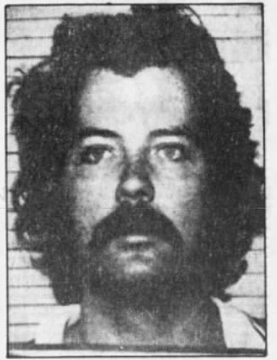
Russell Ellwood was a former New Orleans-area taxi driver who became one of the principal suspects in a large investigation into the murders of women in and around New Orleans, Louisiana, during the 1990s. Ellwood has frequently been described as a serial killer, but that description requires an important qualification. He was convicted of only one murder: the killing of 30-year-old Cheryl Lewis. Authorities nevertheless investigated him in connection with numerous other deaths and at one point reportedly suspected that he could have been responsible for as many as 15 killings.
The larger investigation involved approximately two dozen deaths occurring between 1991 and the mid-1990s. Many of the victims were Black women, and a number had histories involving prostitution or drug use. Bodies were discovered in canals, wetlands, wooded areas, parks and other isolated locations throughout the New Orleans region. Investigators eventually concluded that the entire group of deaths probably did not represent the work of a single offender.
Ellwood's name has also become associated with one of the strangest mysteries connected to the case: the identity of a man calling himself "Clay" who telephoned The Howard Stern Show in August 1997 and claimed on live radio that he was a serial killer from the New Orleans area. In later years, researchers and true-crime writers proposed that Ellwood might have been the anonymous caller. There are intriguing similarities, but there are also serious problems with the theory, including the fact that Ellwood was incarcerated in Florida when the call occurred.
The Murder of Cheryl Lewis
Cheryl Lewis was 30 years old and lived in the Bridge City area of Louisiana. January 31, 1993, was the last day her family saw her alive. After Lewis failed to return home, her mother attempted to locate her and filed a missing-person report on February 2.
Several witnesses later testified that they had seen Lewis either with Russell Ellwood or in his vicinity before she disappeared. One witness said she saw Lewis speaking with Ellwood, while another testified that Lewis indicated she and Ellwood were traveling in the direction of Boutte. That area was close to where Lewis's body would eventually be discovered.
On February 21, 1993, Lewis's body was discovered in a canal off Louisiana Highway 3160 near Hahnville in St. Charles Parish. She was identified through fingerprints. An autopsy initially left questions about exactly how she had died, but subsequent examination and toxicological testing established that she had drowned. Investigators determined that Lewis was alive but unconscious when she entered the water. Cocaine was detected in her body, but it was not considered the cause of her death.
Forensic anthropologist Dr. William Bass later estimated that Lewis had been dead for approximately 18 to 20 days when her body was discovered. That placed her estimated date of death between February 1 and February 3, 1993. Because the precise day could not be established, it is more accurate to use this range rather than assign Lewis a single exact date of death.
Confirmed Victim
- Cheryl Lewis, 30 — Estimated date of death: February 1 to February 3, 1993. Her body was discovered February 21, 1993, in a canal off Louisiana Highway 3160 near Hahnville, St. Charles Parish, Louisiana. Lewis died from drowning while unconscious. Russell Ellwood was convicted of her second-degree murder in June 1999 and was sentenced to life imprisonment on August 17, 1999.
Delores Mack: A Murder Initially Charged Against Ellwood
Delores Mack was another woman whose body was discovered in the same general Louisiana Highway 3160 area. Because of the proximity of the bodies and the wider investigation into the New Orleans killings, authorities initially believed Ellwood could have murdered Mack as well.
Ellwood was indicted for both the murder of Cheryl Lewis and the murder of Delores Mack. Further investigation, however, uncovered evidence showing that Ellwood was in Ohio during the relevant period in Mack's death. Prosecutors consequently dismissed the Mack murder charge before Ellwood went to trial for Lewis's murder.
For that reason, Mack should not be classified as a confirmed victim of Russell Ellwood. Her case is better described as a murder that authorities originally attributed to Ellwood strongly enough to charge him, but from which he was subsequently excluded because of his whereabouts.
- Delores Mack — Her body was discovered in February 1993 near Louisiana Highway 3160 in the Hahnville area of St. Charles Parish, Louisiana. Mack had been asphyxiated. Ellwood was charged with her murder but the charge was dismissed after investigators verified evidence placing him in Ohio during the relevant period. She is not a confirmed Ellwood victim.
The Wider New Orleans Serial-Killing Investigation
The killings investigated around New Orleans began before Cheryl Lewis's death. The series attracted attention after a number of victims were found in or near Algiers, Harvey and other locations around the metropolitan area. Similarities among some cases led detectives to consider whether a serial offender was attacking vulnerable women.
The investigation eventually became associated with the unofficial name "Storyville Slayer" or "New Orleans Serial Killer." These names should not be treated as proven aliases for Russell Ellwood. The larger series remains unresolved, and law-enforcement officials believed that more than one murderer could have been operating in the region.
Victims Associated With the Broader Series, Not Confirmed Ellwood Victims
- Danielle Britton, 17 — Her body was discovered August 4, 1991, in a ditch along Nevada Street in the Algiers section of New Orleans, Louisiana. She had been beaten and strangled. Her murder became one of the early cases associated with the suspected New Orleans serial killer. Her murder was never proven to have been committed by Russell Ellwood.
- Tiera Tassin, 21 — Her body was discovered September 3, 1991, in Harvey, Louisiana. Tassin was a mother of three and was identified using fingerprint records. Her case was eventually considered in connection with the larger series, but no murder conviction or charge established Ellwood as her killer. Her first name has also appeared in some accounts as "Tyra."
- Charlene Price, 28 — Her body was discovered September 21, 1991, in Behrman Park in Algiers, New Orleans, approximately one mile from where Danielle Britton had been found. Price had been beaten and strangled. Her death was investigated as part of the broader series but was never proven to be an Ellwood murder.
- Regina Okoh, 37 — Her body was discovered November 21, 1991, near St. Joseph Street in Harvey, Louisiana. Her death was attributed to strangulation combined with acute cocaine intoxication. She had previous arrests for prostitution. Her killing became associated with the broader investigation, but Ellwood was never convicted or charged with her murder.
Why Russell Ellwood Became a Suspect
An unusual encounter near the Cheryl Lewis body-disposal location eventually helped turn investigators' attention toward Ellwood. Approximately a year after Lewis disappeared, two off-duty St. Charles Parish deputies encountered Ellwood sitting in a taxi on the same isolated stretch of highway, approximately one mile from where Lewis had been found.
Ellwood was partially undressed when officers persuaded him to leave the vehicle. He claimed that he was preparing to change the oil and work on the brakes of his taxi. The deputies searched the vehicle but did not find the oil, filters, brake components or artificial lighting that would normally have been necessary to perform those repairs on an unlit rural road.
The incident initially resulted only in a field interview record. When a serial-crime task force later began reviewing locations connected to the New Orleans murders, an officer remembered the encounter and informed investigators about Ellwood. From that point forward, he became an important suspect.
The Serial Crime Task Force
In May 1995, a multi-agency Serial Crime Task Force was organized to examine a series of killings within an approximately 60-mile region around New Orleans. The investigation involved the FBI along with local law-enforcement agencies from New Orleans and surrounding parishes.
Investigators compared victim backgrounds, methods of death, body-disposal locations and other evidence. Although similarities existed, there were also considerable differences. Some victims had been strangled, some drowned and others died under circumstances involving drugs. Authorities ultimately indicated that they never believed every death being investigated was necessarily committed by the same individual.
Women Who Accused Ellwood of Violence
At Ellwood's eventual murder trial, women testified about violent encounters they said they had experienced with him. Their testimony became important because prosecutors did not possess DNA, fingerprints or another conventional piece of physical evidence placing Ellwood at the scene where Cheryl Lewis was killed.
Dianne Gilliam testified that Ellwood attacked her following an encounter involving drugs. She said he beat and strangled her until she lost consciousness and that she later awoke injured in an isolated wooded location. She had not initially reported the incident, explaining that she believed her involvement in prostitution would cause authorities to disregard her allegations.
Nawassa Richmond also testified about violent encounters with Ellwood. She described him grabbing her around the throat and abandoning her under dangerous circumstances. Prosecutors presented these accounts as evidence of a pattern in which Ellwood associated with women involved in drugs or prostitution, became violent and left them in isolated places.
Ellwood's Statements and Jailhouse Allegations
Investigators interviewed Ellwood in Sebring, Florida, beginning July 23, 1997. Ellwood acknowledged extensive drug use and said that he had associated with more than 100 prostitutes during his lifetime. He denied committing the New Orleans murders.
On August 4, 1997, shortly after those interviews, Ellwood was arrested in Sebring after purchasing cocaine from an undercover officer. He remained incarcerated for 85 days.
Several inmates later claimed that Ellwood made incriminating statements while jailed. One inmate, Stan Hill, testified that Ellwood described taking prostitutes to isolated locations, giving them drugs, choking them and removing them from his taxi. Ellwood acknowledged that he had made statements to Hill but disputed their significance.
A police investigator also testified that Ellwood made an oral statement describing taking a Black woman in his automobile, driving her down a road and putting her into water. Ellwood did not provide a written or recorded confession to the Lewis murder and later denied responsibility.
The Mysterious "Clay" Call to The Howard Stern Show
One of the strangest aspects of the New Orleans serial-murder story occurred on the morning of August 13, 1997. During a live broadcast of The Howard Stern Show, a caller identifying himself only as "Clay" claimed that he was an active serial killer from the New Orleans area.
The caller said that he had murdered 12 prostitutes. During the approximately 17-minute conversation, Stern and his co-host Robin Quivers questioned him about his alleged crimes, background and motivations. "Clay" claimed that most of his victims had been killed by blows from a hammer, although he said he had strangled at least one victim. He also claimed that some victims had not yet been discovered.
The caller further described himself as white and discussed the New Orleans murder investigation. Significantly, he referred to a Black police officer who was being investigated in connection with the killings. That detail attracted later attention because New Orleans Police Officer Victor Gant had indeed been scrutinized in connection with murders within the wider series.
The FBI's Reported Interest in the Call
The following morning, August 14, 1997, Howard Stern discussed the "Clay" call again on the air. Stern said that the FBI had contacted the program after the previous day's broadcast and requested a copy of the recording. Stern also said that investigators were interested because the caller appeared to know details concerning the murders.
The FBI's reported interest is one reason the call has remained a true-crime mystery rather than being universally dismissed as an ordinary radio prank. However, no publicly available FBI finding has conclusively established that "Clay" really was a murderer, nor has the FBI publicly identified Russell Ellwood as the caller. Statements that the FBI definitively proved the caller was genuine go beyond what has been publicly established.
Why Some Believe Russell Ellwood Was "Clay"
The possibility that Russell Ellwood was the anonymous caller became popular years after the original broadcast. There are several superficial and circumstantial similarities that explain why the theory gained attention.
- New Orleans connection: "Clay" described himself as being connected to the New Orleans area, where Ellwood had lived and worked.
- Number of victims: "Clay" claimed approximately 12 murders. Authorities at one time suspected Ellwood in as many as 15 killings.
- Victim type: "Clay" claimed to target prostitutes. Ellwood openly acknowledged extensive contact with prostitutes, and prosecutors presented evidence that he had violently attacked women involved in prostitution.
- Knowledge of the investigation: "Clay" discussed the New Orleans killings and referred to a Black police officer under suspicion. Ellwood had already been questioned by the New Orleans-area task force shortly before the call occurred.
- Timing: The call occurred while investigators were actively examining Ellwood as a possible serial murderer, making the coincidence particularly intriguing to later researchers.
The Major Problem With the Ellwood-"Clay" Theory
Despite those similarities, there is a major chronological problem with identifying Ellwood as "Clay." Court records establish that Ellwood was arrested in Sebring, Florida, on August 4, 1997, for purchasing cocaine from an undercover officer. He was incarcerated for 85 days.
The Howard Stern call occurred on August 13, 1997, nine days after Ellwood's arrest. Ellwood was therefore in custody when "Clay" called the radio program.
Being incarcerated does not make a telephone call literally impossible. Inmates generally have some access to telephones. Nevertheless, a lengthy live call to a nationally syndicated radio program would raise substantial practical questions, particularly if the caller was attempting to conceal his identity. No publicly established evidence has surfaced showing that Ellwood placed such a call from jail.
This timeline is one of the strongest reasons not to state as fact that Russell Ellwood was "Clay." Any website or article identifying the caller outright as Ellwood should instead characterize the connection as an unproven theory.
Differences Between "Clay's" Claims and the New Orleans Murders
There are additional problems with the theory. "Clay" said that his preferred murder weapon was a hammer and claimed that he had killed most of his victims by striking them with it. That does not closely match the known pattern in the New Orleans cases associated with the Storyville Slayer investigation.
Many of the New Orleans victims were strangled, drowned or otherwise asphyxiated. Cheryl Lewis, the only woman Ellwood was actually convicted of murdering, died from drowning. Testimony concerning Ellwood's alleged statements to other inmates described drugging, choking and abandoning women in isolated areas rather than repeatedly killing them with a hammer.
This difference in method does not by itself prove that "Clay" was lying or that he could not have been involved in other murders. Serial offenders can change methods, and a person anonymously confessing on the radio could intentionally provide false information. Nevertheless, the difference is important when evaluating claims that "Clay" and Ellwood were unquestionably the same person.
The Black Police Officer Remark
One of the most frequently repeated arguments supporting the authenticity of "Clay" concerns his reference to a Black police officer suspected in the murders. Victor Gant, a Black New Orleans police officer, had been investigated in connection with the deaths of Sharon Robinson and Karen Ivester.
Some later accounts claimed that Gant's status as a suspect was secret information that only police and the real killer could have known. That assertion is misleading. Gant's connection to the murder investigation had been reported publicly before the August 1997 Howard Stern call. A knowledgeable person following New Orleans news therefore could have learned about the police-officer suspect without being personally involved in the murders.
The statement remains interesting because it demonstrates that "Clay" knew something about the New Orleans investigation, but it cannot by itself authenticate his confession.
Could "Clay" Have Been Another New Orleans Killer?
The possibility that Ellwood was not "Clay" does not necessarily mean the caller was a hoax. Investigators publicly indicated that they believed multiple offenders could have been responsible for the larger collection of New Orleans killings. At the time Ellwood was being investigated, authorities were also examining other suspects.
It is therefore possible that a genuine offender connected to some portion of the murders could have made the call without being Ellwood. It is equally possible that "Clay" was simply an informed caller who had followed news coverage and invented a disturbing story for a radio program famous for provocative telephone calls.
No publicly established evidence has resolved that question. The identity of "Clay" remains unknown.
How the "Clay" Theory Should Be Presented
Russell Ellwood should not be identified as "Clay" as an established fact. A more accurate description is that Ellwood has been proposed by true-crime researchers and commentators as a possible identity for the mysterious Howard Stern caller because of his New Orleans connections, his status as a suspected serial murderer, his association with prostitutes and the timing of the investigation.
At the same time, Ellwood's incarceration on August 13, 1997, represents substantial evidence against the theory. Differences between the murder methods described by "Clay" and those found in the New Orleans cases create additional doubt. Neither law enforcement nor the FBI has publicly confirmed that Ellwood was the caller.
The "Clay" connection therefore remains an intriguing but unproven theory surrounding Russell Ellwood and the unresolved New Orleans murder investigation.
Arrest, Trial and Conviction
Ellwood was eventually indicted on two counts of second-degree murder involving Cheryl Lewis and Delores Mack. After the Mack charge was dismissed because of the evidence placing Ellwood in Ohio, prosecutors proceeded with the Lewis case.
Because of extensive publicity, Ellwood's trial was moved from St. Charles Parish to Lafayette. The three-day trial began on June 8, 1999. Prosecutors relied heavily on circumstantial evidence, witness testimony, Ellwood's alleged statements and accounts from women who said he had attacked them.
Ellwood testified and denied murdering Cheryl Lewis. The jury nevertheless unanimously found him guilty of second-degree murder. On August 17, 1999, he was sentenced to life imprisonment at hard labor without the possibility of parole, probation or suspension of sentence.
Appeal
Ellwood challenged his conviction, emphasizing the lack of direct physical evidence and attacking the credibility of prosecution witnesses. The Louisiana Fifth Circuit Court of Appeal reviewed the trial evidence and upheld the conviction in February 2001.
The appellate record is particularly important to understanding Ellwood because it documents both the evidence used against him and his whereabouts in August 1997. It establishes that his Florida drug arrest occurred on August 4 and that he subsequently spent 85 days incarcerated, placing him in custody on the date of the Howard Stern "Clay" call.
Was Russell Ellwood a Serial Killer?
Russell Ellwood was unquestionably convicted of murdering Cheryl Lewis. Authorities also developed enough suspicion to investigate whether he was responsible for numerous other deaths. At the height of the investigation, he was reportedly suspected in as many as 15 killings.
What was never established was that all, or even several, of those murders were actually Ellwood's work. The second murder formally charged against him was dismissed after his alibi was verified. Other murders remained unresolved, and investigators believed that multiple offenders may have been responsible for the overall series.
The same caution applies to the Howard Stern mystery. Ellwood is one proposed candidate for "Clay," but there is no conclusive identification. In fact, his incarceration on the day of the call makes the theory considerably less straightforward than many popular accounts suggest.
Accurate Classification
- Confirmed Russell Ellwood victim: Cheryl Lewis.
- Originally charged but later excluded: Delores Mack.
- Victims of the broader New Orleans serial-killing investigation, not proven Ellwood victims: Danielle Britton, Tiera Tassin, Charlene Price, Regina Okoh and numerous additional victims associated with the wider series.
- "Clay" from The Howard Stern Show: An unidentified caller who claimed on August 13, 1997, to have murdered 12 prostitutes in the New Orleans area. Russell Ellwood has been proposed as the caller's identity, but the theory has never been proven and is complicated by the fact that Ellwood was incarcerated in Florida when the call was made.
Legacy of the Case
The Russell Ellwood case remains unusual because of the enormous difference between what authorities once suspected and what could ultimately be proved. Investigators once considered him a possible serial murderer responsible for many deaths, yet only Cheryl Lewis's murder resulted in a sustainable conviction.
The unresolved murders surrounding New Orleans, the possibility of multiple offenders and the mysterious "Clay" telephone call have caused Ellwood's name to remain part of speculation decades later. The Howard Stern call adds a particularly unsettling mystery because it occurred only weeks after investigators first interviewed Ellwood about the New Orleans murders and only nine days after his Florida drug arrest.
Despite the coincidences, the historical record does not justify presenting Russell Ellwood as the confirmed Storyville Slayer or as the confirmed identity of "Clay." The most accurate description is that Ellwood was a convicted murderer, a major suspect in a much larger series of unsolved killings and one of several people later theorized to have been the unidentified man who claimed on national radio to be a New Orleans serial killer.