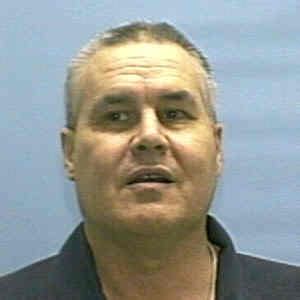
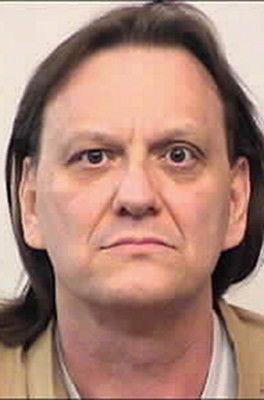
Aeman Lovel Presley: The Atlanta-Area Serial Killer
Overview
Aeman Lovel Presley is an American serial killer who murdered four people in Georgia during a brief but deadly period between September and December 2014. His victims included three men experiencing homelessness and a hairstylist who was attacked while returning to her vehicle in downtown Decatur. The killings occurred in DeKalb and Fulton counties and initially appeared to be unrelated crimes.
Investigators eventually connected the murders through distinctive ammunition and ballistic evidence. Presley was unexpectedly arrested after a transit officer stopped him for entering a Metropolitan Atlanta Rapid Transit Authority station without paying. A search uncovered the revolver used in the killings, ammunition and other evidence. Presley later confessed and pleaded guilty to all four murders.
Background
Presley was born in Chicago, Illinois, in 1980. He became involved with a street gang while still a child but later moved with his mother to Stone Mountain, Georgia. As a teenager, he publicly discussed his former gang involvement and claimed that he was attempting to leave that lifestyle behind.
As an adult, Presley served for a period in the Georgia National Guard and held several jobs. He also developed ambitions of becoming a professional actor. He appeared as an extra and in small film productions before moving to Los Angeles, California, in an effort to establish an acting career. The effort was unsuccessful, and Presley reportedly struggled with substance abuse, unstable employment and increasing anger.
By 2014, Presley had returned to the Atlanta area. He lived for a time in transitional housing and experienced homelessness himself. During this period, he acquired a large-caliber Taurus revolver that had been stolen from a vehicle. The weapon fired unusual .45-caliber ammunition that investigators later used to connect the murders.
The Murder of Calvin Lewis Gholston
Presley committed his first confirmed murder on September 26, 2014. Calvin Lewis Gholston, a 53-year-old man sometimes known by the nickname “Butterball,” was outside the Spring Mill Village shopping center on Memorial Drive in DeKalb County. Gholston was homeless and reportedly suffered from serious mental-health problems.
Presley approached Gholston and shot him multiple times. The attack appeared to have been sudden and unprovoked. Gholston was found dead outside the shopping center, but investigators initially had little evidence identifying his killer. The distinctive bullets recovered from the scene would later become an important part of the case against Presley.
The Murder of Dorian Jenkins
On November 23, 2014, Presley targeted 42-year-old Dorian Jenkins in downtown Atlanta. Jenkins was homeless and had been sleeping outdoors near Courtland Street and Ralph McGill Boulevard. He was wrapped in blankets when Presley approached him.
Presley shot Jenkins repeatedly while he slept. Authorities reported that Jenkins was struck five times. Because Jenkins was asleep and offered no resistance, investigators viewed the shooting as an execution-style attack against a particularly vulnerable victim.
At the time, police did not immediately connect Jenkins’s death to Gholston’s murder. The unusual ammunition recovered from the scene, however, was similar to the ammunition used in the earlier DeKalb County killing.
The Murder of Tommy Mims
Three days later, on November 26, 2014, Presley murdered 68-year-old Tommy Mims. Mims was homeless and sleeping beneath or near a railroad bridge along Northside Drive in Atlanta. Like Jenkins, he had wrapped himself in blankets while resting outdoors.
Presley fired repeatedly at Mims, striking him seven times. Investigators determined that the number of shots required Presley to reload the revolver during the attack. Presley later admitted that after initially leaving the area, he returned to the scene and fired additional shots into Mims.
The excessive number of shots alarmed Atlanta homicide detectives. Ballistic testing showed that Jenkins and Mims had been killed with the same weapon. Police warned members of Atlanta’s homeless community that someone appeared to be deliberately targeting people as they slept outside.
The Murder of Karen Pearce
Presley’s final victim was 44-year-old Karen Pearce, a hairstylist who worked at a salon in the Marietta area. On the evening of December 6, 2014, Pearce had been dining with friends in downtown Decatur. After leaving the restaurant, she walked toward her vehicle near a parking deck and office buildings.
Presley confronted Pearce and demanded her possessions at gunpoint. Although she surrendered her valuables, Presley shot and killed her. Her body was discovered in the street near the parking area. The murder appeared to be a robbery, but investigators later concluded that Presley had already developed a pattern of killing victims even when they presented no threat to him.
Pearce’s death brought additional law-enforcement agencies into the investigation. Decatur police recovered ballistic evidence that appeared consistent with the weapon used in the Atlanta homeless killings. Presley later admitted that he murdered Pearce after robbing her.
Confirmed Victims
- Calvin Lewis Gholston, 53: Shot and killed on September 26, 2014, outside the Spring Mill Village shopping center on Memorial Drive in DeKalb County, Georgia.
- Dorian Jenkins, 42: Shot five times and killed on November 23, 2014, while sleeping near Courtland Street and Ralph McGill Boulevard in downtown Atlanta, Georgia.
- Tommy Mims, 68: Shot seven times and killed on November 26, 2014, while sleeping near Northside Drive and a railroad bridge in Atlanta, Georgia.
- Karen Pearce, 44: Robbed and shot to death on December 6, 2014, near a parking deck in downtown Decatur, Georgia.
The Investigation
After the murders of Jenkins and Mims, Atlanta police announced that the same firearm had been used in both attacks. Detectives focused particular attention on the ammunition. The killer had used an uncommon .45 Colt cartridge with an elongated shape that investigators sometimes described as a “cowboy bullet.” The specific ammunition had not been widely manufactured for several years.
Ballistic evidence eventually connected the Atlanta shootings with the deaths of Gholston and Pearce in DeKalb County. Investigators from Atlanta, Decatur and DeKalb County began coordinating their efforts. Because the victims did not appear to know one another, police believed they were dealing with a stranger who selected vulnerable people at random.
The attacks caused fear among people living on Atlanta’s streets. Homeless-service organizations warned clients to avoid sleeping alone or in poorly illuminated areas. Some people began sleeping near security cameras or moving to unfamiliar locations in an effort to avoid becoming the next victim.
Presley’s Arrest
Presley was arrested on December 11, 2014, after a MARTA police officer saw him enter a rail station without paying the required fare. The incident was minor, but the officer detained and searched him. Presley was carrying a loaded revolver and a quantity of ammunition.
The firearm was submitted for testing. Ballistic comparisons showed that it matched the weapon used in the four murders. The bullets and cartridge characteristics corresponded with evidence recovered from the crime scenes.
Once confronted with the physical evidence, Presley began cooperating with investigators. He admitted responsibility for the killings and provided accounts of how he selected and attacked the victims. His statements indicated that the murders were not committed because of personal disputes with the victims. Instead, he described an escalating desire to kill.
Confessions and Claimed Motives
Presley offered several explanations for his actions. At various times, he blamed anger, mental illness, substance abuse, violent entertainment and his personal failures. He reportedly told investigators that after committing the first murder, he developed an increasing compulsion or “bloodlust” that drove him to continue killing.
He acknowledged that the men he attacked were asleep or otherwise vulnerable. He also admitted that Pearce complied during the robbery but was shot anyway. His shifting explanations were examined by prosecutors and mental-health professionals as his attorneys considered an insanity defense.
Presley initially maintained that he should not be held criminally responsible because of his mental condition. Prosecutors in both DeKalb and Fulton counties prepared to seek the death penalty. Rather than face capital trials, Presley ultimately entered guilty pleas.
DeKalb County Convictions
In June 2016, Presley pleaded guilty in DeKalb County to charges arising from the murders of Calvin Gholston and Karen Pearce. The charges included murder, felony murder, aggravated assault, armed robbery and firearm offenses.
Presley received two consecutive sentences of life imprisonment without the possibility of parole. The plea agreement removed the possibility of a death sentence but guaranteed that he would remain incarcerated for the rest of his life.
During the proceedings, Presley expressed remorse and asked the victims’ families for forgiveness. Prosecutors emphasized that his admissions did not lessen the seriousness of attacking defenseless strangers and deliberately killing Pearce after she surrendered her property.
Fulton County Convictions
In January 2017, Presley appeared in Fulton County Superior Court and pleaded guilty to murdering Dorian Jenkins and Tommy Mims. Both men had been shot while sleeping outdoors and had no opportunity to defend themselves.
Presley received another life sentence for the Fulton County murders. This sentence was added to the two consecutive life-without-parole sentences already imposed in DeKalb County. The combined punishment ensured that Presley could never be released.
Significance of the Case
The Presley case demonstrated how crimes committed in neighboring jurisdictions can initially appear unrelated. The victims were killed in different cities and counties over several months. Cooperation among law-enforcement agencies and the comparison of ballistic evidence allowed investigators to establish that one gun had been used in every attack.
The case also drew attention to the dangers faced by people experiencing homelessness. Three of Presley’s four victims were sleeping or living outdoors when they were targeted. Their isolation and lack of secure shelter made them vulnerable and complicated the early stages of the investigations.
Presley’s capture resulted from an ordinary transit-fare violation rather than a planned homicide arrest. Had the MARTA officer not stopped him and discovered the revolver, Presley might have remained free longer and could have committed additional murders. The weapon he carried provided the physical evidence that directly connected him to all four killings.
Final Outcome
Aeman Lovel Presley was convicted of four murders committed during approximately ten weeks in 2014. He admitted killing Calvin Gholston, Dorian Jenkins, Tommy Mims and Karen Pearce. His victims were strangers selected because they were accessible and vulnerable rather than because of any personal connection.
Presley is serving multiple life sentences, including consecutive terms without the possibility of parole, in the Georgia prison system. His murders ended only after the chance intervention of a transit officer led to the discovery of the revolver that had been used throughout the killing series.