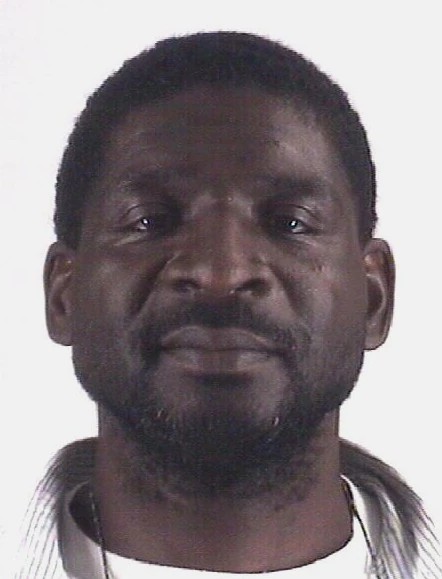
Curtis Don Brown: The Tarrant County Terror
Overview
For two terrifying years in the mid-1980s, a shadow of fear fell over Tarrant County, Texas, as a series of brutal murders of women left communities on edge. The man responsible for at least three of these killings was Curtis Don Brown, a serial rapist and murderer whose violent spree was brought to an end by a chance encounter with police. Already serving a life sentence for one murder, Brown was linked by DNA technology two decades later to two cold-case homicides from 1985. Though convicted of three murders, investigators have long suspected Brown is responsible for as many as 18 unsolved slayings that occurred between 1984 and 1986, a chilling possibility that has left a lasting scar on the cities of Fort Worth and Arlington.
Early Life and Background
Curtis Don Brown was born on August 2, 1958. His childhood was marked by a profound tragedy when, at the age of 13, he survived a house fire that killed his two younger siblings and injured his mother. Following this traumatic event, those who knew him noted a change in his behavior, which became increasingly troubling.
In the early 1980s, Brown moved to Texas to be closer to his mother. By this time, he had a criminal record that included armed robbery. He married in 1984 and had a daughter the following year, working intermittently as a laborer and machinist. However, his life was spiraling into one of extreme violence that would soon terrorize the region.
The Murder of Sharyn Kills Back
On March 15, 1985, 18-year-old Sharyn Kills Back disappeared while walking to a friend's house in Arlington. A member of the Oglala Sioux tribe from the Pine Ridge Indian Reservation in South Dakota, she had moved to Texas for Job Corps training and a new life. Eight days after she was last seen, on March 23, a plumber discovered her body in a storm drain. She had been raped and strangled, with a rope still knotted around her neck. For two decades, her family's prayers for justice went unanswered as her case went cold.
The Murder of Terece Gregory
Just over two months later, the terror continued in Fort Worth. On May 29, 1985, 29-year-old Terece Gregory, a waitress, vanished after leaving the Caravan of Dreams nightclub downtown. The next day, her nude body was found floating in the Trinity River. An autopsy revealed she had been raped and shot in the face. Like the Kills Back case, the investigation into Gregory's murder stalled, leaving another family devastated and without answers for years.
The Murder of Jewel Woods
On the night of May 28, 1986, Curtis Don Brown attacked 51-year-old Jewel Woods, a former nurse, outside her apartment in east Fort Worth. He raped her and bludgeoned her to death with a rock, leaving her body in a patch of tall weeds. Brown’s fatal mistake was being seen. As he fled the scene, he ran for nearly a mile before being spotted by police officers who were in the area on an unrelated matter. When they stopped the out-of-breath Brown, they found him in possession of Woods's purse. The evidence was damning, and he was arrested for her murder.
The Victims
- Sharyn Kills Back, 18 — March 15, 1985, in Arlington, Texas. A member of the Oglala Sioux tribe, Sharyn had moved from South Dakota to Texas with hopes for her future. She was an intelligent and friendly young woman who loved her family and corresponded with them daily.
- Terece Gregory, 29 — May 29, 1985, in Fort Worth, Texas. Remembered as the only daughter of Dr. Patricia D. Gregory, she was a music manager who had worked for CBS Records. She was last seen leaving a downtown nightclub before her life was tragically cut short.
- Jewel Woods, 51 — May 28, 1986, in Fort Worth, Texas. A former nurse, she was attacked and killed just outside her own home. Her son, Gregg Woods, later spoke of the enduring pain his family suffered.
Investigation and Capture
Brown was swiftly captured for the murder of Jewel Woods on the night of the crime in May 1986. His presence near the scene, his exhausted state, and his possession of the victim's belongings provided police with a direct link. He was subsequently charged and, in 1989, convicted and sentenced to life in prison for Woods's murder.
For years, Brown sat in prison, while the murders of Sharyn Kills Back and Terece Gregory remained unsolved. The break in these cold cases came nearly two decades later. In 2005, a new prison policy required inmates, including Brown, to submit DNA samples to be entered into a national database. Fort Worth cold case detectives received a notification that Brown's DNA profile was a match for forensic evidence collected from the body of Terece Gregory in 1985.
This breakthrough prompted Fort Worth and Arlington detectives to collaborate. They re-examined the timeline of Brown's activities and the methods used in other unsolved murders from that era. Soon after, they confirmed that Brown's DNA also matched evidence recovered from the body and clothing of Sharyn Kills Back. The scientific evidence had finally connected the man already in prison for one brutal murder to two more.
The DNA matches also solidified law enforcement's long-held suspicion that a serial killer had been active in Tarrant County. Fort Worth police began re-examining at least 25 unsolved homicides that occurred while Brown was free, determining that more than a dozen warranted a closer look as potentially being linked to him.
Trial and Sentence
Following the DNA revelations in 2005, Curtis Don Brown was indicted on a capital murder charge for the death of Terece Gregory in July of that year. He was subsequently charged with the capital murder of Sharyn Kills Back. Prosecutors in Tarrant County announced their intention to seek the death penalty.
As jury selection for the Gregory trial was set to begin in January 2009, Brown accepted a plea agreement to avoid a possible death sentence. He pleaded guilty to the murders of both Terece Gregory and Sharyn Kills Back. In exchange for his plea, he received two additional life sentences, to run consecutively with the life sentence he was already serving for the murder of Jewel Woods. The plea deal ensured that Curtis Don Brown would never be eligible for parole and would die in prison.
Aftermath and Legacy
The plea agreement brought a mixed reaction from the victims' families. Sharyn Kills Back's sister expressed relief that her family would not have to endure a trial and was satisfied that Brown would pay for his crimes by remaining imprisoned for life. However, Terece Gregory's brother was angered by the deal, having strongly wished for prosecutors to pursue the death penalty.
Curtis Don Brown's case stands as a powerful example of the importance of DNA technology in solving cold cases and bringing a measure of justice to families who have waited decades for answers. While he has only been convicted of three murders, the specter of his suspected involvement in up to 15 other unsolved slayings continues to haunt Tarrant County. Police have stated that the timing and details of the Gregory and Kills Back murders indicate a possible connection to other cases from that violent period, and Brown has not been eliminated as a suspect. For many, he remains the face of a terrifying time when a serial predator stalked the women of North Texas.