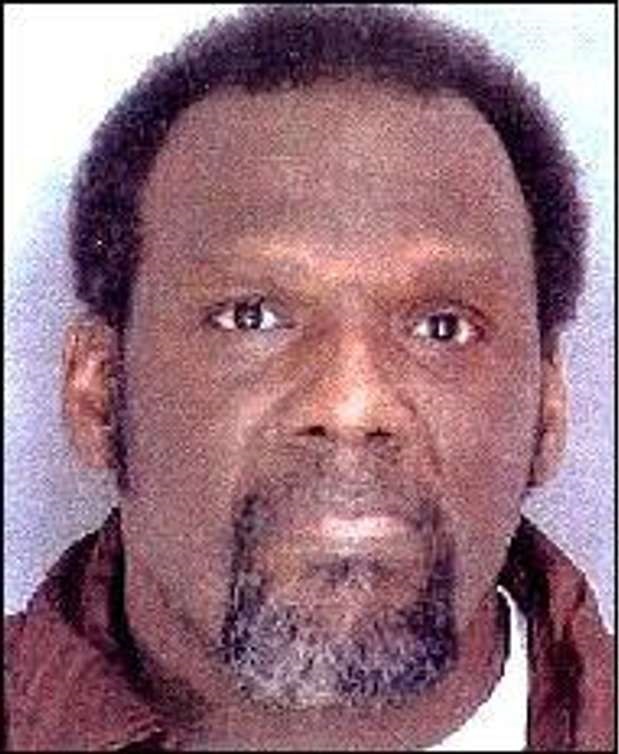
Vernon Lee Clark: Maryland Serial Killer
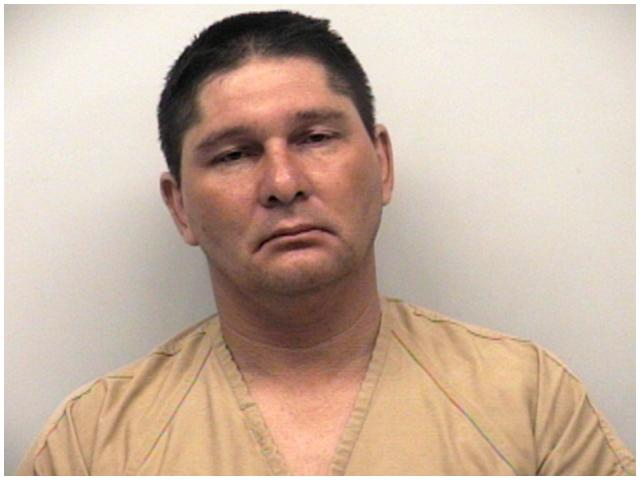
Vernon Lee Clark was an American serial killer whose crimes terrorized communities in and around Elkridge, Ellicott City, and Catonsville, Maryland, during the 1980s. Clark was ultimately held responsible for the murders of four women, with forensic evidence, guilty pleas, and a confession gradually connecting him to crimes that had remained unsolved for years or even decades. He was also investigated as a suspect in the unsolved double murder of Carvel and Sarah Faulkner in 1979.
Clark was born on December 28, 1955, and grew up in Elkridge in Howard County, Maryland. As an adult, he worked at various jobs, including as a laborer and animal skinner at an animal-rendering plant. He also performed yard work, gardening, and other jobs for people in the area. That employment brought him into the lives of some of the women he later murdered.
A Killer Hidden in a Familiar Community
One of the disturbing characteristics of Clark's crimes was his familiarity with several of his victims. Rebecca H. "Dolly" Davis had employed him for yard work, while Evelyn Dieterich knew him through gardening or handyman work. Clark had also previously worked for a business operated by Carvel and Sarah Faulkner, whose murders would later be investigated for a possible connection to him.
For years, investigators did not have the forensic technology necessary to connect Clark to the older killings. Biological material was nevertheless preserved from some of the crime scenes. When DNA testing became significantly more advanced during the 1990s, evidence that had been stored for nearly two decades finally began identifying the same man.
The Murder of Rebecca "Dolly" Davis
Rebecca H. "Dolly" Davis was a 70-year-old Elkridge resident, artist, former teacher, and community volunteer. Clark had occasionally performed work around her property. Davis disappeared in February 1980, and her partially buried body was discovered on February 22 near her home in the 6100 block of Lawyers Hill Road in Elkridge.
Davis had suffered multiple stab wounds, and investigators found evidence that she had been sexually assaulted. The official Maryland death index records her date of death as February 16, 1980. At the time of the original investigation, Clark was interviewed because of his association with Davis, but police lacked evidence sufficient to charge him.
The case remained unresolved for almost two decades. Advances in DNA testing eventually allowed detectives to examine biological material preserved from the Davis investigation and compare it with Clark's DNA. The samples matched. Clark was charged in 1999 and eventually pleaded guilty to first-degree murder on February 13, 2001. He received another life sentence for Davis's murder.
The Murder of Evelyn Dieterich
The next confirmed victim was 68-year-old Evelyn M. Dieterich of Catonsville in Baltimore County. Dieterich lived alone, and Clark had worked for her as a gardener or handyman. Her body was discovered outside near her residence on Devere Lane after she had been violently attacked.
Dieterich had been beaten and strangled, and evidence of sexual assault was recovered. Although many later accounts identify March 29, 1981 as the date associated with the discovery and investigation, Maryland's official death index records Dieterich's date of death as March 28, 1981.
As with Davis, investigators had preserved biological evidence from the Dieterich crime scene. Years later, improved DNA testing produced a match to Clark. In 1999 he was formally charged with her murder. Clark was subsequently convicted in the case and received another life sentence.
The Murder of Iva Myrtle Watson
Iva Myrtle Watson, 81, lived in the 5400 block of Montgomery Road in Ellicott City. She was reported missing on December 29, 1984. The following day, her body was discovered beneath pine trees across the street from her residence.
Watson had suffered severe trauma to her head. Her partially clothed body and other circumstances of the crime caused investigators to compare her murder with the attacks on older women that had already occurred in the area. Watson's official Maryland death record lists December 30, 1984 as her date of death, although the attack was believed to have occurred during the period beginning with her disappearance on December 29.
For many years, Clark was considered a suspect but could not be prosecuted. The case was revived decades later by Howard County cold-case investigators. During an interview in prison in 2014, Clark confessed to Watson's murder. A Howard County grand jury indicted him on March 25, 2015.
On November 16, 2015, Clark pleaded guilty to Watson's murder. The plea resolved a homicide that had remained open for more than three decades and added a fourth confirmed murder to Clark's record.
The Murder of Kathleen Patricia Gouldin
Kathleen Patricia Gouldin was only 23 years old when she became Clark's final known victim. Gouldin worked as a restaurant manager and lived in a ground-floor apartment in the 6100 block of Old Washington Road in Elkridge.
During the night of July 3 into the morning of July 4, 1989, Gouldin was attacked inside her apartment. Prosecutors established that she was shot in the chest with a 20-gauge shotgun through or from outside her bedroom window. Clark then entered the apartment and sexually assaulted her. Her death is officially recorded as July 4, 1989.
The Gouldin investigation produced the evidence that finally brought Clark under sustained police scrutiny. An empty pizza box found near the apartment complex was traced to people who had shared pizza with Clark on the night of July 3. Investigators learned that Clark had taken the box with him when he left. Witnesses also placed him around the apartment complex.
Police additionally determined that a shotgun connected with Clark's workplace could have been used in the killing. Most importantly, biological evidence recovered from Gouldin was subjected to DNA testing. Clark's blood and saliva samples were compared with the evidence, and investigators obtained a match.
Clark was arrested on January 26, 1990 and charged with Gouldin's murder. His trial became an important early example of DNA evidence being used in a Howard County murder prosecution.
On April 17, 1991, a jury found Clark guilty of first-degree murder, assault with intent to rape, perverted practices, and a weapons offense. His conviction ensured that he would remain imprisoned while detectives began taking another look at older murders that appeared to share similarities with Gouldin's killing.
Confirmed Victims
- Rebecca H. "Dolly" Davis, 70 — February 16, 1980 — Elkridge, Maryland. Davis was attacked near her home in the 6100 block of Lawyers Hill Road. She suffered multiple stab wounds and was sexually assaulted. Her partially buried body was discovered on February 22. Clark had previously performed yard work for her. Preserved biological evidence was later matched to Clark through DNA testing, and he pleaded guilty to her murder in 2001.
- Evelyn M. Dieterich, 68 — March 28, 1981 — Catonsville, Maryland. Dieterich was attacked near her Devere Lane residence. She was beaten and strangled and evidence of sexual assault was recovered. Clark had worked for her as a gardener or handyman. DNA testing performed years later connected Clark to the crime, resulting in another murder conviction and life sentence.
- Iva Myrtle Watson, 81 — December 30, 1984 — Ellicott City, Maryland. Watson disappeared from the area of her Montgomery Road home on December 29. Her body was discovered beneath pine trees across the street on December 30. She had suffered severe head trauma. Clark eventually confessed to the murder and pleaded guilty on November 16, 2015.
- Kathleen Patricia Gouldin, 23 — July 4, 1989 — Elkridge, Maryland. Gouldin was shot in the chest with a 20-gauge shotgun in her ground-floor apartment in the 6100 block of Old Washington Road and sexually assaulted. DNA evidence, a pizza box connected to Clark, witness information, and evidence concerning a shotgun helped establish the case against him. Clark was convicted of her murder on April 17, 1991.
Suspected Victims: Carvel and Sarah Faulkner
Investigators also examined Clark as a suspect in the murders of Carvel A. Faulkner and his wife, Sarah M. Faulkner. The couple were killed at their Elkridge-area home in April 1979. Maryland death records list both deaths as occurring on April 25, 1979.
Carvel Faulkner, 58, was found with a fatal gunshot wound to the head. Sarah Faulkner, 56, was found on a bed with her hands and feet bound and her throat cut. Investigators found no obvious indication that robbery had been the motive; money reportedly remained visible inside the residence.
Clark had worked intermittently for the Faulkners' sanitation and poultry-related business, giving him a known connection to the couple. After Clark was linked to other Elkridge-area killings, police and Maryland State Police reopened the Faulkner investigation and explored whether surviving evidence could be tested for DNA.
Unlike the four murders for which Clark was ultimately held responsible, the available record does not establish that he was convicted of or confessed to killing the Faulkners. They therefore remain suspected rather than confirmed victims of Clark.
- Carvel A. Faulkner, 58 — April 25, 1979 — Elkridge, Maryland. Shot in the head inside his home. Clark had previously worked for the Faulkners' business and later became a major suspect, but he was never convicted of the murder.
- Sarah M. Faulkner, 56 — April 25, 1979 — Elkridge, Maryland. Found bound inside the couple's home with her throat cut. Her murder was investigated alongside her husband's death for a possible connection to Clark, but the case was never conclusively attributed to him.
DNA Reopens the Cold Cases
Clark's prosecution illustrates how advances in forensic science transformed murder investigations that had once appeared impossible to solve. When Davis and Dieterich were killed, DNA profiling did not exist as a practical investigative method. Detectives nevertheless retained biological samples collected during the original investigations.
After Clark was imprisoned for Gouldin's murder, investigators revisited the older cases. Modern testing showed that DNA preserved from both the Davis and Dieterich investigations matched Clark. The results provided the evidence detectives had lacked when the women were killed and turned two long-standing cold cases into prosecutable murders.
The discoveries also intensified scrutiny of other violent deaths around Elkridge. Detectives recognized geographic connections, similarities among victims, Clark's personal or employment relationships with several of them, and the fact that the known crimes extended across a period of nearly a decade.
Arrest and Investigation
Clark had already attracted police attention shortly after Gouldin's murder. Investigators traced the pizza box found near her apartment to acquaintances who said Clark had left their home carrying it after eating pizza on the night before her body was discovered.
When officers later attempted to execute a warrant and obtain evidence from Clark, the encounter became violent. Clark fought with officers and bit one of them. The confrontation resulted in an assault arrest, and investigators subsequently obtained the biological samples that became central to the Gouldin prosecution.
On January 26, 1990, Howard County police arrested Clark for first-degree murder after DNA testing linked him to evidence collected from Gouldin. His arrest immediately prompted investigators to reconsider several older homicides in and around Elkridge.
Convictions and Life Sentences
Clark's first major murder conviction came in April 1991 for the killing of Kathleen Gouldin. Years later, improvements in DNA technology led directly to the cases involving Evelyn Dieterich and Rebecca Davis. By February 2001, Clark had accumulated three murder convictions and three life sentences.
Iva Watson's murder remained unresolved much longer. Clark eventually admitted responsibility during a prison interview, leading to his 2015 indictment and guilty plea. By then, four murders committed between 1980 and 1989 had been conclusively attributed to him.
The Question of Additional Victims
Investigators have long questioned whether Clark's four confirmed victims represent the full extent of his crimes. After his arrest, police examined unsolved homicides dating back into the 1970s. The strongest publicly identified additional cases were the murders of Carvel and Sarah Faulkner because Clark knew the couple through their business and because their deaths occurred in the same general geographic area as several of his later crimes.
Nevertheless, suspicion is not proof. No conviction established Clark as the Faulkners' killer, and the couple should not be counted among his confirmed victims without additional evidence. Based on the cases successfully prosecuted or admitted by Clark, his established victim count is four.
Legacy of the Investigation
The Vernon Lee Clark cases demonstrate the importance of preserving evidence in unresolved homicides. Investigators in 1980 and 1981 could not have known how powerful DNA profiling would eventually become, yet biological evidence retained from the Davis and Dieterich murders survived long enough to identify their killer years later.
Clark was able to remain unidentified in several killings because the forensic tools necessary to connect him to those crimes did not yet exist. Once technology caught up with the evidence, murders separated by years and county lines could be connected to the same offender.
The resulting investigations established Vernon Lee Clark as responsible for four murders: Rebecca H. "Dolly" Davis, Evelyn M. Dieterich, Iva Myrtle Watson, and Kathleen Patricia Gouldin. The continuing uncertainty surrounding the murders of Carvel and Sarah Faulkner leaves open the possibility that the complete extent of Clark's violence was never conclusively determined.