Highway of Tears: The Vanishings in British Columbia
Overview
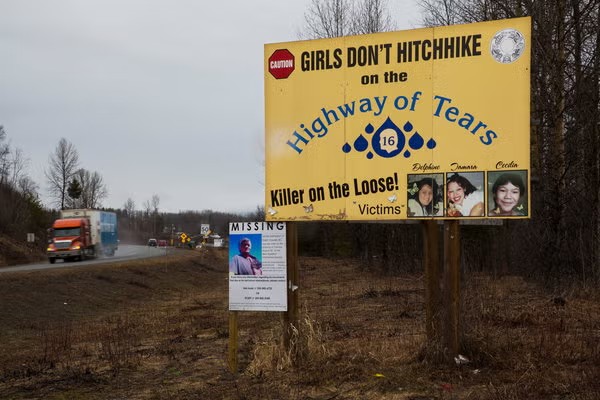
The "Highway of Tears" refers to a desolate, 725-kilometer stretch of Highway 16 between Prince George and Prince Rupert in northern British Columbia, Canada. Since 1969, this remote corridor and adjacent highways have become the backdrop for a haunting series of murders and disappearances involving dozens of women and girls. A disproportionate number of the victims are Indigenous, a fact that has highlighted systemic issues of racism and indifference.
While the popular narrative often suggests a single, elusive serial killer, the Royal Canadian Mounted Police (RCMP) have concluded that multiple perpetrators are responsible. An official police task force, Project E-PANA, has identified 18 women as victims in cases sharing similar characteristics. However, Indigenous communities and family members contend the true number is over 40. The cases span decades, with victims often last seen hitchhiking or walking along the highway. The isolation of the region, a lack of public transportation, and social marginalization created a tragic vulnerability that predators have exploited for years. While a few cases have been solved, linking some of the murders to known killers, the majority remain agonizingly unsolved, leaving a legacy of grief and unanswered questions.
A Landscape of Disappearance
The series of tragedies began in the late 1960s. On October 25, 1969, the body of Gloria Moody, a 26-year-old mother from the Nuxalk Nation, was found on a cattle trail near Williams Lake. She had been sexually assaulted and beaten. The following summer, in July 1970, 18-year-old Micheline Pare was last seen hitchhiking between Fort St. John and Hudson's Hope. Her body was discovered on August 8, 1970; she had been beaten to death.
These early cases marked the beginning of a disturbing pattern. The victims were almost exclusively young women and teenage girls, many of whom were part of the Indigenous communities that dot the northern British Columbia landscape. They vanished from roadsides, gas stations, and small towns, their disappearances often met with a slow or inadequate response from authorities. The term "Highway of Tears" emerged from the profound and ongoing grief of the families and communities who felt their loved ones had been forgotten. The vast, rugged terrain, combined with a transient population and limited police resources, created an environment where a person could disappear with terrifying ease.
The Murders
The 1970s saw a devastating cluster of homicides that would later become central to the Highway of Tears investigation. In October 1973, 19-year-old Gale Weys disappeared while trying to hitchhike from Clearwater to her parents' home in Kamloops. Her body was found in a ditch off Highway 5 the following April. Just weeks after Weys vanished, in November 1973, 19-year-old Pamela Darlington was found murdered in a park in Kamloops after she had also been hitchhiking. She had been sexually assaulted and beaten to death.
The year 1974 brought two more brutal killings. On August 9, 16-year-old Colleen MacMillen left her home in Lac La Hache, intending to hitchhike to a friend's house a few kilometers away. Her body was found a month later on a remote logging road. That winter, on December 13, 14-year-old Monica Ignas was walking home along Highway 16 in Thornhill, near Terrace, when she disappeared. Her partially clothed body was discovered in a wooded area four months later; she had been strangled.
The disappearances continued through the decades. In 1978, 12-year-old Monica Jack vanished while riding her bike near Merritt. Her remains wouldn't be found for 17 years. The 1990s saw another spike in cases, particularly in 1994. In June, 16-year-old Ramona Wilson disappeared from Smithers while hitchhiking to meet friends. Her body was found ten months later in a wooded area near the local airport. In July, 15-year-old Roxanne Thiara, who had been involved in sex work in Prince George, told a friend she was meeting a customer and was never seen alive again. Her body was found along Highway 16 near Burns Lake in August. In December of that same year, 15-year-old Alishia Germaine was found stabbed to death behind an elementary school in Prince George, just off the highway.
The Victims
The women and girls lost along the Highway of Tears were daughters, sisters, mothers, and friends, each with their own story and aspirations. Their lives were cut short with a brutality that has left an indelible scar on their families and communities.
- Gloria Levina Moody, 26 — October 1969, near Williams Lake. A mother of two from the Nuxalk Nation, she was found murdered after a weekend outing with family.
- Micheline Pare, 18 — July 1970, near Hudson's Hope. She was hitchhiking to meet friends when she was murdered. Her body was found by berry pickers.
- Gale Ann Weys, 19 — October 1973, near Clearwater. A bright young woman working two jobs to save for college, she was last seen trying to hitchhike home to Kamloops.
- Pamela Lorraine Darlington, 19 — November 1973, in Kamloops. Described as outgoing and fearless by her family, she was murdered after deciding to hitchhike into town when her car wouldn't start.
- Colleen Daignault MacMillen, 16 — August 1974, near Lac La Hache. A "lovely, sweet, innocent kid," according to her brother, she disappeared while hitchhiking a short distance to a friend's house.
- Monica Andrea Cathy Ignas, 14 — December 1974, near Terrace. A quiet Grade 10 student, she was last seen walking home along Highway 16.
- Monica Jack, 12 — May 1978, near Merritt. The youngest of the official victims, she vanished while riding her bicycle.
- Maureen Mosie, 33 — May 1981, near Kamloops. Her body was found just days after she was last seen.
- Shelley-Anne Bascu, 16 — May 1983, from Hinton, Alberta. She disappeared after walking away from her home.
- Alberta Gail Williams, 24 — August 1989, near Prince Rupert. She was last seen leaving a bar with friends. Her body was found several weeks later; she had been strangled and sexually assaulted.
- Delphine Anne Nikal, 16 — June 1990, near Smithers. She was last seen hitchhiking from Smithers toward her home in Telkwa.
- Ramona Lisa Wilson, 16 — June 1994, near Smithers. A bright student with a part-time job, she was planning to meet friends for graduation parties when she vanished.
- Roxanne Louise Thiara, 15 — July 1994, near Burns Lake. She was struggling with addiction but had just made plans to enter rehab when she was murdered.
- Alishia Augustina Germaine, 15 — December 1994, in Prince George. A friend of Roxanne Thiara, she too had plans to turn her life around before she was killed.
- Lana Patricia Derrick, 19 — October 1995, near Terrace. A college student, she was last seen at a gas station and is believed to have gotten into a car with two unidentified men.
- Nicole Louise Hoar, 25 — June 2002, near Prince George. A tree planter from Alberta, she was last seen hitchhiking on Highway 16, heading to Smithers.
- Tamara Lynn Chipman, 22 — September 2005, near Prince Rupert. A young mother, she was last seen hitchhiking along Highway 16.
- Aielah Katherina Saric-Auger, 14 — February 2006, in Prince George. She was last seen by her family on February 2, and her body was found in a ditch along the highway eight days later.
Investigation and Project E-PANA
For years, families of the victims felt their cases were not being taken seriously, particularly those of Indigenous women. In 2005, facing mounting public pressure, the RCMP launched Project E-PANA. The name was derived from an Inuit goddess who cares for souls. The task force was created to review the unsolved murders and disappearances and to determine if a serial killer was responsible.
Initially, the project focused on nine cases but expanded to 18 by 2007. To be included, cases had to meet specific criteria: the victim had to be female, engaged in "high-risk" activities (like hitchhiking), and was last seen or found near Highways 16, 97, or 5. While this provided a focus for the investigation, it was also criticized for excluding many other missing and murdered women whose cases did not fit the narrow parameters. Investigators have stated that they do not believe a single killer is responsible for all 18 deaths.
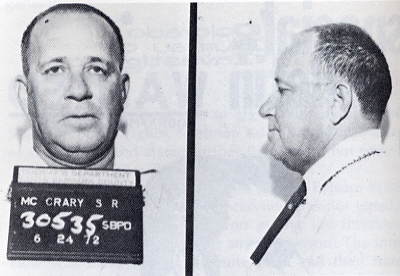
A major breakthrough came in 2012 when DNA evidence from Colleen MacMillen's body was matched to Bobby Jack Fowler, a violent American drifter who died in an Oregon prison in 2006. Fowler had worked for a roofing company in Prince George in 1974. The RCMP named him as MacMillen's killer and also a strong suspect in the 1973 murders of Gale Weys and Pamela Darlington, though no DNA evidence linked him to those two cases. He was ruled out as a suspect in eight of the other E-PANA cases.
Known Killers in the Region
While the majority of the Highway of Tears cases remain unsolved, several killers have been apprehended for murders that occurred within the same geographical area and time frame, adding to the complexity of the narrative.
Bobby Jack Fowler: An American transient with a long and violent criminal record, Fowler was posthumously identified as the killer of Colleen MacMillen in 2012. He is the prime suspect in the murders of Gale Weys and Pamela Darlington. It is unknown how many other women he may have assaulted or killed during his travels through British Columbia and the United States.
Cody Legebokoff: In 2014, Cody Legebokoff, one of Canada's youngest serial killers, was convicted of the first-degree murders of four women in and around Prince George between 2009 and 2010: Jill Stuchenko, 35; Cynthia Maas, 35; Natasha Montgomery, 23; and 15-year-old Loren Leslie. He was arrested in November 2010 after a suspicious RCMP officer saw him pull out of a remote logging road. The officer found the dying body of Loren Leslie nearby. While his crimes occurred in the Highway of Tears region, he is not officially linked to the E-PANA cases, which conclude in 2006.
Garry Taylor Handlen: In 2014, police made an arrest in one of the oldest cases. Garry Taylor Handlen was charged with the 1978 murder of 12-year-old Monica Jack. He was a serial rapist who had been a suspect for years, but there was not enough evidence to charge him until a cold case review. He was convicted of first-degree murder in 2019.
Aftermath and Legacy
The Highway of Tears has become a national symbol of a much larger crisis of missing and murdered Indigenous women and girls (MMIWG) in Canada. The decades of unsolved cases have left families in a state of perpetual grief, fighting for answers and justice. Community-led initiatives, such as memorial walks and the installation of billboards along the highway warning women not to hitchhike, have kept the issue in the public consciousness.
The families' activism and the growing public outcry were instrumental in the launch of the National Inquiry into Missing and Murdered Indigenous Women and Girls in 2016. The inquiry's final report, released in 2019, described the violence as a "Canadian genocide" fueled by systemic racism, sexism, and colonialism.
For the communities along Highway 16, the fear and loss remain palpable. The lack of safe and affordable public transportation in the region continues to be a major concern, leaving many with no choice but to hitchhike. While some cases have been solved, bringing a measure of closure to a few families, the vast majority of the women who disappeared along the Highway of Tears are still waiting for justice, their stories a solemn reminder of a continuing tragedy.