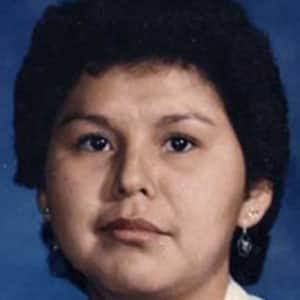
Tamara Lynn Chipman was a young Indigenous woman known for her lively, fiery spirit and a deep love for the outdoors. A member of the Wet'suwet'en Nation, the 22-year-old female grew up in British Columbia, spending much of her childhood on her father's fishing boat and with her grandfather, a heavy-duty mechanic. Described by her aunt as "the humour, the laughter, behind all of us when we were all at home for family gatherings," Tamara was a young mother to a son named Jaden, who was just two
and a half years old when she vanished. Though she faced the challenges of being a young single mother and was going through a difficult period in her life, she remained deeply connected to her family, splitting her time between her mother in Prince Rupert and her father in Terrace.
On the afternoon of September 21, 2005, just weeks before her 22nd birthday, Tamara was seen hitchhiking. Her own car had broken down and was awaiting repairs in Terrace, so she was trying to get a ride east from Prince Rupert along a notorious 720-kilometer stretch of Highway 16. A friend of her father's was the last person known to have seen her, standing near an industrial park on the edge of town, wearing blue jeans and a light blue jacket. She was headed for Terrace, a trip she had made many times before, but on this day, she never arrived.
It took nearly two months for Tamara to be officially reported missing. Her family was spread between two cities, and each assumed she was safe with the other. It wasn't until her father, Tom Chipman, realized her rent was unpaid and her bank account was untouched that the alarm was raised. He reported her disappearance to the Royal Canadian Mounted Police (RCMP) on November 10, 2005, and a joint investigation between the Prince Rupert and Terrace detachments began five days later. Volunteers from her home community of Moricetown First Nation organized searches, and her father walked the highway himself, looking for any sign of his daughter. The family even traveled to Vancouver to hand out flyers after a possible sighting, but found no trace of her.
Tamara’s disappearance is one of the haunting cases associated with the "Highway of Tears," so named for the many women, a disproportionate number of them Indigenous, who have been murdered or have gone missing along its route since 1969. Her case was officially included in Project E-PANA, a special RCMP task force created in 2005 to investigate the unsolved cases along Highway 16 and other major routes in British Columbia. Police have stated that foul play is suspected in her disappearance.
Over the years, the investigation has been met with frustration and few answers. According to one unconfirmed report, two men and a woman came forward to police, with the woman claiming she was in a car with Tamara after they picked her up. She alleged that one of the men argued with, struck, and then strangled Tamara to death in the vehicle before dumping her body in a remote area. Despite a police search of the location with the witness and cadaver dogs, Tamara’s remains were never found.
The lack of resolution has been agonizing for Tamara's family. They have fought against what they call dismissive and derogatory labels sometimes applied to her online and have expressed frustration with the investigation's progress. Her aunt, Gladys Radek, said the family felt they had exhausted all options and received little support. In the years following Tamara's disappearance, her family transformed their grief into powerful advocacy, becoming prominent voices for Missing and Murdered Indigenous Women and Girls (MMIWG). Radek co-founded the organization Walk4Justice, and her aunt Lorna Brown leads the Tears to Hope Society, both dedicated to raising awareness and supporting families of victims.
Tamara Lynn Chipman's case remains an active and open investigation. The BC RCMP continues to ask for the public's help, urging anyone with information, no matter how insignificant it may seem, to come forward. "We still, after 21 years, have no answers," her aunt Lorna Brown said in a 2026 interview. "There's no closure for the family, and you're just forever wondering exactly where is she." For a family that has channeled its pain into a national movement, the search for Tamara, and for justice, is not over.