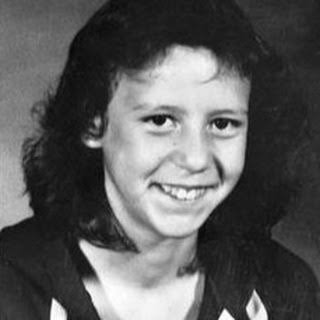
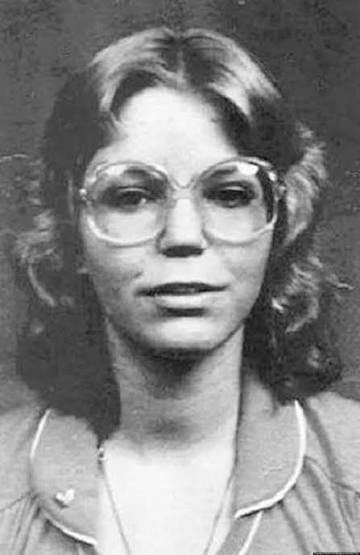
In the warm summer of 1974, Colleen Rae MacMillen was a 16-year-old girl with strawberry-blonde hair and a life full of promise ahead of her in the small community of Lac La Hache, British Columbia. Born on April 11, 1958, Colleen was described by those who loved her as a quiet, sweet, and innocent kid. One of seven siblings, she lived with her family by the lake and, like many teenagers in the rural Cariboo region, she sometimes hitchhiked to get around.
On the evening of August 9,
1974, Colleen left her home to travel the short distance to a friend's house. Her younger brother, Shawn, later recalled her last words to him: "Don't tell mom I'm hitchhiking." She then walked away, stepping out onto Highway 97. It was the last time her family would see her alive. When she never arrived at her destination, a frantic search began. For a month, her family and the community were left to wonder and fear the worst.
The devastating discovery was made on September 4, 1974. Colleen’s remains were found beside a remote logging road about 30 miles from her home. The discovery confirmed the family's deepest fears and plunged the quiet community into a state of shock and grief. The loss was immeasurable. "It's a lifelong disaster is what it is," her brother Kevin would later say. "It was sad the day it happened and we're sad today and we'll be sad till the day we die."
For nearly four decades, Colleen’s murder remained a painful, unsolved cold case. Her case was one of several investigated by the Royal Canadian Mounted Police's Project E-PANA, a task force created to probe the cases of 18 women and girls who were murdered or vanished along British Columbia’s major highways between 1969 and 2006. This notorious stretch of roads, including Highways 16, 5, and 97, would become known as the "Highway of Tears." Investigators knew a predator, or predators, had been using the remote highways to target vulnerable victims, often employing methods like strangulation, stabbing, or blunt force trauma.
The breakthrough in Colleen's case came from a place no one expected, 38 years after her death. In 1974, investigators had carefully preserved evidence from the scene, including Colleen's blouse. Decades later, with incredible advancements in forensic science, a DNA profile of an unknown male was developed from this evidence in 2007. In 2012, this profile was submitted to Interpol and matched a violent American criminal named Bobby Jack Fowler.
Fowler was a transient roofer with an extensive and brutal criminal record in the United States for crimes including kidnapping, attempted murder, and sexual assault. He had been working in Prince George, B.C., in 1974. He was never a suspect in Canada, and his connection was a stunning revelation for investigators. Fowler had died of lung cancer in an Oregon prison in 2006 at the age of 66, meaning he would never stand trial for Colleen's murder. Police also named him as a strong suspect in the 1973 slayings of two other young women, Gale Weys and Pamela Darlington.
The identification of her killer brought a complex mix of emotions for Colleen's family. While there was relief in finally having an answer, it did not erase decades of pain. At a police press conference, her brother Shawn spoke through tears. "Colleen was a lovely, sweet, innocent 16-year-old kid, and there are still no words in the world to express how terribly she was wronged," he said. "We are comforted by the fact he was in prison when he died, and he can't hurt anyone else." The family expressed immense gratitude for the investigators who never gave up.
While the Royal Canadian Mounted Police officially closed Colleen MacMillen's case, it remains a stark and tragic chapter in the story of the Highway of Tears. Her death is a reminder of the many other cases that remain unsolved and the families who still wait for answers. For her loved ones, the resolution brought a measure of peace but could never replace the vibrant young woman whose life was stolen on a summer evening.