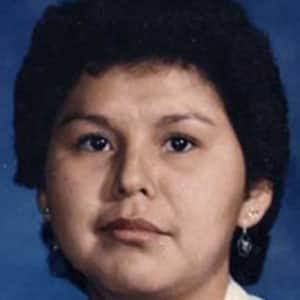
In the winter of 1973, the Ignas family moved from Houston, British Columbia, to the small community of Thornhill, near Terrace, settling into a new life just off the Yellowhead Highway. Their daughter, Monica Andrea Cathy Ignas, a quiet and studious 14-year-old, was in Grade 10. Her family would later recall that she was not the type of girl to hitchhike, making her disappearance all the more baffling and terrifying.
On the cold night of Friday, December 13, 1974, Monica was walking the
short distance to her home along Highway 16. It was around 11 p.m. when she was last seen, a lone figure heading into the darkness. She was dressed for the winter weather in a blue wool duffle coat with distinctive wooden toggle buttons, brown Wallabee-style shoes, and blue socks. That was the last time anyone saw her alive. When she failed to arrive home, a frantic search began, but the snowy landscape held its secrets close.
For four agonizing months, her family waited for any news. The hope that had sustained them through the winter was shattered on April 6, 1975. Monica’s partially clothed and decomposed body was discovered in a gravel pit off a heavily wooded service road known as Celgar, about six kilometers northeast of Terrace. The investigation determined that the young girl had been strangled with her own clothing. At the scene, investigators found only one of her blue socks, a small, haunting detail in a brutal crime.
The Royal Canadian Mounted Police (RCMP) began a homicide investigation, piecing together the final moments of Monica’s life. A significant lead emerged from two witnesses who reported seeing a car pulled over on the side of the road on the night Monica vanished. They told police they saw a man inside the vehicle with a passenger who appeared to be a small girl. Despite this witness account, the trail grew cold, and no arrests have ever been made in connection with Monica's murder.
Monica’s case is one of the earliest and most haunting of the deaths along the notorious stretch of Highway 16 known as the "Highway of Tears." This corridor, running between Prince George and Prince Rupert, has been the site of numerous murders and disappearances, disproportionately affecting Indigenous women and girls, from 1969 to the present. In response to the growing number of unsolved cases, the RCMP created a special task force, E-PANA, to investigate whether a serial killer or killers were responsible for the string of tragedies along British Columbia's northern highways.
Monica Ignas is one of the official victims on the E-PANA list. Her murder, like so many others along that lonely highway, left a permanent scar on her family and community. The image of a quiet teenager walking home, almost within sight of safety, has endured for decades as a symbol of the vulnerability and violence that have plagued the region.
Decades have passed, but the case remains unsolved, a cold file in a long list of tragedies. The identity of the person who ended Monica’s life on that December night remains a mystery, hidden somewhere in the vast, unforgiving landscape of northern British Columbia. Her family has been left with only memories and the enduring pain of an unanswered question. Police continue to ask that anyone with information, no matter how insignificant it may seem, come forward in the hope that justice might one day be found for Monica.