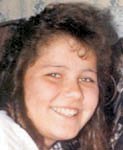
Ramona Lisa Wilson was a bright and bubbly 16-year-old Indigenous girl with a promising future. A member of the Gitxsan Nation, she was the youngest of six children and lived with her family in Smithers, British Columbia. Known for her sense of humor and caring nature, Ramona played outfield for a local baseball team, worked part-time as a dishwasher at a Smitty's restaurant, and served as a peer counselor at school.
She dreamed of being the first in her family to attend university and had told her mother, Matilda, that she wanted to become a psychologist. Ramona was close with her family, and her mother fondly remembered her as her "'sweetheart baby,'" recalling how the teenager would still sometimes crawl into her bed after a nightmare.
On the evening of Saturday, June 11, 1994, Ramona was at home, excitedly getting ready to meet friends. It was a weekend of high school graduation parties in the area, and she planned to join the celebrations. Her mother remembered her being in a great mood, singing and dancing around the house before she left around 9:45 p.m. Ramona told her family she was going to meet her best friend and might need a ride to Moricetown, a nearby village, for a party. That was the last time her family ever saw her. She never met up with her friend, who had expected to see her at a dance in Hazelton.
When Ramona didn't show up for school or her shift at work on Monday, her family's concern grew. Her mother, Matilda, went to the Royal Canadian Mounted Police (RCMP) to report her missing, but felt her concerns were initially dismissed, with officers suggesting Ramona had likely run away. Unwilling to wait, the Wilson family organized their own search, contacting friends and driving around looking for any sign of her. Her bank account was never touched, and her last paycheck remained uncollected. The days turned into weeks, and the weeks into months, with no word.
The agonizing wait ended in heartbreak ten months later. On April 9, 1995, two teenagers riding ATVs in a wooded area off Yelich Road, near the Smithers airport, discovered human remains. The location was known as a local hangout spot for teens. The remains were soon identified as those of Ramona Lisa Wilson. Near her body, investigators found some of her clothing, including a purple sweatshirt and leggings, though her shoes were missing. Also found nearby were several other items, including a section of rope, interlocking nylon ties, and a small pink water pistol shaped like brass knuckles.
Ramona’s murder remains unsolved, one of a tragic number of cases of missing and murdered Indigenous women and girls along a 725-kilometer stretch of Highway 16 known as the Highway of Tears. Her case was included in Project E-PANA, an RCMP task force created in 2005 to investigate the string of unsolved murders and disappearances along major British Columbia highways. While these cases have fueled speculation of one or more serial killers active in the region for decades, investigators have stated they do not believe a single person is responsible for all the deaths. No arrests have ever been made in Ramona's homicide.
In the years since her death, Ramona's family has tirelessly fought to keep her memory alive and to seek justice for her and other victims. They started the annual Ramona Lisa Wilson Memorial Walk in June 1995, a gathering that brings together families of other missing and murdered women to offer mutual support and demand action. Her sister, Brenda, has become a prominent advocate, and her mother, Matilda, has spoken of the bittersweet pain of living without answers, stating that even an arrest would not bring her daughter back. The family continues to hope that someone with information will come forward. "We need to hear the whole story," Brenda has said. "It needs to be concrete. It needs to be able to bring justice to Ramona's case."