Sean Sellers: The Teen Satanist on Death Row
Overview
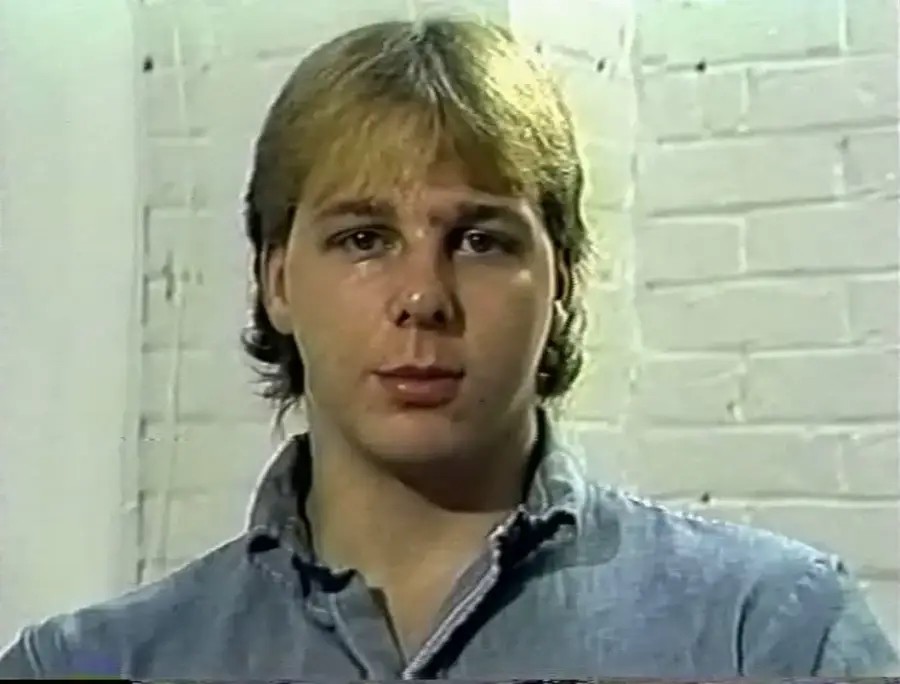
Sean Richard Sellers was a convicted murderer from Oklahoma whose case became a focal point for the international debate over capital punishment for juvenile offenders. At the age of sixteen, influenced by a deep immersion in Satanism, he committed three brutal murders over a six-month period in 1985 and 1986. His victims included a convenience store clerk and his own mother and stepfather. The crimes, marked by their cold-blooded nature, shocked the community.
Sellers was tried as an adult, convicted, and sentenced to death. His youth at the time of the killings made his sentence profoundly controversial. During his thirteen years on death row, Sellers underwent a dramatic transformation, converting to Christianity, writing a book about his experiences, and speaking out against youth violence and the occult. His appeals raised complex questions about mental illness, arguing that an undiagnosed case of Multiple Personality Disorder (now Dissociative Identity Disorder) rendered him not fully culpable. Despite a global clemency campaign, he was executed by lethal injection in 1999 at the age of 29. Sean Sellers was the first person executed in the United States since 1959 for a crime committed at sixteen, and his case was a significant precursor to the 2005 Supreme Court ruling that abolished the death penalty for juvenile offenders nationwide.
Early Life and Descent into Satanism
Sean Sellers was born on May 18, 1969, in Corcoran, California. His childhood was marked by instability and a lack of consistent parental guidance. His mother, Vonda, was only sixteen at his birth, and his biological father was not a part of his life. Vonda later married Lee Paul "Shot" Bellofatto, a long-haul truck driver and decorated Vietnam veteran. The family moved frequently before settling in Oklahoma City. Because both his mother and stepfather worked on the road, Sellers was often left alone or in the care of various relatives for extended periods.
By his early teens, Sellers was a troubled and isolated youth. He felt like an outcast at school and struggled to fit in. He found a sense of power and identity in the occult, becoming deeply obsessed with Satanism. He claimed to have read Anton LaVey's "The Satanic Bible" hundreds of times and began practicing elaborate daily rituals. He would cut himself to drink his own blood in "chalices" and believed he was forging a pact with demonic forces. This dark fascination was intertwined with an addiction to the fantasy role-playing game "Dungeons & Dragons," which his defense would later argue blurred the lines between fantasy and reality for him. His journals and conversations with friends were filled with dark fantasies about power, death, and violence. He told friends he was a "pawn of the devil" and that Satan wanted him to kill.
The Murder of Robert Paul Bower
On the night of September 8, 1985, sixteen-year-old Sean Sellers decided to act on his violent ideations. His stated goal was simple and chilling: he wanted "to see what it feels like to kill somebody." His target was Robert Paul Bower, a 35-year-old night clerk at a Circle K convenience store in south Oklahoma City. Bower had recently angered Sellers's friend, 18-year-old Richard Howard, by refusing to sell him beer.
Sellers armed himself with a .357 Magnum revolver and went with Howard to the store. While Howard waited outside, Sellers entered, approached the counter, and shot Bower once in the chest. Bower, who was unarmed, died behind the counter. Sellers later told Howard that he had laughed about the killing, treating it as a "fantastic prank." The murder remained unsolved for months, a cold case with no immediate suspects, allowing Sellers to continue his life as a seemingly normal high school student.
The Murders of Vonda and Paul Bellofatto
Six months after killing Robert Bower, Sellers's rage turned inward toward his own family. In the early morning hours of March 5, 1986, he decided to murder his mother and stepfather. His motive was rooted in anger; his mother had recently forbidden him from seeing his girlfriend, and he felt controlled and misunderstood. He later claimed a demonic voice commanded him, "You have to kill them."
After Vonda and Paul Bellofatto were asleep in their bedroom, Sellers prepared for the killings. He stripped down to his underwear to avoid getting blood on his clothes. He took a .44 caliber revolver from his stepfather's gun collection and entered their room. He shot Paul Bellofatto first, aiming for the head. The shot woke his mother. As Vonda sat up and looked at him, he shot her directly in the face.
To cover his tracks, Sellers attempted to stage the scene as a robbery-gone-wrong. He moved things around the house to create a sense of disarray. After a brief and unsuccessful attempt to open a safe, he left the house and drove to his girlfriend's home, but she was not there. He then went to the home of his friend, Richard Howard, waking him up to confess what he had just done. The next morning, Sellers returned to his parents' house and called 911, pretending he had just discovered the horrific scene.
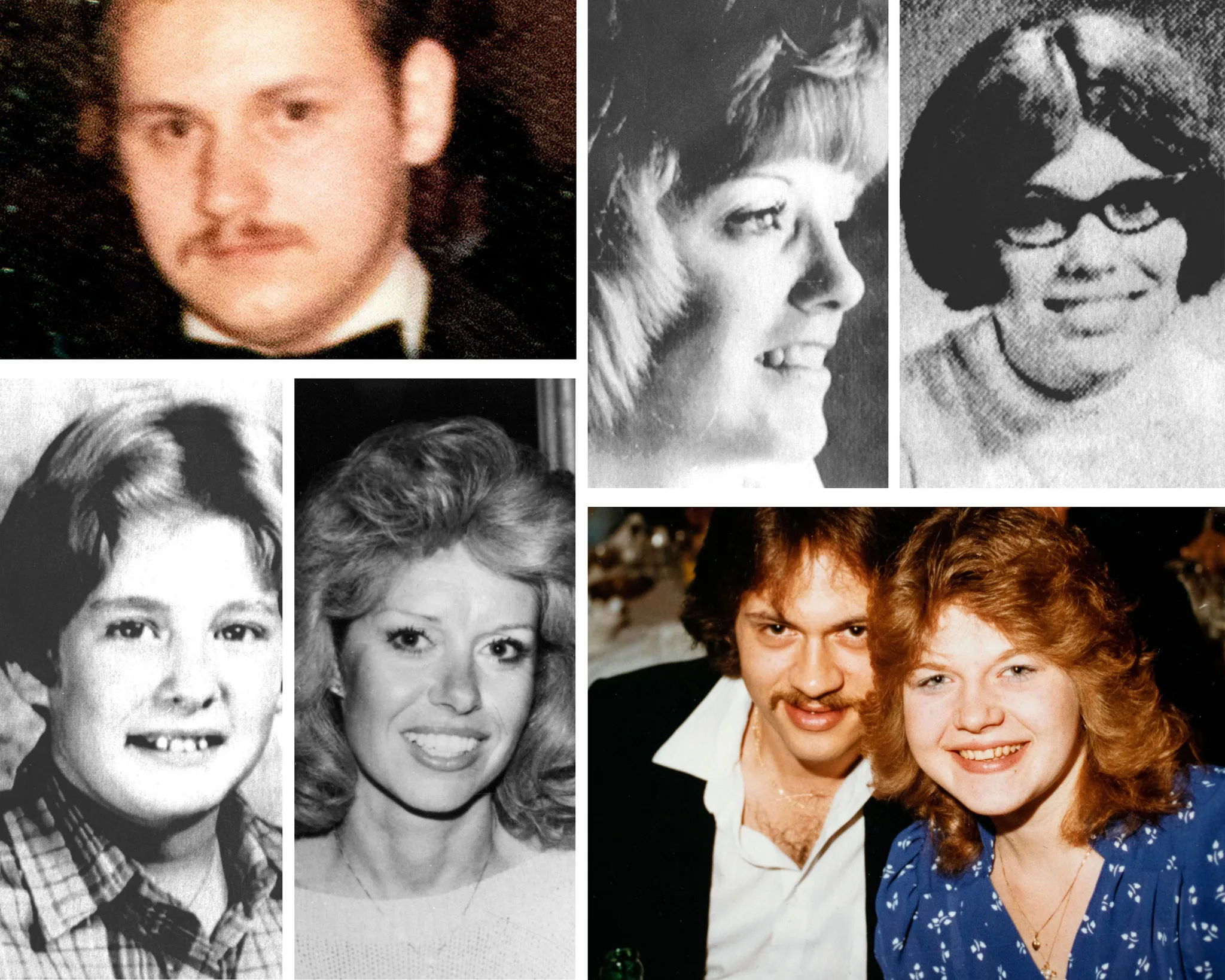
The Victims
- Robert Paul Bower, 35 — September 8, 1985, Oklahoma City. A clerk at a Circle K convenience store, Bower was a stranger to Sellers, murdered simply because Sellers wanted to experience the act of killing.
- Vonda Bellofatto, 32 — March 5, 1986, Oklahoma City. Sellers's mother, she was killed in her bed as she awoke to the sound of her husband being shot.
- Lee Paul Bellofatto, 43 — March 5, 1986, Oklahoma City. Sellers's stepfather, a truck driver and Vietnam veteran, he was the first to be murdered in the family home.
Investigation and Arrest
Sean Sellers's feigned shock and grief did not convince investigators for long. His story began to fall apart almost immediately, largely due to his confession to Richard Howard. When questioned by police, Howard recounted Sellers's chilling admission to killing his parents. He also told them about Sellers's earlier confession to the unsolved murder of the Circle K clerk, Robert Bower.
Armed with this testimony, police arrested Sellers. Howard became the state's star witness. In exchange for his cooperation, prosecutors granted him immunity from a first-degree murder charge in the Bower case. He pleaded guilty to being an accessory after the fact and received a suspended sentence. Howard's detailed account of Sellers's words and actions provided the direct evidence needed to charge the sixteen-year-old with three counts of capital murder.
Trial and Death Sentence
Sellers was tried as an adult in Oklahoma County District Court in late 1986. The prosecution, led by District Attorney Bob Macy, portrayed him as a remorseless and calculating killer who knew right from wrong. They presented his detailed confessions to Howard and physical evidence from the crime scenes to build an overwhelming case.
The defense strategy centered on Sellers's obsession with Satanism. His attorneys argued that he was in the grip of "demonic possession" when he committed the murders and therefore was not in control of his actions. They presented evidence of his occult practices and his immersion in "Dungeons & Dragons," suggesting his perception of reality had been warped. This "devil made me do it" defense was novel and highly publicized, but it failed to persuade the jury.
The jury found Sean Sellers guilty on all three counts of first-degree murder. During the sentencing phase, they were faced with a stark choice. At the time, Oklahoma law did not provide the option of life imprisonment without the possibility of parole. The jurors' only choices were a life sentence, which could have meant Sellers would be eligible for parole in as little as seven to fifteen years, or the death penalty. Fearing he would one day be released and kill again, the jury chose death. On October 2, 1986, the judge formally sentenced seventeen-year-old Sean Sellers to die.
A Diagnosis of Mental Illness
Years after his conviction, as his case proceeded through the appellate courts, a new and compelling argument emerged. In 1992, a psychiatrist diagnosed Sellers with Multiple Personality Disorder (MPD), now known as Dissociative Identity Disorder (DID). The diagnosis was supported by several mental health experts who examined him. They concluded that Sellers had developed at least two distinct alternate personalities, or "alters," as a coping mechanism for severe childhood trauma and abuse.
According to this theory, a violent alter named "Ezra" had emerged during his occult rituals and was in control during the murders. Sellers himself claimed to have no memory of the killings, describing them as blackouts. His lawyers argued that this mental illness, which was not understood or presented at his original trial, meant he was not fully culpable for his actions. They also pointed to a possible physiological cause: a childhood bicycle accident had resulted in a head injury, and a subsequent brain scan revealed damage to his frontal lobe, a region associated with impulse control and judgment. These claims formed the basis of his final appeals, arguing that executing a severely mentally ill individual, who was a child at the time of his crimes, would be a miscarriage of justice.
Life on Death Row
During his thirteen years in the "H-Unit" at Oklahoma State Penitentiary, Sean Sellers underwent a profound personal transformation. He renounced Satanism and, in 1988, became a born-again Christian. He expressed deep remorse for his crimes and dedicated his life in prison to ministry and advocacy. He married in 1995, though his wife was not permitted conjugal visits.
Sellers became a prolific writer, authoring an autobiography and a collection of stories and poems titled "Shuladore: The Souls of Dungeons." He appeared in numerous television interviews and documentaries, speaking out against the dangers of the occult and warning other troubled teens to avoid the path he had taken. His case attracted a wide range of supporters, from human rights groups like Amnesty International to religious figures, who saw his conversion as genuine and argued for his life to be spared.
Appeals and Execution
Sellers's legal team fought his execution for over a decade, filing numerous appeals in state and federal courts. The core arguments were that his trial counsel had been ineffective, that the jury was not given the proper sentencing options, that his MPD diagnosis should be considered, and that executing someone for a crime committed at sixteen was cruel and unusual punishment, violating international law.
His case drew worldwide attention. The Vatican, the American Bar Association, and numerous European governments pleaded with Oklahoma officials for clemency. Despite the international pressure and the complex mental health questions, the courts consistently upheld his conviction and sentence. The Oklahoma Pardon and Parole Board voted 3-1 to deny clemency.
On February 4, 1999, Sean Sellers was executed by lethal injection. His final statement was directed at the families of his victims. To the Bowers, he said, "I'm sorry for the pain and suffering I caused you." To his step-siblings, the children of Paul Bellofatto, he said, "All the pain and suffering I caused you, I'm so sorry. I love you all very much." As the drugs began to flow, he sang a Christian hymn. He was pronounced dead at 12:17 a.m., at the age of 29.
Legacy and the End of Juvenile Executions
The execution of Sean Sellers was a landmark event in the history of American capital punishment. It galvanized opposition to the juvenile death penalty and focused national attention on the issue. At the time of his death, the United States was one of only a handful of countries that still executed juvenile offenders.
Six years after Sellers was put to death, the U.S. Supreme Court took up the case of *Roper v. Simmons*. On March 1, 2005, the Court ruled 5-4 that executing individuals for crimes they committed before the age of eighteen violates the Eighth Amendment's prohibition on cruel and unusual punishment. The majority opinion cited a growing national and international consensus against the practice. The ruling effectively abolished the juvenile death penalty in the United States, a legal shift that many advocates believe was, in part, a legacy of the controversy and debate sparked by the life and death of Sean Sellers.