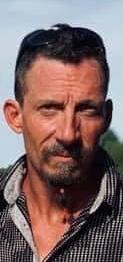
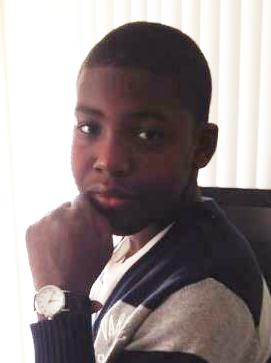
On the quiet night of September 8, 1985, Robert Paul Bower, a 35-year-old male, was at his job as a clerk at a Circle K convenience store in Oklahoma City. His life was cut short in a senseless act of violence by a 16-year-old boy who wanted to know what it felt like to kill someone. The murder was the first of three committed by Sean Richard Sellers, a serial killer whose case would draw international attention because of his age.
That evening, Sellers entered the Circle K with his
friend, Richard Howard. Without any apparent provocation, Sellers drew a handgun and shot Robert Bower. The motive, as Sellers later expressed to his friend, was a chillingly simple and brutal curiosity. According to Howard's testimony, Sellers killed the clerk because he "wanted to see what it feels like to kill somebody." In a later confession, Sellers admitted he laughed after shooting Bower, giggling "like it was a fantastic prank." For six months, the murder remained unsolved, leaving a community in fear and a family without answers.
The investigation into Robert's death gained momentum only after Sellers committed his next horrific crimes. On March 5, 1986, Sellers shot and killed his mother, Vonda Bellofatto, 32, and his stepfather, Paul "Lee" Bellofatto, 43, as they slept in their beds. During the investigation into the double homicide, Sellers's friend Richard Howard informed police about Sellers's confession to killing his parents and also implicated him in the convenience store murder from six months prior. Faced with inconsistencies in his story, Sellers confessed to all three killings. Howard, who was present during Robert's murder, was initially charged with first-degree murder, but the charge was dismissed in exchange for his testimony against Sellers. He received a five-year suspended sentence.
At his 1986 trial, Sellers, then 17, put forth several defenses. His attorneys argued that he was addicted to the game "Dungeons & Dragons" and that he was a practicing Satanist who was demonically possessed at the time of the killings. The prosecution, however, portrayed him as a cold and calculating killer. The jury rejected his claims and found him guilty of three counts of first-degree murder. For the murder of Robert Bower, the jury found aggravating circumstances, including that Sellers posed a continuing threat to society. He was sentenced to death for each of the three murders.
Over the next 12 years, Sean Sellers's case moved through the appeals process, gaining worldwide attention from human rights organizations and other groups opposed to the execution of individuals who were juveniles at the time of their crimes. His defense team later argued that Sellers suffered from Multiple Personality Disorder, now known as Dissociative Identity Disorder, and had undiagnosed brain damage. Despite numerous appeals and a clemency hearing where surviving relatives of Robert Bower demanded the execution proceed, the courts upheld the sentence.
On February 4, 1999, at the age of 29, Sean Richard Sellers was executed by lethal injection at the Oklahoma State Penitentiary. He was the first person in the United States to be executed for a crime committed at the age of 16 since 1959. Before his execution, Sellers issued a statement apologizing to the families of his victims, including the family and friends of Robert Paul Bower. The case had a lasting impact on capital punishment jurisprudence; in 2005, the U.S. Supreme Court ruling in *Roper v. Simmons* declared it unconstitutional to execute individuals for crimes committed under the age of 18, a decision that was influenced by cases like that of Sean Sellers.