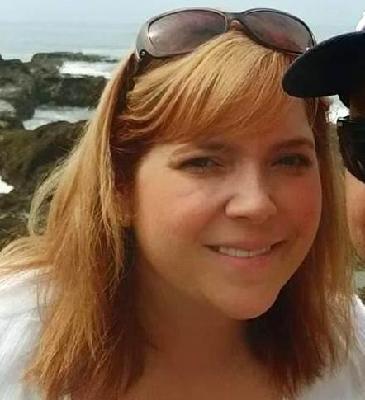
Vonda Bellofatto was a 32-year-old woman whose life was tragically cut short in her Oklahoma City, Oklahoma, home. She was born Vonda Maxine Blackwell and had a son, Sean Richard Sellers, when she was just 16 years old. After her first marriage ended, Vonda married Lee Paul Bellofatto, a truck driver and Vietnam veteran. For a time, both Vonda and Lee worked as cross-country truck drivers, sometimes leaving their son with relatives for extended periods.
Eventually, the family settled in Oklahoma City, where the couple stopped driving and tried to build a stable life.
In the early morning hours of March 5, 1986, Vonda and her 43-year-old husband, Lee, were murdered as they slept in their bed. The person responsible was Vonda's own son, 16-year-old Sean Sellers. Dressed only in his underwear to avoid blood spatter, Sellers entered his parents' bedroom with his stepfather's.44 caliber revolver. He first shot Lee Bellofatto in the head. The sound of the gunshot awoke Vonda, and her son then shot her in the face, killing her. Sellers attempted to stage the scene to look like a home invasion before going to a friend's house. The next morning, he returned home and pretended to discover the bodies.
Investigators quickly saw through the staged crime scene, and inconsistencies in Sellers's story led them to focus on him. Within a day, he confessed to killing his mother and stepfather. During his confession, Sellers also admitted to a murder he had committed six months earlier, on September 8, 1985. In that case, he had shot and killed Robert Paul Bower, a 36-year-old convenience store clerk who had refused to sell beer to his friend. Sellers later told his friend, Richard Howard, that he killed Bower because he "wanted to see what it feels like to kill somebody." Howard, who was present during Bower's murder, testified against Sellers in exchange for a suspended sentence.
At his 1986 trial for three counts of first-degree murder, Sellers's defense attorneys argued that he was not responsible for his actions due to an addiction to the game "Dungeons & Dragons" and his involvement in Satanism. They claimed demonic possession had driven him to kill. The jury rejected these defenses and found him guilty on all three counts. At the time, Oklahoma law did not offer juries the option of life without parole, and fearing Sellers might be released in as little as seven years, the jury sentenced him to death.
Sean Sellers was executed by lethal injection on February 4, 1999, at the age of 29. His case drew international attention and condemnation because he was only 16 at the time of the murders, making him the first person executed in the United States for a crime committed at that age in 40 years. While on death row, Sellers converted to Christianity, wrote a book, and claimed he suffered from Multiple Personality Disorder, arguing an alternate personality was responsible for the killings. A federal court acknowledged there was "significant evidence" of the disorder but ruled the claim had been made too late to be considered on appeal.
The family of Lee Bellofatto remained steadfast in their support of the execution. His brother, Thomas Bellofatto, publicly stated that Sellers's age was no excuse, saying his own seven-year-old grandson understood right from wrong. Lee's son, Lorne Bellofatto, dismissed Sellers's claims of a troubled childhood and abuse as fictionalized stories created to gain sympathy. The execution of Sean Sellers brought a final, decisive end to the legal chapter of the case, though it contributed to a larger national and international debate about juvenile capital punishment that continued for years. In 2005, the U.S. Supreme Court ruled it unconstitutional to execute individuals for crimes committed under the age of 18.