Cary Anthony Stayner: The Yosemite Killer
Background
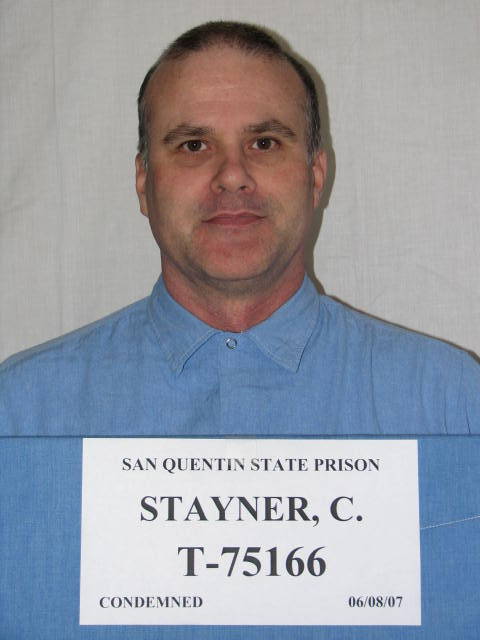
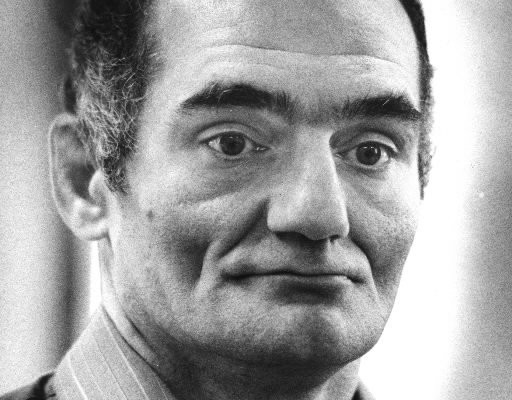
Cary Anthony Stayner was an American serial killer responsible for murdering four females in and around Yosemite National Park in California during 1999. Known as the “Yosemite Killer” or the “Yosemite Park Killer,” Stayner selected victims who were visiting or working near the park. He used his employment as a handyman at the Cedar Lodge motel in El Portal to observe travelers, move around the property without attracting attention and gain access to areas associated with the victims.
Stayner was born on August 13, 1961, in Merced, California. He was the older brother of Steven Stayner, who became nationally known after being kidnapped at age seven and held captive for approximately seven years. Cary Stayner later claimed that he had experienced violent fantasies long before committing the Yosemite murders. By the late 1990s, he was living and working near Yosemite, placing him in close contact with tourists visiting the region.
The Disappearance of the Yosemite Sightseers
In February 1999, Carole Sund traveled to the Yosemite area with her 15-year-old daughter, Juliana “Juli” Sund, and 16-year-old Silvina Pelosso, an exchange student from Argentina who was staying with the Sund family. The three had attended a cheerleading event in Stockton before continuing to Yosemite for sightseeing.
On February 15, 1999, they stayed at the Cedar Lodge in El Portal, near the western entrance to Yosemite National Park. Carole spoke with her husband that evening and discussed the group’s plans. The three were expected to return home the following day, but they failed to arrive. When relatives could not contact them, their disappearance was reported, beginning an extensive search involving local authorities and the FBI.
Investigators initially had few clear leads. Carole’s wallet was found on a street in Modesto on February 19, far from the motel. The discovery appeared to suggest that whoever was responsible might have traveled west after the women disappeared. Search teams examined roads, waterways, wooded areas and properties throughout the region while the Sund family offered a substantial reward for information.
The Murders of Carole Sund, Juli Sund and Silvina Pelosso
Stayner later confessed that he entered the women’s room at the Cedar Lodge on the night of February 15, 1999. Armed and prepared to restrain his victims, he took control of the room and prevented the three from escaping. He murdered Carole Sund first, then attacked Silvina Pelosso and Juli Sund.
Stayner placed the bodies of Carole and Silvina in Carole’s rented red Pontiac Grand Prix. He drove the vehicle away from the lodge and eventually abandoned it near Long Barn in Tuolumne County. He set the vehicle on fire in an attempt to destroy the bodies and eliminate evidence connecting him to the crimes.
The burned rental car was discovered on March 18, 1999. The remains of Carole Sund and Silvina Pelosso were found inside its trunk. Dental records were required to establish their identities because of the severe fire damage. Juli Sund’s body was not in the vehicle, leaving investigators uncertain about where she had been taken.
Several days later, the FBI received an anonymous letter containing a hand-drawn map. The message included the disturbing statement, “We had fun with this one.” The map directed investigators to a remote location near Don Pedro Reservoir. On March 25, 1999, searchers found Juli’s remains near the reservoir. Stayner later admitted that he had written the note and drawn the map.
The Murder of Joie Ruth Armstrong
Four months after the first three murders, Stayner targeted 26-year-old Joie Ruth Armstrong, a naturalist employed by the Yosemite Institute. Armstrong lived in a cabin near Foresta, a small community inside Yosemite National Park. She was preparing to leave the area to visit friends when Stayner approached her home on July 21, 1999.
Stayner initially attempted to persuade Armstrong to enter his vehicle by claiming that he needed assistance. She became suspicious and resisted him. Armstrong fought desperately and attempted to escape, but Stayner caught her and murdered her near the cabin. Her body was discovered on July 22, 1999.
Witnesses reported seeing a distinctive blue 1972 International Scout near Armstrong’s residence. Investigators connected that vehicle to Stayner, who had previously been interviewed as a Cedar Lodge employee during the Sund investigation. The vehicle description transformed him from a peripheral witness into a primary suspect.
Confirmed Victims
- Carole Evon Sund, 42 — Murdered on February 15, 1999, at or near the Cedar Lodge in El Portal, Mariposa County, California. Her body was placed in the trunk of a rented Pontiac Grand Prix, which was later burned near Long Barn in Tuolumne County. Her remains were discovered on March 18, 1999.
- Silvina Pelosso, 16 — Murdered on February 15, 1999, after being abducted from the Cedar Lodge in El Portal. Pelosso was an Argentine exchange student traveling with the Sund family. Her remains were found with Carole Sund’s inside the burned rental car near Long Barn on March 18, 1999.
- Juliana “Juli” Sund, 15 — Murdered on February 15, 1999, after being taken from the Cedar Lodge. Stayner transported her to an isolated area near Don Pedro Reservoir in Tuolumne County. Her remains were located on March 25, 1999, after Stayner anonymously mailed investigators a map showing where he had left her.
- Joie Ruth Armstrong, 26 — Murdered on July 21, 1999, near her cabin in the Foresta area of Yosemite National Park, Mariposa County. Armstrong was a naturalist with the Yosemite Institute. Her body was discovered on July 22, 1999.
Investigation and Arrest
After Armstrong’s murder, investigators quickly focused on the blue International Scout seen near her cabin. Stayner owned and drove a vehicle matching the witnesses’ descriptions. Authorities also knew that he worked at the Cedar Lodge, the last confirmed location of Carole Sund, Juli Sund and Silvina Pelosso before they disappeared.
Stayner left the Yosemite area after Armstrong’s killing. FBI agents located him at the Laguna del Sol resort near Wilton, California, on July 24, 1999. He was detained and questioned about Armstrong’s death. During the interrogation, Stayner confessed to killing Armstrong and then admitted that he had also murdered Carole Sund, Juli Sund and Silvina Pelosso.
Stayner provided investigators with details that had not been publicly released. He described the victims’ final movements, the disposal of their bodies and the anonymous map sent to the FBI. His knowledge of these details, combined with physical evidence and witness information, supported the confession.
Confession and Claims About His Motives
During interviews, Stayner claimed that he had experienced fantasies about abducting and murdering women from an early age. He said that he had considered attacking other victims before choosing the Sund party. His statements portrayed the murders as planned acts rather than sudden explosions of violence.
Stayner’s defense later argued that he suffered from serious mental disorders and that his psychological condition affected his judgment. Prosecutors maintained that he understood the criminal nature of his actions and had taken deliberate steps to avoid detection. Those steps included moving bodies, burning the rental car, abandoning evidence in another city, sending the map anonymously and fleeing after Armstrong’s murder.
Federal Prosecution
Because Joie Armstrong was murdered within Yosemite National Park, her case fell under federal jurisdiction. Stayner pleaded guilty in federal court to charges connected to her kidnapping and murder. In December 2000, he received a federal sentence of life imprisonment without the possibility of parole.
The federal plea resolved Armstrong’s case but did not cover the three Cedar Lodge victims, whose murders were prosecuted by the State of California. Stayner therefore faced a separate trial for the killings of Carole Sund, Juli Sund and Silvina Pelosso.
California Trial and Death Sentence
Stayner’s state trial was moved to Santa Clara County because of the extensive publicity surrounding the Yosemite murders. The defense did not seriously dispute that he had killed the victims. Instead, his attorneys attempted to prove that he was legally insane at the time of the crimes and should not be held fully responsible under California law.
Prosecutors presented his detailed preparations, efforts to conceal evidence and attempts to avoid arrest as proof that he knew his actions were wrong. Jurors rejected the insanity defense and convicted him in 2002 of three counts of first-degree murder with special circumstances, along with kidnapping and related offenses.
During the penalty phase, prosecutors emphasized the calculated nature of the crimes, the ages of the teenage victims and the suffering inflicted on the victims and their families. The jury recommended capital punishment. On December 12, 2002, Stayner was formally sentenced to death for the murders of Carole Sund, Juli Sund and Silvina Pelosso.
Aftermath
The Yosemite murders caused fear throughout one of the country’s most famous national parks and surrounding tourist communities. The case also demonstrated how an offender with no established history of homicidal violence could initially escape suspicion while participating in the environment surrounding an investigation.
Stayner had been interviewed during the search for the Sund party, but investigators did not initially view him as a likely killer. He appeared cooperative, had access to the motel as an employee and did not have the type of violent criminal record that would have immediately connected him to multiple murders. Only after Armstrong’s death and the sighting of his distinctive vehicle did authorities recognize the connection.
The four victims are remembered as individuals whose lives were taken during ordinary activities: a family vacation, an educational trip and a young naturalist’s work in Yosemite. Stayner’s convictions brought legal accountability, but the case left lasting grief for the Sund, Pelosso and Armstrong families and permanently linked the peaceful Yosemite region with one of California’s most notorious serial murder investigations.