Joseph Douglas Ball: The Butcher of Elmendorf
Overview
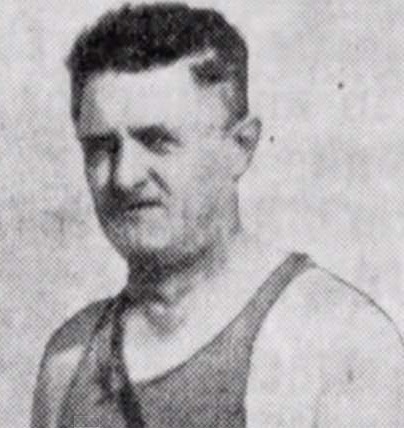
Joseph Douglas "Joe" Ball was a Texas tavern owner and murderer whose name became attached to one of the most disturbing crime legends of the 1930s. Born on January 7, 1896, in San Antonio, Texas, Ball later became known as the "Butcher of Elmendorf," the "Alligator Man," and the "Bluebeard of South Texas." Although later stories attributed numerous murders to him, the surviving historical evidence most firmly connects Ball to the deaths of two women: Minnie Gotthardt and Hazel "Schatzie" Brown. Investigators suspected that additional missing women may also have been victims, but those cases were never conclusively proved.
Ball's notoriety was greatly amplified by the unusual attraction behind his tavern near Elmendorf, Texas: a concrete enclosure containing several live alligators. Contemporary accounts and later interviews established that Ball kept approximately five alligators and entertained customers by feeding animals to them. After women associated with his tavern began disappearing, rumors spread that Ball had disposed of human remains by feeding them to the reptiles. That allegation became inseparable from his legend, although investigators never established through physical evidence that either of his two known victims was fed to the alligators.
Early Life and the Sociable Inn
Ball grew up in the San Antonio area and served in the United States military during World War I, including service overseas in Europe. After returning to Texas, he became involved in the illegal liquor trade during Prohibition. When Prohibition ended, Ball already possessed experience in the liquor business and opened a roadside establishment near Elmendorf known as the Sociable Inn.
The tavern developed a reputation for drinking, gambling, attractive young waitresses, and unusual entertainment. Behind the establishment Ball constructed a concrete pond or enclosure where he kept alligators. Customers reportedly gathered to watch the animals being fed. Stories from people familiar with the tavern described Ball feeding the alligators meat and, on some occasions, live animals. The spectacle helped make the Sociable Inn locally famous.
Ball was also known for becoming romantically involved with women who worked for him. Some employees remained only briefly, and during the late 1930s several women associated with Ball disappeared. At first the disappearances could be explained individually. Ball frequently told concerned relatives or investigators that a missing employee had simply quit, moved away, or found another job. Eventually, however, the number of unexplained disappearances attracted the attention of law enforcement.
Minnie Gotthardt
Minnie Gotthardt, commonly called "Big Minnie," was from the Seguin area and became closely associated with Ball and the operation of his tavern. The two were romantically involved for a period of time. Their relationship became complicated when Ball developed an interest in another employee, Dolores "Buddy" Goodwin.
Gotthardt disappeared in 1937. Ball gave different explanations for her absence, suggesting that she had gone elsewhere and was no longer associated with the Sociable Inn. Her family, however, remained concerned because they could not locate her.
After Ball's death, his handyman Clifton Wheeler told investigators what he said had actually happened. According to Wheeler, Ball took Gotthardt to the Texas coast near Ingleside in June 1937. During the outing, Ball shot her in the head. Wheeler said he was present and assisted Ball in concealing her body beneath the sand.
Investigators eventually traveled to the location described by Wheeler. After a difficult search of the coastal sand, authorities recovered Gotthardt's remains near old Ingleside on October 13, 1938. Contemporary newspaper reports announced the discovery the following day. The location and condition of the remains supported Wheeler's claim that Gotthardt had been killed and secretly buried there approximately a year and a half earlier.
Hazel "Schatzie" Brown
Hazel Brown, often called "Schatzie," was a 22-year-old woman from McDade, Texas, who worked at Ball's establishment. Like several other young women employed at the Sociable Inn, Brown became personally involved with Ball. According to Wheeler's later account, Brown eventually became interested in another man and wanted to leave Ball.
Brown also reportedly knew about the disappearance of Minnie Gotthardt. Wheeler told authorities that tension intensified when Brown threatened to reveal what she knew about Gotthardt's death. Brown disappeared in September 1938, shortly before investigators confronted Ball.
After Ball died, Wheeler admitted that he knew where Brown's body had been concealed. He led officers to an isolated location approximately three miles outside Elmendorf near the San Antonio River. There investigators uncovered Brown's dismembered remains in a shallow grave. Parts of her skull and jaw were reportedly recovered from the remains of a nearby fire.
Wheeler told investigators that Ball had placed Brown's body inside a large barrel and transported it to the isolated river location. He described being forced to assist Ball in dismembering and burying her remains. Wheeler's ability to lead investigators directly to Brown's grave provided the strongest evidence connecting Ball to her murder.
Known Victims
- Minnie Gotthardt - Killed in June 1937 near Ingleside and Corpus Christi Bay, Texas. According to Clifton Wheeler, Ball shot Gotthardt in the head and buried her in the coastal sand. Her remains were recovered near old Ingleside on October 13, 1938. Contemporary reports described her as being from Seguin, Texas.
- Hazel "Schatzie" Brown - Killed in September 1938, shortly before Ball's death; the exact day of her death has not been reliably established. Brown was 22 and was from McDade, Texas. Her dismembered remains were recovered from a shallow grave near the San Antonio River approximately three miles from Elmendorf, Texas, after Clifton Wheeler led investigators to the location.
Other Missing Women and Suspected Victims
The deaths of Gotthardt and Brown are the two murders most strongly supported by the surviving evidence. Nevertheless, investigators in 1938 were concerned that Ball might have killed additional women. Several former employees of the Sociable Inn had disappeared, and deputies began compiling information about women who had worked for him.
One of the names investigated was Julia Turner, a former employee whose family reported her missing. Ball claimed that Turner had been experiencing personal problems and had decided to leave town. Investigators became suspicious when they discovered that she had apparently left clothing and other belongings behind. Ball then claimed that he had given Turner money so she could leave quickly. Contemporary reports continued to describe Turner as a possible victim after Ball's death, but no verified remains or confirmed date of death connected to her were established. She therefore cannot responsibly be listed among Ball's proven murder victims.
Newspapers also reported that authorities were attempting to locate a woman named Betty Wendell, while several other women remained unaccounted for during the investigation. Some later accounts increased the supposed number of victims dramatically, occasionally claiming that Ball killed a dozen or even twenty women. The historical evidence does not establish those numbers. Investigators found photographs of numerous women among Ball's possessions, but they were unable to demonstrate that the women pictured had been murdered by him.
Dolores "Buddy" Goodwin
One disappearance that initially appeared ominous eventually had a very different explanation. Ball married Dolores "Buddy" Goodwin in September 1937. Their relationship was troubled, and Goodwin suffered serious injuries in an automobile accident in January 1938 that resulted in the loss of an arm. When she disappeared several months later, rumors immediately suggested that she had become another of Ball's victims.
Goodwin was subsequently located alive. She had left Ball rather than being murdered by him. Her survival is important because early reports sometimes included her among the women supposedly killed at the Sociable Inn. In later years, Goodwin disputed some of the more sensational stories associated with her former husband and reportedly maintained that Ball had committed two murders rather than the enormous number eventually attributed to him.
The Investigation Closes In
By September 1938, law enforcement attention was increasingly focused on Ball. Families of missing women had been demanding answers, and investigators were questioning people who knew Ball and his employees. On September 23, a witness reportedly informed authorities about a suspicious barrel associated with Ball that appeared to contain decomposing material. Other disturbing stories about the tavern and the alligator enclosure were also reaching investigators.
On September 24, 1938, Bexar County deputies John Gray and John Klevenhagen went to the Sociable Inn to take Ball to San Antonio for further questioning. Ball initially appeared to cooperate and asked for an opportunity to close the establishment.
Instead, he went behind the bar to his cash register. Ball opened the register, removed a handgun, and shot himself. His death certificate recorded a gunshot wound through the heart, although later retellings frequently described him as shooting himself in the head. Ball died at the Sociable Inn on September 24, 1938, at the age of 42. His suicide prevented investigators from questioning him about the growing list of missing women or bringing him to trial.
Clifton Wheeler's Confession
Ball's death shifted the investigation toward Clifton Wheeler, his handyman. Wheeler initially denied knowing what had happened to the missing women, but eventually provided investigators with detailed information about Brown and Gotthardt.
Most importantly, Wheeler did not merely make accusations. He led officers to physical evidence. He guided them to the burial site of Hazel Brown near the San Antonio River and later identified the coastal area near Ingleside where Minnie Gotthardt had been buried. Authorities recovered remains from both locations.
Wheeler maintained that Ball was the killer and that he had participated in disposing of the bodies, at least in part because Ball threatened him. Authorities nevertheless considered Wheeler criminally responsible for his role. In April 1939, Wheeler pleaded guilty as an accessory after the fact in connection with Hazel Brown's murder and received a two-year prison sentence. A separate case concerning Gotthardt was expected to be dropped after his conviction.
Did Ball Feed Women to His Alligators?
The most famous part of the Joe Ball story is also the least certain. Rumors that Ball fed murdered women to his alligators appeared almost immediately after his suicide. Newspapers across the country printed sensational accounts describing the possibility that women had been dismembered and thrown into the alligator enclosure.
Investigators searched around the Sociable Inn and examined the alligator pond. They encountered rotting animal meat and investigated claims from witnesses who said they had seen suspicious activity around the enclosure. However, no conclusive physical evidence demonstrated that the remains of Gotthardt, Brown, or any other identified woman had actually been consumed by Ball's alligators.
In fact, the two known victims were located in graves. Brown had been buried near the San Antonio River, while Gotthardt had been buried in coastal sand near Ingleside. This does not prove that Ball never used the alligators to dispose of human remains, but it means the famous "alligators ate the victims" story should be treated as an allegation and part of the folklore surrounding the case rather than a firmly established fact.
How Many People Did Joe Ball Kill?
The true number of Ball's victims remains unknown. Two murders are supported by compelling evidence: Minnie Gotthardt and Hazel Brown. Both women disappeared after close relationships with Ball, Wheeler described Ball's involvement in their deaths, and Wheeler led authorities to their remains.
Claims of five, fourteen, twenty, or even more victims developed as the story was retold. Contemporary investigators themselves suspected additional murders because several women associated with Ball could not immediately be located. Yet many people initially feared dead were eventually found alive, and no additional set of remains was conclusively tied to Ball.
For that reason, Ball is frequently described as a serial killer or suspected serial killer, but the historical record is considerably more limited than the legend. His suicide ensured that the most important unanswered questions could never be put directly to him.
Legacy
Joseph Douglas Ball died before he could face a murder trial, leaving investigators to reconstruct his crimes from Wheeler's testimony, recovered remains, surviving witnesses, and newspaper reports. The discovery of two murdered women demonstrated that the suspicions surrounding the Sociable Inn were not merely rumors. At the same time, the absence of proof for the many additional murders attributed to him created a mixture of documented crime and folklore that has persisted for decades.
The story of the tavern owner, his disappearing employees, and the alligator enclosure became one of Texas's most enduring true-crime legends. Ball's reputation grew far beyond what investigators were ever able to prove, transforming two documented murders into stories of an enormous killing operation in which victims supposedly vanished into an alligator pond.
Behind that legend, however, were two identifiable women whose deaths were established by physical evidence. Minnie Gotthardt was killed in June 1937 and secretly buried near Ingleside. Hazel Brown was murdered in September 1938 and buried near the San Antonio River outside Elmendorf. Their recoveries revealed the reality behind the rumors and established Joseph Douglas Ball as a killer, even though his suicide on September 24, 1938, prevented a trial and left the full extent of his crimes permanently unresolved.