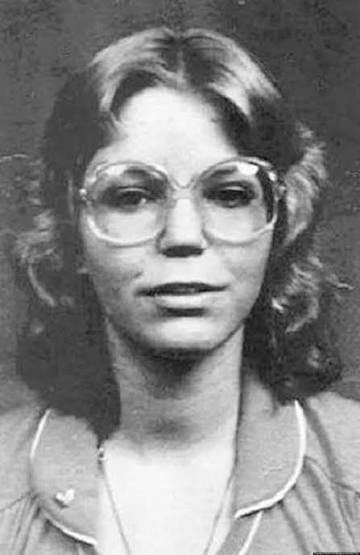
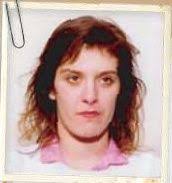
In the small Rocky Mountain town of Hinton, Alberta, with a population of about 8,500 in the early 1980s, Shelley-Anne Bascu was a familiar, friendly face. At 16 years old, the five-foot-tall girl with brown hair, freckles, and a small scar on her forehead was known to her family and friends. Shelley-Anne, a Caucasian female, lived with rheumatoid arthritis and a hearing impairment but did not let it define her.
She was a daughter, a sister, and a friend with her whole life stretching out before her.
The evening of Tuesday, May 3, 1983, began like many others for Shelley-Anne. She was babysitting at her boyfriend's brother's home in what was then known as the Sunset Trailer Park. Around 8 p.m., she called her mother, Muriel, to say she was heading home and asked her to put some pasta on for dinner. It was a short walk, about seven kilometers, to her family's rural home off Highway 40. It was the last time her mother would ever hear her voice. When Shelley-Anne's boyfriend called the house around 9 p.m. looking for her, a knot of worry began to form. Her parents, Muriel and Sandy, immediately drove the route she would have taken but found no trace of her.
Police were initially hesitant to treat the case as more than a teenage runaway, a theory her mother vehemently rejected. However, the discovery of some of Shelley-Anne's personal belongings four days later, on May 7, shifted the investigation's focus entirely. Strewn on the banks of the Athabasca River, just off Highway 40 and about three miles from her house, searchers found her grey and burgundy jacket, a bra, pantyhose, her student card, and a library book she had just checked out. The grim discovery led investigators to suspect foul play was involved in her disappearance.
Witnesses reported seeing Shelley-Anne walking west along the shoulder of Highway 16, carrying her school books and a blue binder, with no intention of hitchhiking. More troubling were accounts of a van, possibly blue or another dark color, with British Columbia license plates in the area around the time she was last seen. One witness reported seeing a young girl being pushed or pulled into a van by a tall, blonde man. Despite these leads, an extensive search for the vehicle and its occupants proved fruitless. The rugged, heavily wooded terrain surrounding Hinton hampered search efforts from the beginning.
Years turned into decades, and Shelley-Anne's case grew cold, but it was never closed. Her disappearance was eventually included in Project E-PANA, a Royal Canadian Mounted Police (RCMP) task force investigating a string of unsolved murders and disappearances of women along major highways in British Columbia and Alberta, including the notorious "Highway of Tears." Though her body has never been found, the RCMP officially reclassified her case as a homicide. In 2019, investigators with the RCMP's Historical Homicide Unit took a fresh look at the evidence, applying modern forensic techniques. They were able to develop two DNA profiles from items found at the scene; one was Shelley-Anne's, but the other, believed to belong to her killer, has not matched anyone in the national DNA databank.
For more than four decades, Shelley-Anne's family has lived in a state of suspended grief. Her brother has since passed away, and her parents, now in their 80s, have never given up hope of bringing their daughter home. "I don't want to leave this earth not knowing… I want to have her remains. I think I deserve that," her mother, Muriel, has said. The family, with the help of a local businessman, has offered a $50,000 reward for information that leads to answers.
The investigation into Shelley-Anne Bascu's disappearance remains open and active. Police and her family believe that someone in the community holds the key to solving the mystery of what happened on that foggy, rainy spring night in 1983. "Someone out there knows what happened, and we want that person to come forward," said an RCMP sergeant on the cold case team. Until then, a family waits, a community remembers, and a case file stays open, holding the story of a 16-year-old girl who simply wanted to go home for dinner.