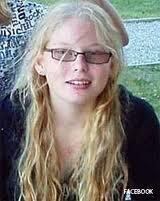
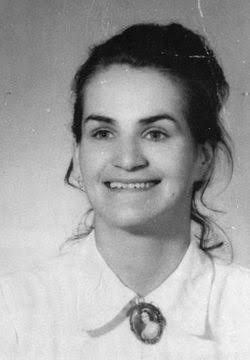
Gale Ann Weys was a bright, independent, and caring 19-year-old woman with a promising future ahead of her. The second oldest of nine siblings in a Kamloops, British Columbia, family, she was remembered by her sisters as a protective and supportive figure with an infectious laugh and a sharp sense of humor. Gale was a natural leader who channeled her energy into helping others.
She was a Girl Guide leader, a swimming instructor and lifeguard, and volunteered her time to work with special-needs children. Described as a "tomboy," she loved outdoor adventures and encouraged her younger siblings to join her. In 1973, Gale moved to the small town of Clearwater to live on her own and save money. She worked two jobs, one at a service station and another at the David Thompson Pub, with dreams of traveling to Mexico to help alleviate poverty and one day becoming a mother.
On the evening of Friday, October 19, 1973, Gale finished her shift and was intent on getting home to her family in Kamloops, a journey of more than 120 kilometers south. She went to the pub where she also worked and asked patrons for a ride, but no one was heading in that direction. A local banker, Ron Hagerman, remembered seeing her that night. "I know that night she was asking around for someone to drive her to Kamloops, because her parents lived there," he later recalled. "No one was going to Kamloops, and so she just walked outside and stuck out her thumb." That was the last time Gale was seen alive. Her family’s hope and worry turned to anguish as the weeks and months passed with no word.
Nearly six months later, on April 6, 1974, Gale’s remains were discovered in a water-filled ditch off Highway 5, about 11 kilometers south of Clearwater. Her body was found nude, and her clothing was never recovered. The discovery confirmed her family's worst fears and left the community in grief. The investigation into her homicide would span decades, eventually becoming linked to a series of similar unsolved murders and disappearances of young women along major transportation routes in British Columbia.
Gale's case was included in the portfolio of the RCMP's Project E-PANA, a task force created to investigate the string of cases collectively known as the "Highway of Tears." This series of killings, primarily of young women, many of whom were Indigenous and were last seen hitchhiking, created a climate of fear across the region for decades. The official timeframe for the E-PANA investigation covers cases from 1969 to 2006, with at least 18 women on the official list of victims.
For nearly 40 years, Gale’s case remained cold. Then, in 2012, the RCMP announced a major development. They identified a deceased American convict named Bobby Jack Fowler as a "strong suspect" in Gale's murder. Fowler, a transient roofer who had worked in Prince George in 1974, died in an Oregon prison in 2006. DNA evidence had conclusively linked him to the 1974 murder of another Highway of Tears victim, 16-year-old Colleen MacMillen. Investigators also considered him a suspect in the 1973 death of 19-year-old Pamela Darlington. All three young women were last seen hitchhiking.
The announcement brought a flicker of hope to Gale's family. "As a family we truly never thought this open wound would be resolved in any way; we had given up hope," her sisters Denice Weys and Dianne Weddell said in a statement. They appealed to the public for any information about Fowler, no matter how trivial it might seem, urging anyone who may have been afraid to speak up to come forward, as he could no longer harm them. Despite the strong suspicion and circumstantial links, however, investigators were unable to find DNA evidence connecting Fowler to Gale's case.
Today, the murder of Gale Ann Weys remains officially unsolved. Her bright spirit and the dreams she never had the chance to fulfill are not forgotten. Her family’s statement captured the profound loss: "These dreams and many others yet to be created were never fulfilled as life was taken from her, and she from us, violently, painfully and abruptly." Her case stands as a painful reminder of the vulnerability of those who traveled the lonely highways of British Columbia and the enduring quest for justice for the many victims of the Highway of Tears.