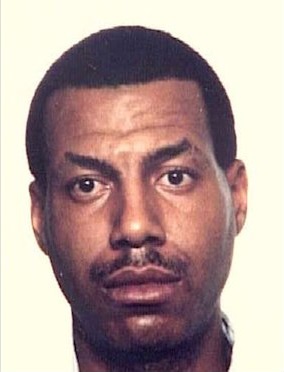
James Edward Daniels: Murder, Parole, and a Final Violent Manhunt
Early Life and Criminal Background
James Edward Daniels was born in Brooklyn, New York, in 1940. He developed a serious criminal record while still a young man. In early 1960, Daniels was arrested after assaulting a man in Queens with a homemade or improvised firearm commonly described as a zip gun. He was imprisoned for approximately two years. His release did not mark the end of his violent behavior. Within roughly a year, Daniels became involved in the killing that would result in his first murder conviction.
The Murder of Calvin Dean
In March 1963, Calvin Dean was killed during violence connected with a craps game in the Ozone Park section of Queens, New York. Dean was reportedly running the gambling game when the deadly confrontation occurred. Daniels and five other men were subsequently charged with second-degree murder in connection with Dean's death.
Daniels was convicted for his role in the murder and received an extraordinarily lengthy sentence of 50 years to life in prison. He was incarcerated at Green Haven Correctional Facility in New York. Surviving accounts identify Dean's death as occurring in March 1963; some modern records give March 5, 1963, although the exact day is not consistently reproduced in surviving contemporary material.
Years in Prison and Parole
Daniels spent approximately 13 years imprisoned for Dean's murder. While at Green Haven, he participated in vocational training and learned barbering. He also played football and took courses in subjects including political science and Black studies. He came into contact with college students who visited the institution as prison volunteers.
Changes in New York sentencing law eventually affected the amount of time Daniels was required to serve. On February 8, 1976, he was paroled despite the original 50-years-to-life sentence. His release gave him an opportunity to establish a new life outside prison, but his subsequent history was marked by additional legal problems and ultimately another series of killings.
Relocation to Oregon
In September 1977, Daniels moved to Portland, Oregon. During his time there he married, became a father and obtained work at an alcohol detoxification facility. For a period, his life appeared substantially different from the circumstances that had led to his murder conviction.
Problems developed after allegations arose that Daniels was stealing money from people at the facility. Investigators conducted an undercover operation, and on August 11, 1978, Daniels was arrested after allegedly taking $91 from an undercover officer. Daniels denied stealing the money. The prosecution went through two unsuccessful trials, with one resulting in a hung jury and another in a mistrial. The charge was eventually dismissed under an arrangement that called for Daniels to return to New York.
Return to New York and Fugitive Status
Daniels eventually lived in the St. Albans area of Queens. Although the Oregon case had not produced a conviction sufficient to revoke his parole, he subsequently left New York without authorization. A parole warrant was issued for him. People who knew Daniels later described a man who had become increasingly bitter about the possibility of returning to prison.
By early 1984, Daniels was again associated with criminal activity in Queens. Investigators believed he was involved with a burglary operation whose participants stole household property. It was through this criminal circle that Daniels was connected with Ira Adams, a 29-year-old man with a history of arrests for burglary and grand larceny.
The March 19, 1984 Double Homicide
During the early morning of March 19, 1984, police were alerted to a parked U-Haul truck in Queens. Inside the stolen vehicle officers discovered the body of Ira Adams. Adams had been shot to death. What initially appeared to be a single homicide quickly developed into a double-murder investigation.
Investigators discovered information inside the truck that directed them to an address only several blocks away. When officers reached the residence, they found 21-year-old Karen Jefferson, Adams's live-in girlfriend, dead from gunshot wounds. Jefferson had been shot in the head and chest.
Detectives soon focused on James Edward Daniels. A witness reportedly identified him, and investigators developed the theory that Daniels and Adams had become involved in a dispute concerning money connected with their criminal activities. Authorities believed Adams was killed because of that dispute and that Jefferson was killed because she could identify or implicate the person responsible for Adams's death.
Daniels was therefore regarded by authorities as the principal suspect in both killings. State and federal authorities sought his arrest, and surveillance operations were established at locations in Brooklyn and Queens. Unlike Calvin Dean's murder, however, Daniels would never face a jury for the deaths of Adams and Jefferson. He remained a fugitive until his own death less than two months later.
Life on the Run
Daniels managed to avoid the intensive search for him. He was reportedly living in an older van and at one point traveled to Durham, North Carolina. He later returned to the New York area despite the warrants and police attention surrounding him.
By May 1984, Daniels was not merely a convicted murderer on parole but a fugitive wanted for questioning and arrest in connection with two new homicides. His effort to remain free culminated on the morning of May 7, 1984, when an encounter on the New Jersey Turnpike brought the manhunt to a violent conclusion.
The Murder of Trooper Carlos M. Negron
On May 7, 1984, Daniels was traveling with Lenell Hutchinson, approximately 40 years old, when their van was stopped along the northbound New Jersey Turnpike in East Windsor Township. New Jersey State Trooper Carlos M. Negron, 29, was on routine patrol when he noticed the vehicle and believed its occupants might need roadside assistance.
At approximately 8:12 a.m., Negron stopped near the van at about milepost 66.7 and approached it. Instead of encountering stranded motorists, he was confronted by armed fugitives. Gunfire erupted. Negron was struck repeatedly, including multiple wounds to his chest and another wound near his rib cage.
The critically wounded trooper attempted to return toward his patrol vehicle as the confrontation continued. Daniels and Hutchinson abandoned their original van and fled from the Turnpike into the surrounding area. Negron was transported to the Medical Center at Princeton, where he was pronounced dead at approximately 9:35 a.m. His official date of death was May 7, 1984.
Hostages and the Stolen Van
Daniels and Hutchinson fled through wooded terrain until they reached a nearby service facility. There they confronted three employees at gunpoint. The employees were restrained with telephone cords, and the fugitives stole another van.
The escape immediately produced a large police response. New Jersey State Police and local officers pursued the stolen vehicle as Daniels and Hutchinson attempted to escape through the East Windsor and Hightstown area. The pursuit moved onto Route 33 at high speed.
The Fatal Crash
The pursuit ended when the fleeing van went out of control, struck a utility pole, traveled down an embankment and overturned. Both Daniels and Hutchinson suffered catastrophic injuries in the collision. Emergency personnel removed them from the wreckage and transported them for treatment.
Both men died from their injuries on May 7, 1984. Daniels therefore died on the same morning as Trooper Carlos Negron. His death ended the search for him and ensured that prosecutors would never be able to bring him to trial for the murders of Ira Adams and Karen Jefferson.
Possible Connection Between the Queens Murders and Trooper Shooting
Investigators examining the aftermath of the Turnpike shooting had an important forensic question: whether the weapon used against Trooper Negron was connected with the March killings in Queens. Contemporary authorities publicly investigated the possibility that the firearm involved in Negron's killing could also have been used in the New York homicides.
The circumstances strengthened the authorities' belief that they had located the fugitive they had been seeking since March. Daniels's death, however, prevented a criminal trial in which the evidence surrounding the Adams and Jefferson killings could have been tested before a jury. For that reason, the distinction between his crimes is important: Daniels was convicted of participating in Calvin Dean's murder, while Adams and Jefferson were later homicide victims for whose deaths authorities identified Daniels as the prime suspect.
Victims
- Calvin Dean - Killed in March 1963 in Ozone Park, Queens, New York, during violence surrounding a craps game. Daniels and five other men were charged with second-degree murder, and Daniels was convicted for his role. Some modern records list March 5, 1963, but surviving accounts do not consistently establish the exact day.
- Ira Adams, 29 - Found shot to death on March 19, 1984, inside a stolen U-Haul truck in Queens, New York. Police identified Daniels as the principal suspect and believed the killing resulted from a dispute involving money and criminal activities.
- Karen Jefferson, 21 - Found shot to death on March 19, 1984, at a residence in Queens, New York, several blocks from where Adams was discovered. Jefferson was Adams's live-in girlfriend. Investigators believed Daniels killed her because she represented a potential witness to Adams's murder.
- Trooper Carlos M. Negron, 29 - Shot on May 7, 1984, after stopping to assist Daniels and Hutchinson near milepost 66.7 on the northbound New Jersey Turnpike in East Windsor Township, New Jersey. Negron was transported to the Medical Center at Princeton and pronounced dead that morning.
Classification and Legacy
James Edward Daniels is generally classified as an American serial killer responsible for or strongly connected with four deaths occurring across two widely separated periods, beginning with Calvin Dean's murder in 1963 and ending with the violence of 1984. His case differs from that of many serial killers because the killings were not presented as a continuous series motivated by a single recognizable compulsion. Instead, the deaths occurred within a broader history of robbery, criminal associations, disputes, fugitive behavior and resistance to returning to prison.
The strongest legal finding against Daniels concerned Calvin Dean: he was convicted of murder and served approximately 13 years before parole. The killings of Ira Adams and Karen Jefferson produced an intensive manhunt and made Daniels a wanted homicide suspect, but his death prevented prosecution. The killing of Carlos Negron occurred during Daniels's final attempt to remain free and was followed almost immediately by the pursuit that killed Daniels and Hutchinson.
Daniels's criminal history ultimately stretched for more than two decades. A young man convicted of murder in the 1960s was given another opportunity outside prison in the 1970s, only to become the central figure in a double-homicide investigation in 1984. His final hours included the fatal shooting of a state trooper who had approached his vehicle intending to provide assistance, the armed restraint of civilians, theft of another vehicle and a desperate police pursuit. The crash on May 7, 1984, ended Daniels's life but left important aspects of the Queens double murder unresolved in court, making his case a combination of confirmed conviction, strong investigative attribution and a final killing documented by law-enforcement records.