Kenneth Smith: The Toronto Cold Case Killer
Overview
For more than four decades, the unsolved murders of three women in and around Toronto, Ontario, left a trail of unanswered questions and enduring grief for their families. The victims—Christine Prince, Claire Samson, and Gracelyn Greenidge—were killed between 1982 and 1997, their cases unconnected by any evidence save for the invisible signature of their killer's DNA. The crimes were brutal and varied, suggesting a predator who was both adaptable and elusive. For years, the investigations stalled, turning the files into cold cases that haunted generations of detectives.
The silence was broken in a stunning announcement on December 11, 2025. At a joint press conference, the Toronto Police Service (TPS) and the Ontario Provincial Police (OPP) revealed they had finally identified the serial killer. His name was Kenneth Smith. The breakthrough came not from a traditional tip or a suspect's confession, but from the cutting-edge science of investigative genetic genealogy. However, the resolution was bittersweet. Smith would never stand trial or face a judge; he had died of natural causes in 2019 at the age of 72. The posthumous identification provided long-awaited answers but also opened a new, disturbing line of inquiry: with a known history of violence and a long gap between his confirmed crimes, police believe Kenneth Smith may have claimed other victims who remain unknown.
Early Life and Background
Kenneth Smith was born in 1947 in South Porcupine, a neighborhood within the city of Timmins in Northern Ontario. During the 15-year span of his known murders, he lived and worked in the Toronto area. Details about his specific employment or personal life during this period remain sparse, but police confirmed he was on their radar for other offenses. Smith had a criminal record that included convictions for sexual assault and violence. He had been incarcerated at least once before the murders of Prince and Samson, and twice before the murder of Greenidge. Despite this history, he was never considered a suspect in any of the three homicides during the initial investigations.
Sometime after his final known murder in 1997, Smith's life took him away from the Toronto area. In 2013, he relocated to Windsor, Ontario, where he lived until his death in 2019. He died six years before forensic science would unmask him as a serial killer, leaving behind a legacy of violence that investigators are still working to fully understand.
The Murder of Christine Prince
Christine Prince was a 25-year-old woman from Wales who was in Toronto for a working experience as a nanny. On the night of June 21, 1982, she enjoyed an evening out with friends. She was last seen alive after 1:10 a.m. boarding a public streetcar on St. Clair Avenue West at Bathurst Street. The streetcar dropped her off near her employer's home on Pinewood Avenue. Investigators believe she was attacked shortly after she disembarked. Her umbrella was later found on Pinewood Avenue, a small clue in a case that would quickly grow cold.
The next morning, on June 22, 1982, at approximately 7:15 a.m., a passerby discovered her body in the Rouge River, near Sewells Road in Scarborough. The autopsy revealed a brutal assault; she had been struck on the head and sexually assaulted, with the official cause of death determined to be drowning. The randomness of the attack and the lack of a suspect left the community shaken and her family in Wales devastated.
The Murder of Claire Samson
Fourteen months later, Kenneth Smith killed again. His second victim was 23-year-old Claire Samson, who was living in Toronto and had recently moved back in with her parents. On the evening of September 1, 1983, Samson was last seen near the intersection of Jarvis and Gerrard streets in Toronto. Witnesses reported seeing her get into a beige car driven by an older white male with thinning or gray hair.
Her body was discovered the following day in a remote, wooded area on private land off the 20/21 Sideroad in Oro-Medonte Township, a rural community about 120 kilometers north of Toronto. A beekeeper checking on his hives made the grim discovery. Samson had been shot twice with a .22 caliber firearm. For years, her murder was investigated by the Ontario Provincial Police as a separate and isolated case, with no forensic or evidentiary links to the killing of Christine Prince in Toronto.
The Murder of Gracelyn Greenidge
Nearly 14 years passed before Smith's third and final confirmed murder. Gracelyn Greenidge, a 41-year-old nursing assistant who had immigrated to Canada from Barbados, was a dedicated healthcare worker. She was last seen alive leaving her job at a seniors' home around 11:30 p.m. on Monday, July 28, 1997. When she failed to report for her shift the next day, a concerned coworker went to her apartment at 50 Driftwood Avenue to check on her.
Looking through the peephole, the coworker saw Greenidge's body on the floor and immediately called the police. Officers entered the apartment on July 29 and found clear signs of a violent struggle. An autopsy later confirmed that Greenidge had died from fatal stab wounds and blunt force trauma. Like the other two cases, her murder investigation yielded no suspects and eventually went cold, though police were able to develop a DNA profile from evidence left at the scene.
The Victims
- Christine Prince, 25 — June 22, 1982, in Toronto, Ontario. A young woman from Wales working as a nanny, she was enjoying a new chapter of her life in Canada when she was tragically murdered after a night out with friends.
- Claire Samson, 23 — September 1, 1983, in Oro-Medonte Township, Ontario. Known to some as "KC" or "Casey," she was living in Toronto at the time of her death. Her life was cut short when she was abducted and killed far from her home.
- Gracelyn Greenidge, 41 — July 29, 1997, in Toronto, Ontario. A compassionate nursing assistant from Barbados, she was remembered as a caring individual. Her life was taken inside her own apartment by the man whose identity would remain a mystery for over 28 years.
Investigation and Capture
For decades, the murders of Prince, Samson, and Greenidge were treated as three separate, unsolved homicides by two different police forces. The first major breakthrough occurred in 2016, when advances in DNA technology allowed investigators to compare evidence from the historical cases. DNA recovered from the scenes of Christine Prince's and Claire Samson's murders were uploaded to Canada's National DNA Data Bank and found to match a single, unknown male profile. This discovery prompted a joint investigation between the Toronto Police Service and the Ontario Provincial Police.
A year later, in 2017, forensic scientists at Ontario's Centre of Forensic Sciences (CFS) made another critical link: the same unknown male DNA profile was also responsible for the 1997 murder of Gracelyn Greenidge. Investigators now knew they were hunting for a serial killer, but his identity remained a complete mystery. The state of the DNA samples and the technology of the time limited how much further they could go.
The final, decisive chapter in the investigation began in 2022. The joint task force partnered with Othram Inc., a private American laboratory specializing in forensic genetic genealogy. Othram's scientists used advanced sequencing techniques to build a comprehensive DNA profile from the degraded and complex crime scene evidence. This profile was then used by the Toronto Police's forensic genealogy team to search public genealogical databases, a process that helped build a family tree and identify potential relatives of the unknown killer.
This painstaking work eventually led investigators to the family of Kenneth Smith. On December 3, 2025, the CFS performed a direct comparison and conclusively matched the crime scene DNA to Smith, officially identifying him as the killer of all three women. As he had died in 2019, Smith was "captured" only through this posthumous scientific identification.
Trial and Sentence
Kenneth Smith died in Windsor, Ontario, in 2019 at the age of 72, over six years before he was identified as the serial killer responsible for three murders. Because he was deceased, he was never arrested, charged, or tried for the deaths of Christine Prince, Claire Samson, and Gracelyn Greenidge.
At the 2025 press conference, police officials made it clear that had Smith been alive, he would have faced justice. Toronto Police Deputy Chief Robert Johnson stated that the TPS would have arrested him for the murders of Prince and Greenidge, while the OPP would have arrested him for the murder of Samson, with charges of first-degree murder anticipated. His death ensured he would never be held accountable by the Canadian justice system.
Aftermath and Legacy
The identification of Kenneth Smith brought a tumultuous wave of emotions for the families of his victims. After living with uncertainty for 30 to 40 years, they finally had a name and a face for the man who had violently ended their loved ones' lives. Toronto Police Deputy Chief Robert Johnson acknowledged their long ordeal, stating, "For Christine's family and for the families of Claire and Gracelyn, the wait for answers has been extraordinarily long." The knowledge that Smith lived freely for decades and died without facing punishment was a source of deep and complicated pain.
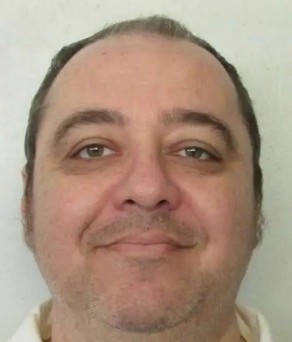
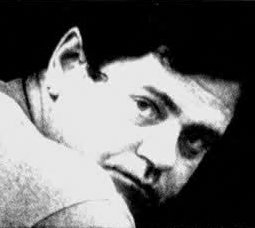
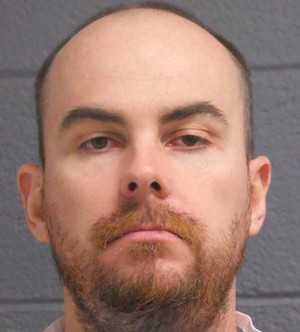
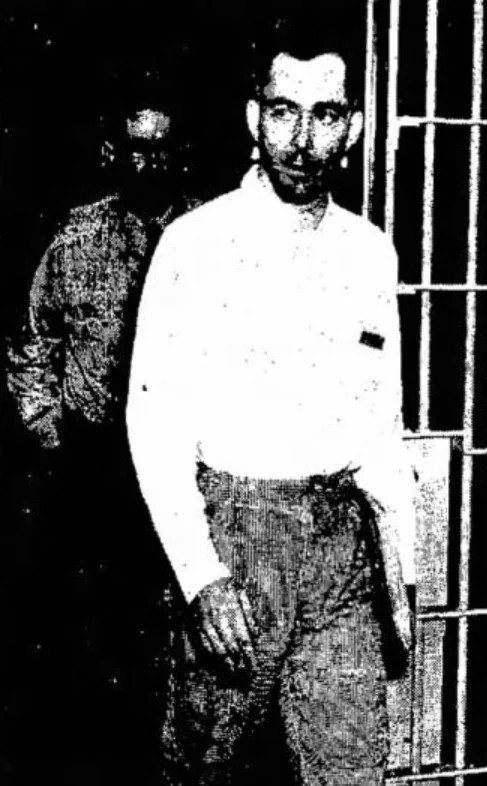
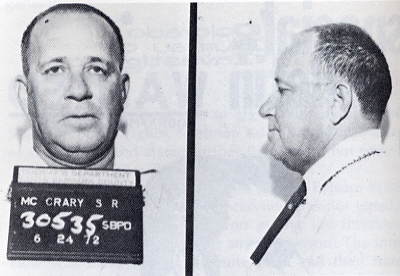
Investigators have publicly expressed their strong belief that Smith is likely responsible for other violent crimes. Detective-Sergeant Steve Smith of the TPS Cold Case Unit noted that the murders appeared to be "crimes of opportunity" and that the 14-year gap between the second and third killings is a significant concern. Police released photos of Smith from 1986 and 2012 and appealed to the public for any information about him, hoping to better understand his life and actions and potentially link him to other unsolved cases.
The case is a landmark for Canadian law enforcement, demonstrating the transformative power of investigative genetic genealogy in solving the most challenging cold cases. OPP Chief Superintendent Karen Gonneau remarked, "This case stands as a powerful reminder that while time may pass, our commitment to victims and their families does not fade." For the families, the breakthrough provided a measure of closure, but for investigators, the work continues as they seek to determine the full, terrible scope of Kenneth Smith's crimes.