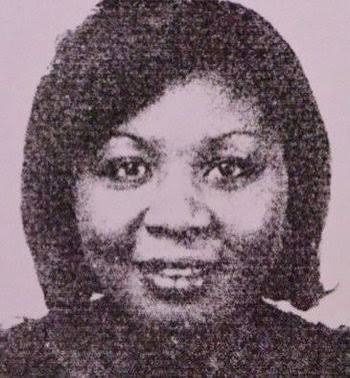
In the autumn of 1981, Christine Prince, a 25-year-old woman from Wales, arrived in Canada to begin a new chapter of her life. Having earned a special diploma in child care, she accepted a position as a live-in nanny for a family in Toronto, Ontario, caring for their three-year-old daughter. Christine embraced her new life, found happiness in her work, and was considered a member of the family she worked for.
She also found love, becoming engaged to a chef named David Curtis-Smith, with plans to marry in October 1982.
The night of Sunday, June 20, 1982, began happily for Christine. She and a friend went to a movie before meeting up with her fiancé after his shift ended late that evening. The three spent time together at a donut shop until about 1:15 a.m. on what was now Monday, June 21. Christine and her friend, Gloria Betts, then took the subway to St. Clair Avenue West and boarded a streetcar. Gloria got off at her stop, leaving Christine to ride just two more stops to Wychwood Avenue. From there, it was only a short walk in the rain to her residence on Pinewood Avenue. It was the last time she was seen alive.
When Christine failed to return home, her employers reported her missing. The search ended in tragedy on the morning of Tuesday, June 22, 1982, around 7:15 a.m. Police responded to a call and discovered Christine's body in the Rouge River in Scarborough, more than 40 kilometers from where she was last seen. An investigation determined the young nanny had been abducted, sexually assaulted, and beaten before being drowned. Her umbrella was later found on the sidewalk on Pinewood Avenue, a sign investigators believed indicated she was taken by force.
For decades, Christine’s murder remained a chilling cold case, haunting her family and investigators. Over the years, police considered several suspects, including other known killers, but no definitive link could be established. The breakthrough would not come until years later, thanks to significant advances in forensic science. DNA evidence had been collected from the scene, but it took until 2016 for that sample to be linked to the 1983 murder of another woman, 23-year-old Claire Samson. A year later, the same unknown male DNA profile was connected to a third homicide, the 1997 killing of 41-year-old Gracelyn Greenidge.
With investigators from the Toronto Police Service and Ontario Provincial Police now certain they were hunting a serial killer, the case gained new momentum. In 2022, they partnered with a forensic genealogy company to apply modern techniques to the degraded DNA samples. This process eventually allowed investigators to trace the killer's DNA through familial relatives. In December 2025, the Centre of Forensic Sciences conclusively identified the man responsible for all three murders: Kenneth Smith.
Kenneth Smith had lived and worked in the Toronto area during the times of the murders and had a known history of sexual assault. He was never a suspect in Christine's murder during the initial investigation. The resolution of the case was bittersweet, as Smith would never face justice in a courtroom. He died in 2019 at the age of 72. Police believe it is possible he had other victims who have not yet been identified.
After nearly 40 years of uncertainty, the families of Christine Prince, Claire Samson, and Gracelyn Greenidge finally had answers. Toronto Police Deputy Chief Robert Johnson acknowledged their long and painful wait. "For Christine's family and for the families of Claire and Gracelyn, the wait for answers has been extraordinarily long," he stated at a news conference. "It is only through sustained collaboration and advances in forensic science that we have arrived at this moment." While nothing could erase their grief, the identification of the killer brought a measure of closure to a tragedy that cut short a young woman's promising new life in Canada.