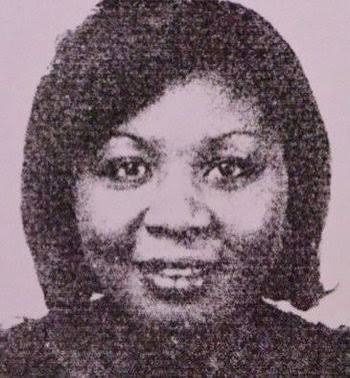
On a cold winter day in Toronto, four-year-old Carole Voyce was playing outside with a friend near her home on Saturday, January 19, 1957. A trusting little girl, she was approached by a teenager on a bicycle who offered her a ride. Carole accepted and was placed on the handlebars. That friendly gesture was the beginning of a nightmare that would end her life and mark her as the final and youngest victim in a series of terrifying child murders that had gripped the city.
The teenager,
17-year-old Peter Woodcock, cycled with Carole to a pre-selected location: a ravine beneath the Prince Edward Viaduct, also known as the Bloor Viaduct. Once there, he led her down into the ravine where he attacked her. Her brutalized body was discovered later that night. The cause of her death was determined to be a horrific series of injuries, including being choked into unconsciousness and sexually molested. The nature of the crime sent a wave of fear and outrage through Toronto, a city already on edge from the recent murders of two young boys.
The investigation into Carole’s murder moved quickly, aided by crucial witness accounts. Several people had seen a teenager on a red bicycle with a small girl on the handlebars. A former classmate of Woodcock's was even able to identify him. Based on these descriptions, police created a composite sketch that was published on the front page of the Toronto Star. This sketch led directly to Woodcock's arrest just two days later, on January 21, 1957.
In custody, Woodcock confessed not only to killing Carole Voyce but also to the murders of seven-year-old Wayne Mallette in September 1956 and nine-year-old Gary Morris in October 1956. His confession solved a string of crimes that had baffled and terrified the public. Before Carole's murder, Toronto Police had arrested and wrongfully charged a 14-year-old boy, Ron Moffatt, for the murder of Wayne Mallette. Woodcock's confession ultimately led to Moffatt's exoneration and release.
Peter Woodcock was tried only for the murder of Carole Voyce. After a four-day trial in April 1957, he was found not guilty by reason of insanity and was ordered to be indefinitely committed to the Oak Ridge division of the Penetanguishene Mental Health Centre, a maximum-security psychiatric facility. Woodcock, who was diagnosed as a psychopath, spent decades in psychiatric institutions. In 1982, he legally changed his name to David Michael Krueger.
The hope that Woodcock could be cured or rehabilitated was shattered in 1991. On his first escorted day pass in 35 years, he murdered a fellow patient, Dennis Kerr. Following this murder, he was returned to the maximum-security facility where he remained for the rest of his life. The Toronto Star would later describe him as "the serial killer they couldn't cure."
The case of Carole Voyce is a chilling chapter in Canadian true crime history, a story of innocence lost to a deeply disturbed young killer. Peter Woodcock, the teenager on the bicycle, was responsible for at least four murders across his lifetime. He died in the psychiatric facility on his 71st birthday, March 5, 2010, closing the final chapter on a life defined by violence and the pain it caused.