Richard Benjamin Speck and the Murder of Eight Chicago Nursing Students
Background
Richard Benjamin Speck was born on December 6, 1941, in Kirkwood, Illinois. Although he is sometimes described as a serial killer, criminologists generally classify him as a mass murderer because his eight confirmed victims were killed during one continuous attack at a single location. The murders took place during the night of July 13 and the early morning of July 14, 1966, inside a townhouse used as a residence for student nurses in Chicago, Illinois.
Speck spent much of his childhood and adolescence in Texas after his widowed mother remarried and moved the family to the Dallas area. He developed a lengthy record of arrests involving intoxication, theft, burglary, assault and other offenses. He drank heavily, had difficulty maintaining employment and frequently moved between cities. His marriage also deteriorated amid allegations of violence and abuse.
During the spring of 1966, Speck returned to Illinois and eventually traveled to Chicago, where he attempted to find work as a merchant seaman. By July, he was staying near the waterfront and the South Deering neighborhood while waiting for a position aboard a ship. He spent July 13 drinking in local establishments and wandering through the area near the nursing students’ residence.
The Nursing Students’ Residence
The victims were students associated with South Chicago Community Hospital. Several of the women lived together at 2319 East 100th Street, a two-story townhouse in Chicago’s Jeffery Manor area. The residence allowed the students to remain close to the hospital while completing their professional training.
Shortly before 11:00 p.m. on July 13, 1966, Speck entered the townhouse and confronted the women with a handgun and a knife. He announced that he intended to rob them and forced those present into an upstairs room. He tied their hands and attempted to keep them under his control. Additional residents returned home while the attack was underway and were also detained.
Speck held the women captive for several hours. He removed them from the room individually or in small groups and killed them in other parts of the townhouse. The victims were stabbed, strangled or suffered a combination of injuries. Gloria Davy was sexually assaulted before she was murdered. The killings continued after midnight, making July 14, 1966, the verified date of death for all eight victims.
Victims
- Gloria Jean Davy, 22 – Davy was a nursing student from Dyer, Indiana. Speck sexually assaulted and strangled her after removing her from the room where the women had been held. She died on July 14, 1966, at 2319 East 100th Street in Chicago, Illinois.
- Patricia Ann Matusek, 20 – Matusek was a student nurse from Chicago. She was among the residents taken captive after Speck entered the townhouse. She was killed during the early morning of July 14, 1966, inside the nursing residence at 2319 East 100th Street.
- Nina Jo Schmale, 24 – Schmale was a student nurse from Wheaton, Illinois. She was restrained with the other women and later taken from the room where they were being held. She was murdered on July 14, 1966, inside the Chicago townhouse.
- Pamela Lee Wilkening, 20 – Wilkening was a nursing student from Lansing, Illinois. She returned to the residence while Speck’s attack was already underway and was forced to join the other captives. She died on July 14, 1966, at the East 100th Street residence.
- Suzanne Bridget Farris, 21 – Farris was a student nurse from Chicago. She was one of the women confronted and restrained by Speck during the initial stages of the attack. She was murdered inside the townhouse on July 14, 1966.
- Mary Ann Jordan, 20 – Jordan was a nursing student who had recently moved from the townhouse but returned to visit friends on the night of the murders. She arrived while Speck was holding the residents captive and was forced upstairs. She was killed on July 14, 1966, inside the residence.
- Merlita Gargullo, 23 – Gargullo was an exchange nursing student from the Philippines. She returned to the townhouse with Valentina Pasion while the other women were being held. Speck took both women captive, and Gargullo was murdered on July 14, 1966, at the Chicago residence.
- Valentina Pasion, 23 – Pasion was an exchange nursing student from the Philippines. She entered the residence with Gargullo during the attack and was immediately placed under Speck’s control. She was killed inside the townhouse on July 14, 1966.
The Sole Survivor
Corazon “Cora” Amurao, a 23-year-old exchange nursing student from the Philippines, was the only woman inside the residence to survive. During one of Speck’s trips out of the room, Amurao managed to roll beneath a bed. A bedspread hanging toward the floor concealed her from view.
Speck apparently lost track of the number of women he had detained or failed to realize that Amurao was still inside the house. She remained hidden and silent for hours, uncertain whether he had actually left. After daylight, she emerged, climbed onto a window ledge and called for help. Police entered the townhouse and discovered the eight victims.
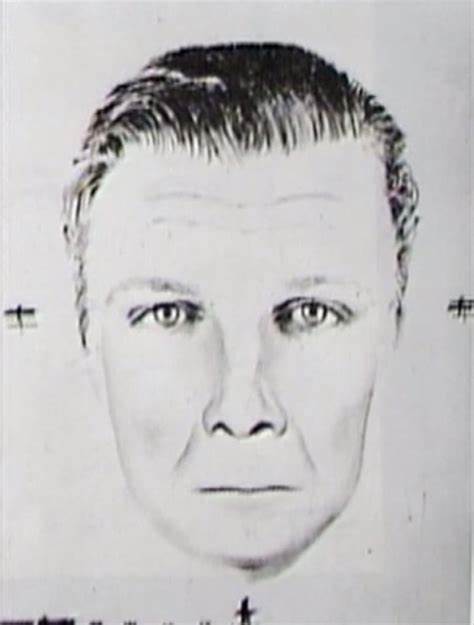
Amurao provided investigators with a description of the attacker, including information about his appearance and a distinctive tattoo on his arm reading “Born to Raise Hell.” Her observations became central to the investigation and later to Speck’s prosecution.
Identification and Arrest
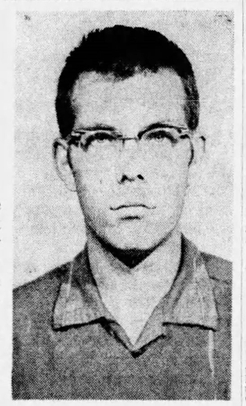
The murders prompted an enormous police operation. Investigators circulated a description of Speck and learned that a man matching it had recently been seeking maritime employment near the neighborhood. Speck’s photograph and identifying information were soon distributed through newspapers and television reports.
On July 16, 1966, Speck rented a room at the Starr Hotel in Chicago. During the following night, he cut his wrists and was taken to Cook County Hospital for treatment. A physician recognized the tattoo described in news reports and notified authorities. Speck was placed under arrest on July 17, 1966.
Investigators also found Speck’s fingerprints inside the townhouse. The prints were compared with records created when he applied for maritime work and were identified as his. This physical evidence, combined with Amurao’s eyewitness account, directly connected him to the crime scene.
Trial and Conviction
Because of the extensive publicity surrounding the murders, Speck’s trial was moved from Chicago to Peoria, Illinois. Jury selection began in April 1967. Prosecutors presented fingerprint evidence, testimony concerning Speck’s movements and the detailed account supplied by Amurao.
During the trial, Amurao was asked whether she could identify the man who had attacked the nurses. She approached Speck in the courtroom, pointed directly at him and identified him as the killer. Her testimony was one of the most dramatic moments of the proceedings.
On April 15, 1967, the jury found Speck guilty of all eight murders after deliberating for less than an hour. On June 5, 1967, he was sentenced to death in the electric chair. His execution was delayed while his attorneys pursued appeals.
Sentence Reduction
Speck’s death sentence was eventually overturned following changes in the constitutional standards governing capital punishment. In 1972, an Illinois court resentenced him to eight consecutive prison terms totaling between 400 and 1,200 years. The sentence was later adjusted to a combined term of 100 to 300 years, but Speck remained effectively imprisoned for life.
He was incarcerated at Stateville Correctional Center in Illinois. Speck repeatedly sought parole, but each request was denied. Officials concluded that the severity of the crimes, the number of victims and the continuing danger he represented made his release unacceptable.
Death in Prison
Richard Speck died of a heart attack at Silver Cross Hospital in Joliet, Illinois, on December 5, 1991, one day before his fiftieth birthday. He had spent approximately twenty-five years in prison and never received parole.
The murders of Gloria Davy, Patricia Matusek, Nina Jo Schmale, Pamela Wilkening, Suzanne Farris, Mary Ann Jordan, Merlita Gargullo and Valentina Pasion remain among the most notorious crimes in Chicago history. The case was particularly disturbing because the victims were young women preparing for careers devoted to caring for others and were attacked inside what should have been the security of their own residence.
Classification and Legacy
Speck is frequently included in discussions of serial murder, but the structure of his crime more closely meets the definition of mass murder. All eight confirmed victims were killed at one address during a single prolonged episode, without a cooling-off period separating the deaths.
The case demonstrated the importance of surviving-witness testimony, fingerprint identification and rapid communication between police, hospitals and the public. Corazon Amurao’s survival allowed authorities to obtain an immediate description of the attacker, while Speck’s fingerprints supplied powerful physical evidence against him.
Public memory of the case has often centered on Speck, but its enduring human cost was the loss of eight nursing students whose lives and careers were abruptly taken. Their names continue to be remembered together as the victims of the Chicago nursing-student murders of July 14, 1966.