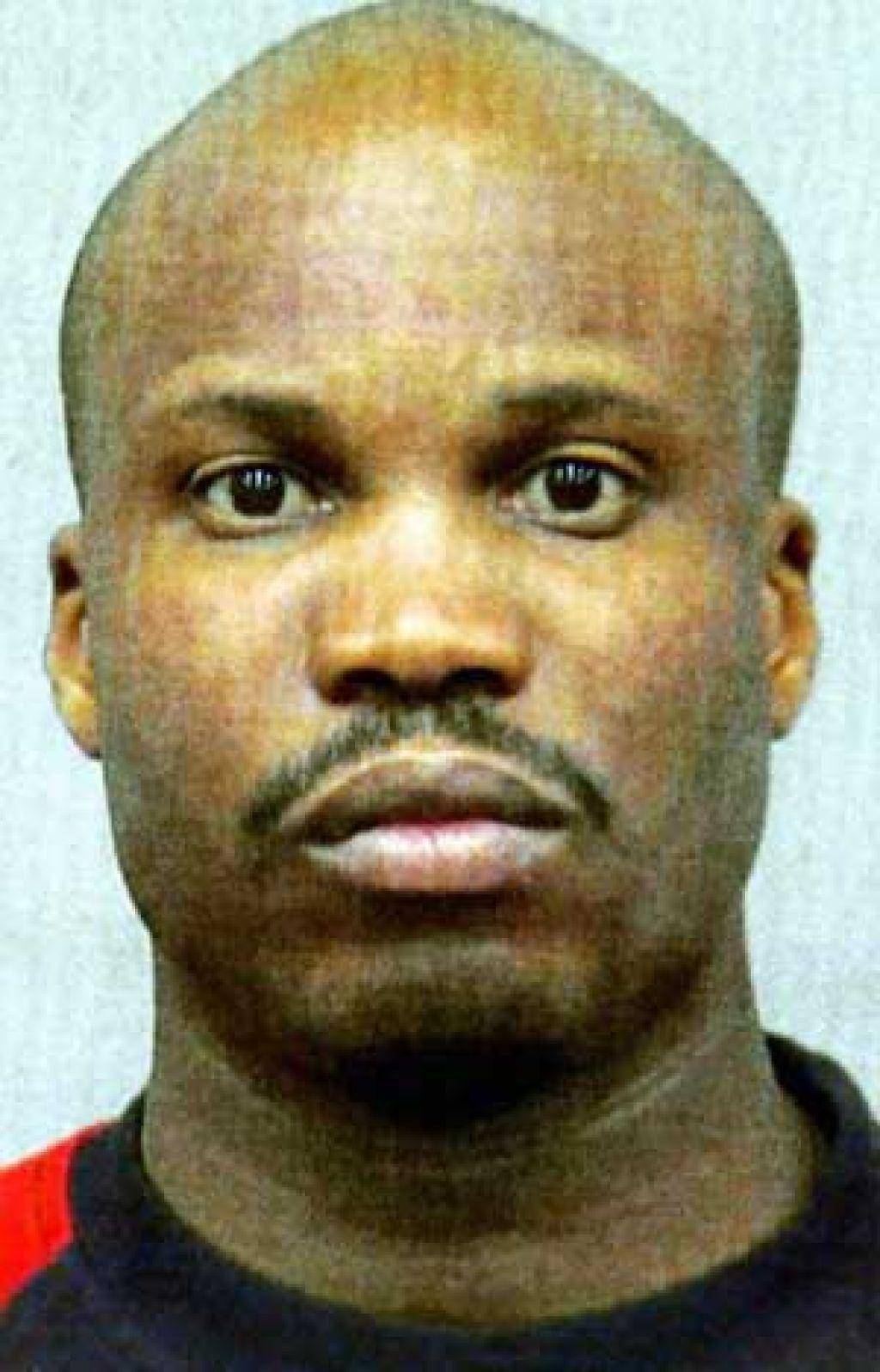
Antone Charles "Tony" Costa – The Cape Cod Serial Killer
Antone Charles "Tony" Costa was an American serial killer whose crimes shocked Cape Cod, Massachusetts, during the late 1960s. Born on August 2, 1944, in Cambridge, Massachusetts, Costa became closely associated with Provincetown and the neighboring town of Truro. A carpenter and handyman by trade, he was known around Provincetown as an intelligent, personable young man who moved easily among the area's artists, tourists, young counterculture followers, and drug users. Behind that outwardly approachable personality, however, was a history of violence that eventually culminated in the murders and dismemberment of young women whose remains were hidden in the secluded woods of Truro.
Costa was ultimately convicted of murdering Patricia Walsh and Mary Ann Wysocki, both 23. The remains of two other young women, Sydney Monzon and Susan Perry, were recovered from the same general area associated with Costa, and investigators considered them victims of the same killer. Because Costa was never tried for the Monzon and Perry killings, the most precise description of his record is that he was convicted of two murders and strongly linked to four victims whose bodies were recovered from his burial area.
Early Life and Signs of Violence
Costa grew up primarily in the Provincetown area. As a teenager he had already demonstrated disturbing violent behavior. In November 1961, when he was 17, he broke into the home of a teenage girl and assaulted her. The incident resulted in burglary and assault charges. He received probation and a suspended sentence rather than a lengthy period of incarceration.
In 1963, at the age of 18, Costa married a 14-year-old girl named Avis. They eventually had three children. The marriage deteriorated as Costa became increasingly involved with drugs and an unstable lifestyle. He spent time in California before eventually returning to Massachusetts. By 1968, he was again living around Provincetown and Truro, working at various construction, carpentry, and handyman jobs.
Costa became heavily involved in the local drug culture. He used drugs himself and was known to associate with younger people who gathered around him. In the woods of Truro, near Pine Grove Cemetery, he maintained a secluded marijuana-growing area that he sometimes referred to as his garden. That isolated section of woodland would later become the central location in the investigation of several disappearances.
The Truro Woods
The burial area connected to Costa was in an isolated stretch of sandy woodland in Truro, only a short distance from Provincetown. The area was secluded enough that Costa could cultivate marijuana there without attracting much attention. He knew the woods well and had taken acquaintances into the area before the murders were discovered.
When investigators eventually searched the woods, they found shallow graves containing the dismembered remains of four young women. The condition of the bodies demonstrated that the killer had spent considerable time cutting apart and concealing the remains. Some of the victims had been placed in separate graves, while portions of different bodies were buried together. The discoveries transformed what had initially been investigations into missing young women into one of the most notorious serial murder cases in New England history.
Confirmed and Strongly Established Victims
- Sydney Monzon, 18 – approximately May 25, 1968 – Provincetown/Truro, Massachusetts: Monzon was an 18-year-old local woman from the Cape Cod area who worked at an A&P store in Provincetown. Contemporary reporting placed her disappearance at approximately May 25, 1968. She reportedly left her bicycle behind near the store and vanished. Because young people sometimes left Provincetown without warning during the counterculture era, her disappearance initially did not generate the alarm that it would have under different circumstances. Her exact date of death was never conclusively established, so the date of her disappearance should not be treated as a medically confirmed death date. Months later, her dismembered remains were discovered in the Truro woods associated with Costa. Her body was found beneath or near the burial sites containing other victims.
- Susan Perry, 17 – disappeared September 8, 1968 – Provincetown/Truro, Massachusetts: Perry was a 17-year-old Provincetown resident who had associated closely with Costa. Contemporary reporting states that she disappeared on September 8, 1968, shortly after Labor Day. Costa reportedly offered explanations suggesting she had simply left the area. Her parents, who were divorced, initially believed she may have moved elsewhere, and she was not immediately treated as a murder victim. Her precise date of death was never conclusively established. On February 8, 1969, investigators searching the Truro woods discovered Perry's remains. Her body had been dismembered into multiple pieces and buried in a shallow grave. She was identified in part through a ring connected to her family. The discovery of Perry's body was the first physical evidence revealing that several missing women had been killed and concealed in the same area.
- Patricia Helene Walsh, 23 – last seen alive January 25, 1969 – Provincetown/Truro, Massachusetts: Walsh was a 23-year-old teacher from Providence, Rhode Island. On January 24, 1969, she traveled to Provincetown with her friend Mary Ann Wysocki for a winter weekend on Cape Cod. They drove Walsh's light-blue Volkswagen and rented rooms at a Provincetown guesthouse where Costa was also staying. The following day, January 25, Costa was observed riding in Walsh's Volkswagen with the two women as the car traveled in the direction of Truro. Walsh and Wysocki were never seen alive again. The exact medical date of Walsh's death was not independently established, although the evidence placed her death after she was last seen with Costa on January 25. Her remains were uncovered in the Truro woods during searches beginning March 5, 1969. Medical evidence established that Walsh had suffered a fatal gunshot wound to the neck. Her body had subsequently been mutilated and dismembered.
- Mary Ann Wysocki, 23 – last seen alive January 25, 1969 – Provincetown/Truro, Massachusetts: Wysocki was a 23-year-old college student from Providence who accompanied her longtime friend Patricia Walsh to Provincetown on January 24, 1969. She and Walsh met Costa at their guesthouse and were seen traveling with him toward Truro the following day. Like Walsh, Wysocki disappeared on January 25, and her precise medical date of death could not be separately fixed beyond the evidence surrounding her disappearance. Her dismembered remains were recovered from the Truro burial area in March. Medical testimony established that she had been shot in the head, including a fatal gunshot wound to the brain. Investigators recovered spent .22-caliber cartridge cases near the burial area and connected the ammunition evidence to a .22-caliber firearm belonging to Costa.
The Disappearance of Walsh and Wysocki
Patricia Walsh and Mary Ann Wysocki arrived in Provincetown on Friday, January 24, 1969. They checked into a guesthouse operated by Patricia Morton, where Costa happened to be staying as a paying guest. Morton introduced the women to Costa. During the night, the visitors went out in Provincetown and enjoyed what was intended to be a brief weekend vacation.
The next morning, a note signed "Tony" appeared asking whether Costa could get a ride to Truro. Between noon and 2 p.m. on January 25, an acquaintance saw Costa riding as a passenger in Walsh's Volkswagen. Two women were in the vehicle, with one of them driving. The Volkswagen then continued in the direction of Truro.
Walsh and Wysocki were expected to meet another acquaintance later that afternoon, but they never arrived. When they failed to return to Providence, their families became alarmed and authorities began searching for them.
Costa Takes Possession of Patricia Walsh's Car
Costa's behavior following the disappearance of Walsh and Wysocki produced some of the strongest circumstantial evidence against him. On January 29, only days after the women vanished, Costa asked a service-station owner about the cost of repainting a Volkswagen an unusual color.
On February 2, Walsh's Volkswagen was seen parked inside a wooded area in Truro. That same day, Costa traveled into the woods with two friends and drove away in the Volkswagen. He told the men that the two women had given him the vehicle because they were leaving for Canada.
Costa subsequently traveled with the car and attempted to establish control over it. While in Boston, he asked about obtaining false driver's-license, registration, and bill-of-sale documents. On February 7, he rented a parking space for the Volkswagen and attempted to register it in his own name in Burlington, Vermont. Walsh's Rhode Island license plates were later found concealed inside the vehicle.
Investigators also discovered personal property belonging to Walsh and Wysocki in Costa's room. When questioned, Costa supplied several conflicting explanations concerning the last time he had seen the women and how he had obtained Walsh's automobile.
The False Telegram
One particularly suspicious development occurred on March 3, 1969, when a telegram supposedly sent by Patricia Walsh and Mary Ann Wysocki arrived at the home of Costa's mother. It was signed "Pat and Mary Ann" and appeared to suggest that the women were still alive.
The telegram did not end the investigation. Authorities determined that it had originated through a New York City telephone number to which Costa had access. Rather than proving that Walsh and Wysocki were alive, the telegram became additional evidence suggesting an effort to make investigators believe the missing women had voluntarily left Cape Cod.
The Bodies in Costa's Garden
The investigation finally broke open when police searched the woodland around Costa's marijuana-growing area. Susan Perry's dismembered remains were the first discovered in February 1969. As investigators expanded their search, they realized the isolated woods concealed more than one victim.
Beginning on March 5, police uncovered additional graves containing Patricia Walsh and Mary Ann Wysocki. Parts of the bodies had been buried separately, illustrating the extent of the dismemberment. The remains of Sydney Monzon were also recovered from the burial area.
Investigators found a .22-caliber pistol buried near the graves. The weapon was identified as belonging to Costa. Three spent .22-caliber cartridge cases recovered near the bodies were examined, and expert testimony at trial linked them to Costa's gun. Walsh had been shot in the neck. Wysocki had been shot in the head, including a shot that penetrated her brain.
Other physical evidence strengthened the case. Bloodstains were discovered on rope associated with Costa and on a pair of his boots. The prosecution also had evidence concerning his possession of Walsh's vehicle, the property of the missing women found in his room, his contradictory statements, and the false telegram purporting to come from Walsh and Wysocki.
Dismemberment and Postmortem Abuse
The condition of the victims' remains made the Costa case particularly notorious. The women had been dismembered before being placed in shallow graves, and investigators found portions of different bodies buried in the same general area. Later accounts of the case also described evidence of sexual activity involving the bodies after death, which contributed to Costa's reputation as a necrophilic killer.
The sensational nature of the discoveries generated enormous press coverage. Costa was given such nicknames as the "Cape Cod Vampire" and, more notoriously, the "Cape Cod Cannibal." The cannibalism label, however, should not be treated as an established fact.
The Cannibalism Story
Barnstable County District Attorney Edmund Dinis initially made highly sensational statements concerning the condition of the bodies. Reports circulated that organs, including hearts, had been removed and that evidence suggested cannibalism. Those claims spread rapidly through newspapers and helped transform Costa's case into an international story.
Some of the most disturbing allegations were subsequently contradicted. The medical examiner stated that the victims' hearts were present, undermining one of the major claims used to support the cannibalism story. There is no reliable basis for describing Costa as a proven cannibal. The dismemberment and murders were real; the lurid cannibalism allegations became part of the mythology surrounding the case rather than an established finding.
Other Women Once Linked to Costa
As publicity surrounding the murders grew, investigators examined Costa's earlier movements and relationships. Several women who had known or traveled with him were initially described in books and later accounts as possible victims. Some older summaries consequently gave Costa a victim count considerably higher than four.
Among the names historically associated with him were Bonnie Williams, Diane Federoff, and Barbara Spaulding. Subsequent information established that these women were alive, meaning they should not be included in an accurate list of Costa's murder victims. Their survival is important because older accounts continue to repeat them as possible Costa murders.
Another woman, Christine Gallant, died in Provincetown in November 1968 after a barbiturate overdose and drowning in a bathtub. Because Gallant knew Costa, her death was later discussed in connection with him. However, Costa was never convicted of killing Gallant, and the available evidence does not establish her death as one of his murders. For that reason she should be treated as a historically suspected or questioned case rather than a confirmed victim.
Arrest
By early March 1969, investigators had accumulated overwhelming reasons to focus on Costa. The bodies were being recovered from woods he knew intimately and used for his marijuana garden. He possessed Walsh's missing Volkswagen, attempted to register it as his own, concealed its original license plates, had belongings belonging to the missing women, and repeatedly changed his explanation of what had happened.
Costa was arrested in Boston in early March 1969 as investigators continued excavating the graves in Truro. He was taken back to Cape Cod, where the investigation continued under intense public scrutiny. He maintained that he was not responsible for the murders and at various times offered explanations involving other people.
The Murder Trial
Prosecutors ultimately concentrated their trial on the murders of Patricia Walsh and Mary Ann Wysocki, the two cases for which the evidence against Costa was strongest. The Commonwealth was able to construct a detailed timeline beginning with the women's arrival in Provincetown, their introduction to Costa, the sighting of all three traveling toward Truro, Costa's subsequent possession of Walsh's Volkswagen, and the eventual discovery of the women in graves associated with him.
The firearms evidence was particularly damaging. Costa's .22-caliber pistol was recovered buried near the graves, while spent cartridge cases found near the victims were connected to the weapon. Medical testimony established gunshot wounds as the causes of death for Walsh and Wysocki.
Costa's attempts to distance himself from the women after their disappearance also became significant. His stories about being given the Volkswagen were contradicted by the surrounding circumstances, and his efforts to repaint or obtain documentation for the car suggested an attempt to conceal its origins. The fraudulent telegram supposedly sent by Walsh and Wysocki further strengthened the prosecution's argument that someone connected to Costa was trying to create the illusion that the women were still alive.
Conviction
In May 1970, a Massachusetts jury found Antone Costa guilty of the first-degree murders of Patricia Walsh and Mary Ann Wysocki. Although the remains of Susan Perry and Sydney Monzon had been found in the same Truro burial area, Costa was not ultimately convicted in their deaths.
Costa received life imprisonment and was sent to the Massachusetts state prison at Walpole. His murder convictions were subsequently reviewed by the Massachusetts Supreme Judicial Court, which documented much of the evidence concerning Walsh and Wysocki, including Costa's possession of the Volkswagen, the graves, gunshot evidence, and the .22-caliber pistol.
Costa's Version of the Murders
While imprisoned, Costa worked on an unpublished manuscript commonly identified as "Resurrection." In his version of events, he attempted to shift responsibility for the killings onto another man, sometimes identified under the name "Carl." Costa claimed that drugs were involved and depicted this supposed companion as the person responsible for much of the violence.
His story concerning Walsh and Wysocki portrayed the other man as shooting the women while Costa was present. Costa's account nevertheless contained disturbing knowledge of events surrounding the deaths. He also attempted to characterize the deaths of Susan Perry and Sydney Monzon as drug overdoses followed by the concealment and dismemberment of their bodies by someone else.
Investigators never produced persuasive evidence supporting the existence of a second killer responsible for the Truro murders. The physical evidence, Costa's connection to each victim, the location of the graves, his possession of Walsh's automobile, and his actions after the disappearances continued to point toward Costa himself.
Death in Prison
Antone Charles Costa did not spend the remainder of his natural life in prison. On May 12, 1974, at the age of 29, he was found dead at the Massachusetts Correctional Institution in Walpole. His death was reported as suicide by hanging. He had used a leather belt to hang himself in his cell.
His death ended any possibility of prosecuting him for additional murders or obtaining a definitive explanation of what happened to Sydney Monzon and Susan Perry. It also left unanswered questions concerning whether he had committed other killings that were never discovered.
Victim Count
Costa has sometimes been credited with as many as seven or eight victims, but those larger figures rely heavily on old suspicions that have not withstood later scrutiny. At least three women once described as potential Costa victims were subsequently established to have survived. Other deaths associated with him were never conclusively classified as his crimes.
The strongest historically supportable victim count is four: Sydney Monzon, Susan Perry, Patricia Walsh, and Mary Ann Wysocki. All four women's remains were found in the Truro woods associated with Costa. He was convicted specifically of killing Walsh and Wysocki, while Monzon and Perry remain strongly attributed victims for whom Costa was never brought to trial.
Legacy of the Cape Cod Murders
The Costa murders remain among the darkest episodes in Cape Cod history. The crimes were particularly disturbing because they occurred against the backdrop of Provincetown, a community better known for beaches, artists, tourists, fishermen, and a growing counterculture than for violent crime. Costa moved comfortably through that world and was known personally by many people who had no idea what was concealed in the nearby Truro woods.
The case also became an example of how sensational reporting can become intertwined with genuine criminal horror. Costa unquestionably committed brutal crimes involving murder, dismemberment, and the concealment of human remains. Yet the unsupported claims of cannibalism surrounding the investigation created myths that persisted for decades and sometimes obscured the factual evidence.
At the center of the case were four young women: Sydney Monzon, Susan Perry, Patricia Walsh, and Mary Ann Wysocki. Their disappearances initially appeared unrelated, and in the cases of Monzon and Perry, assumptions that young women might simply have left town delayed recognition of what had happened. The disappearance of Walsh and Wysocki finally brought sustained police attention to Costa and the isolated woods he used as his private garden.
The discovery of four dismembered bodies there revealed that the garden was also a burial ground. Costa's conviction for the murders of Walsh and Wysocki ensured that he would never again be free, but his suicide only four years later prevented investigators from ever receiving a complete and trustworthy account of the other deaths. More than half a century later, Antone Charles Costa remains remembered as the serial killer whose crimes transformed a secluded patch of Cape Cod woodland into the scene of one of Massachusetts' most disturbing murder investigations.