Jorge Avila-Torrez: Serial Murders in Illinois and Virginia
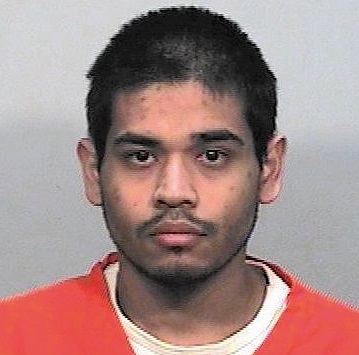
Jorge Avila-Torrez is an American serial killer and former United States Marine whose crimes stretched from his teenage years in Illinois to his military service in Virginia. He was ultimately held responsible for the murders of three people: eight-year-old Laura Hobbs, nine-year-old Krystal Tobias, and 20-year-old U.S. Navy Petty Officer Amanda Jean Snell. His identification as the killer came only after a series of violent attacks on women in Virginia led police to obtain his DNA, connecting him to crimes that had remained unsolved for years.
The case of Avila-Torrez is particularly notable because the 2005 murders of Hobbs and Tobias initially resulted in the wrongful arrest of Laura Hobbs's father. The true killer remained free, later joined the Marine Corps, and went on to murder again. DNA evidence, recorded jail conversations, surviving victims, and extensive forensic evidence eventually exposed the connection between the Illinois child murders, Snell's murder on a military installation, and Avila-Torrez's later attacks on women in Arlington, Virginia.
The Murders of Laura Hobbs and Krystal Tobias
On May 8, 2005, Mother's Day, eight-year-old Laura Hobbs and her nine-year-old friend Krystal Tobias were together in Zion, Illinois. Avila-Torrez was only 16 years old at the time and lived in the same community. Evidence later presented in federal court established that the two girls encountered Avila-Torrez in a park in Zion that evening.
When Laura and Krystal failed to return home, their families became alarmed and a search was organized. The following morning, Laura's father and grandfather discovered the girls in a wooded portion of the park. Both children had been killed with a knife.
Laura had suffered approximately 20 stab wounds. The injuries were distributed across several areas of her body and included wounds severe enough to damage internal organs. Krystal had been stabbed 11 times, suffering wounds to her torso and neck that caused massive bleeding. Evidence also established that Laura had been sexually assaulted.
Investigators recovered important biological evidence from Laura's body and clothing. Male DNA was also recovered from her hand. At the time, however, investigators did not have a matching DNA profile identifying the person responsible.
The investigation soon took a disastrous turn. Laura's father, Jerry Hobbs, was questioned and eventually charged with murdering both girls. Although forensic testing excluded him as the source of crucial DNA evidence, Hobbs remained incarcerated for years while the actual killer remained unidentified.
DNA Reveals a Different Suspect
The biological evidence from the 2005 crime scene was retained and entered into forensic databases. The break in the case did not occur until 2010, after Avila-Torrez was arrested for a series of violent crimes against women in Virginia and his DNA became available for comparison.
A forensic examiner obtained a potential match between Avila-Torrez and evidence from the Hobbs murder. More detailed testing produced an extraordinarily strong match. According to evidence later discussed in federal court, the statistical probability of another unrelated individual sharing the relevant DNA profile was approximately one in 985 quadrillion.
The discovery transformed the investigation. The evidence excluded the theory that Laura's father had committed the murders and instead pointed to a teenager who had lived in Zion at the time and who had subsequently entered the United States Marine Corps.
The Murder of Amanda Jean Snell
By 2009, Avila-Torrez was serving as a corporal in the U.S. Marine Corps and was stationed in the Washington, D.C., area. He lived in Keith Hall at Joint Base Myer-Henderson Hall in Arlington, Virginia. Eight doors away lived 20-year-old Amanda Jean Snell, a U.S. Navy Petty Officer Second Class and intelligence specialist.
On July 11, 2009, Avila-Torrez entered Snell's barracks room. Evidence presented at his federal trial established that the attack occurred while Snell was in her room and that Avila-Torrez killed her by asphyxiation. In statements he later made while incarcerated, he described entering through an unlocked door, attacking Snell while she was in bed, restraining her with a laptop power cord and strangling her.
After killing Snell, Avila-Torrez concealed her body inside a wall locker in her room. He also attempted to leave the room appearing orderly. Snell was scheduled to report for duty at the Pentagon on the night of July 12. When she failed to appear, concern grew about her whereabouts.
On the morning of July 13, 2009, Navy personnel entered Snell's room and discovered her body concealed in the locker. Naval Criminal Investigative Service agents began processing the scene. The initial medical examination did not produce an obvious external cause of death, and the original cause was listed as undetermined. A later expert review concluded that the circumstances were consistent with death from asphyxia.
Avila-Torrez lived only a short distance down the hall. During the initial investigation he claimed that he did not know Snell and had never been inside her room. He voluntarily provided investigators with information and a DNA sample, but the murder remained unsolved at the time.
Escalating Attacks in Arlington
During early 2010, Avila-Torrez began targeting women in Arlington County, Virginia. His actions demonstrated increasingly organized efforts to abduct and sexually assault victims.
On February 10, 2010, a 26-year-old woman identified in court records as M.N. was walking in Arlington when Avila-Torrez approached her from behind. He grabbed her, displayed a firearm and attempted to force her toward his Dodge Durango. He also produced a knife. The woman managed to break free and escape before he could force her into the vehicle.
On February 27, 2010, Avila-Torrez confronted two female graduate students, identified in court records as K.M. and J.T., as they approached a residence in Arlington. Armed with a gun, he forced the women into the house and restrained them with electrical cords.
J.T. managed to obtain a telephone and call 911, but Avila-Torrez discovered what she was doing. He forced her from the residence at gunpoint and placed her in his Dodge Durango. He drove away with her restrained inside the vehicle.
Avila-Torrez sexually assaulted J.T. repeatedly. He eventually drove her to a secluded wooded area and tightened her scarf around her neck until she lost consciousness. Believing she was incapacitated, he abandoned her outside. J.T. survived, regained consciousness and was eventually able to obtain help from a passing motorist.
Arrest and Evidence
Police used descriptions of the attacker, his vehicle and similarities between the Arlington crimes to identify Avila-Torrez. He was arrested on February 27, 2010, at Joint Base Myer-Henderson Hall.
A search of his Dodge Durango produced property belonging to J.T., along with packing tape and a stun gun. Investigators also searched his military living quarters and recovered a loaded Glock pistol and ammunition. The arrest gave authorities the opportunity to enter Avila-Torrez's DNA into law-enforcement systems, ultimately providing the crucial link to the murders of Laura Hobbs and Krystal Tobias five years earlier.
Avila-Torrez was prosecuted in Virginia for the attacks on the surviving women. His convictions included abduction, abduction with intent to defile, rape, forcible sodomy, robbery, use of a firearm during a felony and breaking and entering while armed. On December 10, 2010, he was sentenced to five life sentences followed by an additional 168 years in prison.
Recorded Jail Confessions
While Avila-Torrez was incarcerated awaiting proceedings on the Virginia crimes, authorities became concerned that he was attempting to intimidate or eliminate witnesses against him. Investigators arranged for another inmate, Osama El-Atari, to record conversations with Avila-Torrez.
During the recorded discussions, Avila-Torrez made statements implicating himself in Amanda Snell's murder. He knew details concerning the location and concealment of her body and described killing her inside the barracks room. Although some details of his descriptions changed during different conversations, prosecutors argued that he possessed knowledge that demonstrated his involvement.
He also discussed the Zion murders and admitted killing two girls when he was 16. These statements, combined with the powerful DNA evidence from the 2005 crime scene, supplied investigators and prosecutors with evidence connecting him to all three murders.
Federal Trial for Amanda Snell's Murder
A federal grand jury indicted Avila-Torrez in May 2011 for the murder of Amanda Snell. Because the homicide occurred on a federal military installation, the case was prosecuted in federal court.
His trial began in 2014. Prosecutors presented the physical evidence, testimony surrounding the discovery of Snell's body, Avila-Torrez's recorded statements, and evidence describing his other violent crimes. On April 8, 2014, a federal jury found him guilty of the premeditated first-degree murder of Amanda Jean Snell.
The case then entered a separate sentencing phase. On April 24, 2014, the jury selected the federal death penalty. The sentence was subsequently imposed by the court. Avila-Torrez appealed, but in August 2017 the United States Court of Appeals for the Fourth Circuit upheld both his murder conviction and death sentence.
Guilty Pleas for the Zion Child Murders
Although the DNA connection to Laura Hobbs and Krystal Tobias had been established years earlier, the Illinois prosecution continued while Avila-Torrez faced his other cases. Illinois authorities ultimately brought him back to Lake County to resolve the murders.
On September 18, 2018, Avila-Torrez pleaded guilty to two counts of first-degree murder for killing Laura Hobbs and Krystal Tobias. His plea formally ended more than 13 years of uncertainty surrounding one of Lake County's most notorious murder cases.
Lake County Circuit Judge Daniel Shanes sentenced Avila-Torrez to 100 years in prison under the plea agreement. The sentence was in addition to the multiple life sentences he was already serving for the Virginia attacks and the federal sentence imposed for Amanda Snell's murder.
Confirmed Murder Victims
- Laura Hobbs, age 8 — Murdered May 8, 2005, in a park in Zion, Lake County, Illinois. Laura was sexually assaulted and stabbed approximately 20 times. Her body was discovered with Krystal Tobias the following morning in a wooded area. Avila-Torrez pleaded guilty to her murder in 2018.
- Krystal Tobias, age 9 — Murdered May 8, 2005, in a park in Zion, Lake County, Illinois. Krystal suffered 11 stab wounds, including severe injuries to her torso and neck. Her body was discovered beside Laura Hobbs the following morning. Avila-Torrez pleaded guilty to her murder in 2018.
- Amanda Jean Snell, age 20 — Murdered July 11, 2009, in her room at Keith Hall, Joint Base Myer-Henderson Hall, Arlington, Virginia. Snell was a U.S. Navy Petty Officer Second Class and intelligence specialist. She was killed by asphyxiation and her body was concealed inside a wall locker. She was discovered on July 13, 2009. Avila-Torrez was convicted of her premeditated murder in federal court on April 8, 2014.
The Wrongful Prosecution of Jerry Hobbs
One of the most troubling consequences of the Zion investigation involved Jerry Hobbs, Laura's father. He had participated in the search and helped discover the bodies. Police soon focused on him as a suspect, and he was charged with murdering his daughter and Krystal Tobias.
Hobbs spent approximately five years incarcerated while awaiting trial. Forensic evidence eventually proved critical to demonstrating that the biological material recovered from the crime scene did not belong to him. When Avila-Torrez's DNA was entered into the system following his Virginia arrest, investigators finally had another identifiable suspect whose genetic profile matched the evidence from Laura.
The charges against Hobbs were dismissed, and he was released. The episode became a significant wrongful-prosecution case and illustrated how the unidentified killer had remained free long enough to commit additional acts of violence.
Final Sentences and Commutation
By the end of the prosecutions against him, Avila-Torrez faced overwhelming sentences in multiple jurisdictions. Virginia had imposed five life sentences plus 168 years for the abductions and sexual assaults. Illinois imposed another 100 years for the murders of Laura Hobbs and Krystal Tobias. His federal conviction for Amanda Snell's murder initially resulted in a death sentence.
On December 23, 2024, President Joe Biden commuted Avila-Torrez's federal death sentence to life imprisonment without the possibility of parole as part of a broader group of federal death-row commutations. The clemency did not overturn his conviction, establish his innocence, or release him from custody. It changed the federal punishment from execution to life imprisonment without parole. His additional state sentences also remain in place.
Legacy of the Case
The crimes committed by Jorge Avila-Torrez occurred over approximately four years and involved victims in two states. He killed two children at age 16, remained unidentified, entered the Marine Corps, murdered a fellow service member, and later carried out increasingly violent abductions and sexual assaults against women in Virginia.
Ultimately, the survival of one of his Virginia victims helped bring his violent activity to an end. His arrest led to the collection and comparison of DNA evidence, which in turn reopened the path toward solving the murders of Laura Hobbs and Krystal Tobias. Recorded jail conversations provided additional evidence about the earlier killings and Amanda Snell's death.
The investigations eventually established three confirmed murder victims and resulted in convictions or guilty pleas for each of their deaths. The cases also demonstrated the lasting consequences of investigative error: while Laura Hobbs's father remained jailed for a crime he did not commit, Avila-Torrez was free and eventually killed again. Years of forensic work, survivor testimony, DNA analysis and separate state and federal prosecutions finally established the full scope of the murders for which Jorge Avila-Torrez was responsible.