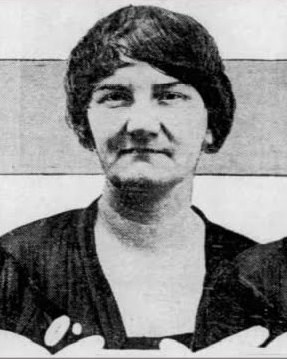
Paul Ezra Rhoades: The 1987 Idaho Murder Spree
Background
Paul Ezra Rhoades was an American murderer convicted of killing three people during a violent crime spree in southeastern Idaho in 1987. The murders occurred within approximately three weeks and involved the abduction, robbery, and shooting of victims in and around Blackfoot and Idaho Falls. Because of the concentrated timing of the crimes, Rhoades has often been described as a spree killer, although he has also appeared on lists of suspected serial killers because investigators examined him in connection with several earlier, unsolved murders in neighboring states.
Rhoades was born on January 18, 1957, in Idaho Falls, Idaho. He experienced serious health problems during childhood, including polio, and later developed a long history of alcohol and drug abuse. By adulthood, he was heavily involved with methamphetamine and had accumulated a record of burglaries and thefts. Witnesses later reported seeing him loitering around convenience stores during the period immediately preceding the murders.
The three confirmed killings shared important similarities. Each victim was shot with the same .38-caliber handgun, and two of the victims were employees working at convenience stores. Prosecutors portrayed Rhoades as a roaming predator who used robberies and abductions to gain control over his victims before taking their lives.
Confirmed Victims
- Stacy Dawn Baldwin, 21 — February 28, 1987 — Blackfoot, Idaho: Baldwin was working the overnight shift at the Red Mini Barn convenience store in Blackfoot. Her coworker left at approximately 11:00 p.m. on February 27, leaving Baldwin alone. When customers returned around midnight, Baldwin had disappeared, although her coat and automobile remained at the store. Approximately $249 was missing from the cash register. Her body was discovered later on the morning of February 28 near garbage dumpsters along an isolated road leading to an archery range northwest of Blackfoot. She had been shot three times. A pathologist determined that a bullet passing through her back and chest caused her death and that she may have remained alive for as long as an hour after receiving the fatal wound. Footprints found in the snow were consistent with Rhoades's unusually large boots, and a hair recovered from Baldwin's clothing was consistent with his hair. A watch resembling the one Baldwin had been wearing was later found in Rhoades's possession.
- Nolan Haddon, 20 — March 17, 1987 — Idaho Falls, Idaho: Haddon was working at Buck's convenience store in Idaho Falls when he was attacked during an early-morning robbery. He was found critically wounded inside the store's walk-in cooler after being shot. Haddon was transported to Eastern Idaho Regional Medical Center, but he died from his injuries later that day. The firearm evidence tied his shooting to the same .38-caliber handgun used in the murders of Baldwin and Susan Michelbacher. Rhoades ultimately entered a conditional guilty plea to second-degree murder and robbery while continuing to claim that he was innocent.
- Susan Michelbacher, 34 — March 19–21, 1987 — Idaho Falls and Bonneville County, Idaho: Michelbacher was a special-education teacher and the mother of two children. She disappeared on March 19 after leaving a supermarket parking lot in Idaho Falls. During the abduction, she was forced to visit two bank branches and cash checks totaling approximately $2,000. Her body was found on March 21 in a remote lava-rock area west of Idaho Falls. The precise time of her death was not publicly established, but investigators determined that she had been shot nine times after her abduction. Evidence also showed that she had been sexually assaulted or subjected to sexual contact around the time of her death. Rhoades was convicted of her kidnapping, robbery, rape, murder, and related firearm offenses. Shortly before his execution, he acknowledged responsibility for Michelbacher's death and apologized to her husband.
The Abduction and Murder of Stacy Baldwin
Stacy Baldwin began her final shift at approximately 9:45 p.m. on February 27, 1987. Witnesses placed Rhoades around convenience stores in the Blackfoot and Idaho Falls area during this period. Shortly before midnight, several young women returned to the Red Mini Barn and saw a man leave the business, enter a pickup truck, and drive away recklessly. A passenger was visible inside the vehicle, although the witnesses could not identify either person.
Inside the store, Baldwin was gone. Her personal belongings and automobile remained behind, suggesting that she had not left voluntarily. The last recorded transaction occurred shortly after midnight, and money had been removed from the register. Investigators concluded that Baldwin had been abducted from the store during a robbery and transported to the isolated archery-range area.
At the remote location, Baldwin was shot repeatedly and abandoned in freezing conditions. Evidence indicated that she did not die immediately. The sentencing court later emphasized the cruelty of leaving the wounded young woman alive in the cold rather than obtaining medical assistance.
Physical and circumstantial evidence connected Rhoades to the crime. Shoe impressions in the snow matched the size and pattern of his boots, his hair was consistent with a hair recovered from Baldwin's blouse, and ballistics testing established that the handgun recovered near his abandoned vehicle fired the bullets that killed her. A jailhouse witness also testified that Rhoades described kidnapping Baldwin, taking her to the archery range, and shooting her after an intended sexual assault did not occur.
The Murder of Nolan Haddon
Less than three weeks after Baldwin's death, Nolan Haddon was attacked while working at a convenience store in Idaho Falls. The store was robbed, and Haddon was shot and placed or left inside a walk-in cooler. He was still alive when discovered, but his wounds proved fatal.
The Haddon investigation became linked to the Baldwin and Michelbacher cases through firearm evidence. Bullets and other ballistic evidence showed that the same .38-caliber revolver had been involved in all three shootings. Prosecutors also possessed statements attributed to Rhoades following his arrest and testimony from jailhouse informants who claimed that he had discussed the killings.
Rather than face another complete murder trial, Rhoades entered a conditional plea to second-degree murder and robbery. The arrangement allowed him to preserve certain legal issues for appeal. He received two life sentences for Haddon's murder and the accompanying robbery.
The Kidnapping and Murder of Susan Michelbacher
Susan Michelbacher disappeared after visiting a supermarket in Idaho Falls on March 19, 1987. Investigators reconstructed a terrifying sequence in which she was abducted and compelled to withdraw or obtain money. She cashed two checks, each reportedly worth $1,000, at separate bank locations while under the control of her abductor.
Michelbacher was then taken to a desolate lava field west of Idaho Falls. The secluded landscape provided concealment and was far removed from the places where she had last been seen. Her body was discovered on March 21. She had been shot nine times, demonstrating an extraordinary degree of violence. The prosecution also presented evidence of sexual assault and charged Rhoades with rape and the desecration of her body.
Ballistics testing connected the bullets to the revolver associated with the Baldwin and Haddon murders. Additional evidence included Rhoades's movements, statements attributed to him after his arrest, and items recovered during the investigation. A jury convicted him of first-degree murder, first-degree kidnapping, robbery, rape, and associated firearm charges.
Arrest and the Murder Weapon
Rhoades's arrest followed the discovery of a green Ford LTD connected to his family. His mother reported the vehicle stolen on or around March 22 or March 23. Witnesses subsequently saw Rhoades driving a similar automobile. On March 24, truck drivers noticed the Ford parked along a highway median in northern Nevada and observed a man matching Rhoades's appearance moving near the vehicle before running into the surrounding sagebrush.
A Nevada Highway Patrol trooper located a .38-caliber handgun on the ground near the open door of the car. A holster was found several yards away. Rhoades appeared the following morning at a ranch near the abandoned vehicle and eventually received a ride to Wells, Nevada. Officers arrested him while he was playing blackjack at the Four Way Casino on March 25, 1987.
During the arrest and booking process, Rhoades reportedly made several statements that officers interpreted as admissions. After Idaho investigators approached him, he said, “I did it.” At the highway patrol station, an officer remarked that Stacy Baldwin might still be alive if Rhoades had been arrested earlier. Rhoades again allegedly responded that he had done it.
The recovered revolver became the central physical link connecting the three murders. Ballistics specialists concluded that it had fired the bullets recovered in the Baldwin, Haddon, and Michelbacher cases. The discovery transformed three recent homicide investigations into a combined examination of Rhoades's activities across southeastern Idaho.
Trials and Sentences
The murder cases were prosecuted separately. In January 1988, a jury convicted Rhoades of the murder and kidnapping of Susan Michelbacher, as well as robbery, rape, and related offenses. On March 24, 1988, he was sentenced to death for her murder and kidnapping. After hearing the sentence, he threw a chair toward the prosecutor, although a law-enforcement officer intercepted it before anyone was injured.
Rhoades was later tried for the murder, kidnapping, and robbery of Stacy Baldwin. Prosecutors relied upon ballistics, footprints, hair evidence, witness observations, Rhoades's possession of a watch resembling Baldwin's, and his alleged admissions. The jury found him guilty. On May 13, 1988, he received death sentences for Baldwin's murder and kidnapping, along with additional imprisonment for the robbery and firearm offenses.
In the Nolan Haddon case, Rhoades entered his conditional plea to second-degree murder and robbery. He received two indeterminate life sentences. His convictions and sentences were repeatedly reviewed by state and federal courts, but his principal appeals and requests for post-conviction relief were rejected.
Suspected Crimes Outside Idaho
Investigators examined whether Rhoades might have committed additional murders before the confirmed Idaho crime spree. Authorities in Utah and Wyoming questioned him about several shootings with similarities to his known offenses. He had reportedly traveled and worked throughout the region, and investigators attempted to determine whether he had been present near the crime scenes.
- Carla Maxwell, 20 — April 25, 1986 — Layton, Utah: Maxwell was shot five times while working at a 7-Eleven store. Rhoades was investigated because of similarities involving a convenience-store employee, robbery, and repeated gunfire. He was never charged with her murder.
- Lisa Strong, 25 — May 12, 1986 — Salt Lake City, Utah: Strong was shot on or near a street corner while apparently attempting to flee from her attacker. Investigators considered Rhoades a possible suspect, but no conclusive evidence established that he killed her.
- Lisa Ehlers, 25 — June 21, 1984 — Near Bondurant, Wyoming: Ehlers was found shot beside a road in the Jackson Hole region. An investigator reported that Rhoades could be placed in the general area during the relevant period. Despite the suspicion, prosecutors never charged him with the crime.
Rhoades was also once investigated in connection with the May 15, 1985, murder of 18-year-old Christine Gallegos in Utah. That suspicion was later disproved. In 2025, genetic genealogy identified another man, Ricky Lee Stallworth, as Gallegos's killer. The development demonstrated that the earlier theories linking Rhoades to unsolved regional murders were not proof of his involvement.
Years of Appeals
Rhoades spent more than two decades challenging his convictions and death sentences. His attorneys raised arguments involving police interrogation, prosecutorial conduct, jury selection, Idaho's abolition of the insanity defense, evidentiary issues, and the constitutionality of the state's execution procedure.
One later claim concerned biological evidence collected in the Michelbacher investigation. A laboratory report indicated that Rhoades was excluded as the contributor to one tested sample, while other samples produced insufficient information for a conclusion. Courts found that the results were inconclusive because the measurable material might have originated from Michelbacher herself and did not necessarily establish the presence of a different attacker. His conviction remained intact.
As the execution date approached, Rhoades's lawyers challenged Idaho's three-drug lethal-injection protocol, arguing that inadequate safeguards created a risk of severe pain. Federal courts rejected the request for a stay after determining that the state had adopted procedures similar to protocols previously upheld by the courts.
Execution
Paul Ezra Rhoades was executed by lethal injection at the Idaho Maximum Security Institution near Kuna on November 18, 2011. He was 54 years old. His execution was Idaho's first in approximately 17 years and only the state's second since capital punishment resumed in the United States during the 1970s.
In his final statement, Rhoades admitted responsibility for Susan Michelbacher's murder and apologized to her husband. He continued to deny killing Stacy Baldwin and Nolan Haddon, telling their relatives that they should continue searching for answers. Those denials conflicted with his convictions, the ballistics evidence tying the same handgun to all three shootings, his alleged statements to investigators, and the additional physical evidence presented in Baldwin's trial.
Legacy of the Case
The crimes of Paul Ezra Rhoades left three families grieving and frightened communities across southeastern Idaho. The victims were attacked while carrying out ordinary responsibilities: Baldwin and Haddon were working overnight shifts, while Michelbacher was completing errands connected to her work and family life. The speed with which the murders followed one another created the fear that an armed offender was moving through the region and could strike again without warning.
Although Rhoades has frequently been called a serial killer, his three confirmed murders occurred during a short, uninterrupted period and are therefore more precisely described as a spree. Claims that he committed earlier murders in Utah or Wyoming remain unproven. His established criminal record consists of the murders of Stacy Dawn Baldwin, Nolan Haddon, and Susan Michelbacher, along with the kidnappings, robberies, sexual violence, and firearm offenses connected to those crimes.