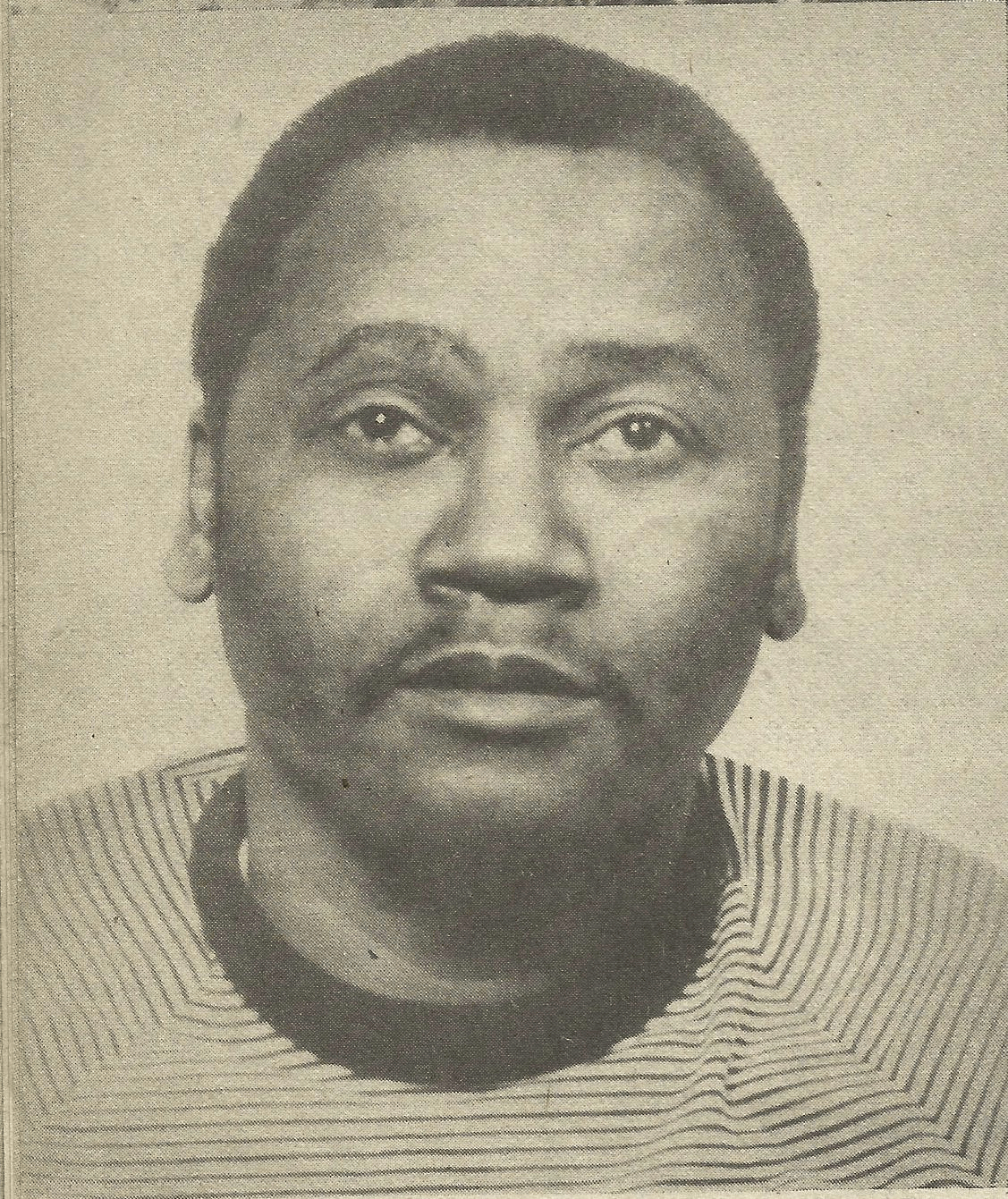
James Turner: The Life-Insurance Murder Suspect
Overview
James Turner was an American convicted murderer and suspected serial killer whose name became associated with a disturbing series of deaths and disappearances in the Rochester, New York, area between 1963 and 1975. Most of the people connected to Turner were relatives, friends, or coworkers. A repeated and highly suspicious feature of the cases was that Turner had been named as the beneficiary of a life-insurance policy belonging to the victim.
Investigators eventually examined at least seven cases involving Turner. Several deaths had originally been classified as accidents or suicides, while one victim disappeared and was never found. Turner was convicted only of murdering his 20-year-old brother-in-law, Dwight Dees. The evidence was insufficient to charge him with the other suspected killings, and he should therefore be described as a suspected serial killer rather than as the legally proven perpetrator of every death connected to him.
Early Background and Insurance Connections
Turner was reportedly born in Florida in approximately 1931. He later moved to Rochester, New York, where he worked at industrial plants and established a reputation as a dependable employee and attentive neighbor. People living near him described Turner as hardworking, quiet, and willing to help others. He sometimes cleared snow from sidewalks for neighbors who could not do the work themselves.
Behind this respectable public image, however, investigators discovered a succession of insurance arrangements involving people who later died under violent, unexplained, or suspicious circumstances. Turner frequently became close to coworkers and relatives before being designated as the beneficiary of their policies. In certain cases, the policies were changed shortly before the insured person died.
The financial structure surrounding the deaths became the central theory of the investigation. Authorities suspected that Turner cultivated relationships with people who could be persuaded to purchase insurance or replace their normal beneficiaries with him. Their deaths could then be presented as accidents, suicides, or unrelated crimes, allowing Turner to attempt to collect the proceeds without immediately attracting attention.
Suspected Victims and Confirmed Murder
- Turner’s unnamed sister — April 14, 1963 — Rochester, New York: Turner’s sister died from smoke inhalation or suffocation during a fire in the apartment they shared. Turner was reportedly absent when the fire began. He collected approximately $2,500 from two insurance policies and filed his claim the day after her death. Investigators later learned that Turner had contacted an insurance agent shortly before the fire to cancel his own policies while confirming that his sister’s coverage remained active. Police considered the possibility that she had been drugged before the fire, but Turner was never charged in connection with her death.
- John Louis Brown — disappeared in June 1964 — Rochester, New York: Brown worked with Turner at the Nabisco plant in Rochester. He disappeared during June 1964 and was never found. Brown had a $5,000 life-insurance policy that named Turner as its beneficiary. Because no body was recovered and Brown was not conclusively shown to be dead, it is unclear whether Turner received any insurance money. Brown’s disappearance was later reviewed as part of the broader investigation into Turner.
- Frank Scialdone — November 19, 1968 — Rochester, New York: Scialdone was an 18-year-old coworker of Turner at a General Motors plant. He was found murdered with a gunshot wound to the back of his head. Relatives said Turner had planned to co-sign a loan that would allow Scialdone to purchase a car. Scialdone was reportedly expected to obtain a life-insurance policy that would cover the loan, although he was killed before the policy was completed. He was carrying approximately $400 intended for the vehicle purchase when he died. Turner was investigated but never prosecuted for the killing.
- William Bradwell — May 10, 1969 — Genesee River, Rochester, New York: Bradwell, a 23-year-old General Motors employee, was found dead in the Genesee River. His body was partially decapitated. Shortly before his death, Bradwell had named Turner as the beneficiary of a $5,000 life-insurance policy. Turner successfully collected the policy proceeds. The combination of the violent death, recent beneficiary designation, and payment to Turner later caused investigators to treat Bradwell as a possible victim.
- Lewis McDowell — December 2, 1969 — Rochester, New York: McDowell, 29, was discovered dead inside his garage from carbon-monoxide poisoning. His death was initially classified as a suicide. Before he died, McDowell had changed the beneficiary of an employment-related life-insurance policy to his coworker James Turner. Investigators later questioned whether the apparent suicide might have been staged, but no murder charge was filed.
- Horace Everett — July 16, 1971 — Rochester, New York: Everett was another General Motors employee connected to Turner. During July 1971, he changed the beneficiary of his $9,000 life-insurance policy from his wife to Turner. Everett’s wife later recalled that her husband and Turner held several secretive meetings. She became convinced that they were involved in something dangerous or dishonest and begged her husband to withdraw. Everett reportedly told her that the arrangement would soon make them wealthy and help provide for their children.
- Horace Everett, continued: Everett left home to meet Turner and never returned. His body was found behind an abandoned industrial building. A towel had been wrapped around his head, concealing a devastating shotgun wound that destroyed part of his skull. Everett left three children, and a fourth child was born approximately two months after his death. The insurance company refused to pay Turner after concluding that the beneficiary change had been improperly or fraudulently obtained. Everett’s widow received part of the policy and additional accidental-death benefits. Turner sued over the unpaid proceeds but abandoned the action in 1973 as questions about Everett’s murder intensified.
- Dwight Dees — January 21, 1975 — near Rochester, New York: Dees, Turner’s 20-year-old brother-in-law, was the only victim Turner was convicted of murdering. Dees lived in Turner’s home while attending community college. In the autumn of 1974, he resumed payments on a $50,000 life-insurance policy that he had previously allowed to lapse because of educational expenses. Turner stood to benefit financially from his death.
The Murder of Dwight Dees
During the night of January 21, 1975, a borrowed automobile driven by Dwight Dees was discovered nose-down at the bottom of an embankment near Rochester. At first glance, the scene appeared to be a severe traffic accident. Dees was inside the vehicle with a catastrophic wound to his neck and head.
A closer examination quickly demonstrated that the car crash had been staged. Dees had not received his fatal wounds when the vehicle left the road. Investigators found a trail of blood leading away from the car and toward an old barn several hundred feet from the embankment. Behind the barn were large pools of blood, indicating that Dees had been attacked there before his body was dragged to the automobile.
Dees had been struck and repeatedly cut with a large bladed weapon. His head was almost severed. The killer apparently placed him inside the borrowed car and pushed or drove it over the embankment in an attempt to make the death resemble an accident. The blood evidence made the attempted deception immediately apparent.
Investigators focused on Turner because of his relationship with Dees, his financial interest in the insurance policy, and inconsistencies surrounding the young man’s final movements. Turner was arrested on January 22, 1975. After news of the arrest was broadcast, an insurance agent contacted police and informed them that Turner stood to receive $50,000 following Dees’s death.
Police subsequently recovered a machete connected to the attack. The weapon and the physical evidence surrounding the barn, blood trail, vehicle, and insurance policy formed the basis of the murder case. Turner was indicted in Monroe County on February 27, 1975, and entered a plea of not guilty on March 3.
The Broader Investigation
Once Turner was arrested for killing Dees, detectives began examining his history more closely. They discovered that Dees was not the first person connected to Turner who had died after making him an insurance beneficiary. Investigators traced policies involving John Louis Brown, William Bradwell, Lewis McDowell, and Horace Everett. They also reviewed the murders or unexplained deaths of other relatives and acquaintances.
The emerging pattern suggested a financially motivated offender who may have used different methods to avoid creating an obvious series. The suspected victims had disappeared, died in a fire, suffered carbon-monoxide poisoning, been shot, been mutilated, or been placed inside a staged automobile accident. The methods varied, but the insurance connection repeatedly led back to Turner.
Authorities also investigated Turner’s earlier life in Florida. Family members reported that one of his sisters had been killed near Plant City in 1954. Later research indicated that she had apparently been stabbed by another woman who was convicted of the crime, making Turner’s involvement unlikely. Relatives nevertheless mentioned other family deaths in Florida that had been considered accidental at the time. Investigators were unable to develop sufficient evidence connecting Turner to those incidents.
Possible Motive and Method
The apparent motive behind the suspected crimes was financial gain. Turner allegedly persuaded people close to him to designate him as the beneficiary of their life-insurance policies. In some instances, he may have offered financial assistance, business opportunities, or help obtaining loans. Once the policy was active, the insured person faced an increased risk of dying under suspicious circumstances.
The cases did not involve a single consistent murder method. This variation may have helped conceal the possible series. A fire could be viewed as an accident, carbon-monoxide poisoning could be classified as suicide, and a body inside a wrecked car could initially resemble a traffic fatality. Shootings could appear to be unrelated acts of street or workplace violence. The absence of a uniform method made it more difficult for investigators to recognize the financial pattern connecting the victims.
Turner also appeared willing to challenge insurance companies when payments were withheld. His lawsuit over Horace Everett’s policy showed confidence and a willingness to place himself under legal scrutiny. He abandoned the claim only after the litigation began generating deeper questions about Everett’s death and Turner’s relationship with him.
Conviction and Sentence
Turner was ultimately convicted of murdering Dwight Dees. He received a sentence of 25 years to life in prison and was incarcerated at Attica Correctional Facility in New York. The Dees conviction established that Turner had committed at least one carefully planned killing connected to a substantial insurance policy.
No additional murder convictions followed. The passage of time, the loss or absence of physical evidence, and the original classifications of several deaths made prosecution difficult. John Louis Brown’s body was never recovered. McDowell’s death had been treated as suicide, while the apartment fire involving Turner’s sister had occurred more than a decade before investigators recognized the possible pattern.
Classification as a Suspected Serial Killer
James Turner is often categorized as a suspected serial killer because he was connected to a series of deaths separated by months or years and apparently motivated by insurance money. He was not convicted of killing all of the people associated with him. Legally, Dwight Dees remains his only confirmed murder victim.
The other cases contain significant circumstantial evidence but remain unproven. Turner’s position as an insurance beneficiary, particularly when combined with recent policy changes and violent or unusual deaths, created a pattern that investigators considered extremely suspicious. The successful collection of money after some deaths strengthened the theory that financial gain was the motive.
Legacy of the Case
The James Turner investigation illustrates how a suspected serial offender can avoid early detection by using different methods and allowing individual deaths to appear unrelated. Rather than repeatedly targeting strangers in the same manner, Turner allegedly exploited personal relationships and insurance arrangements. Each case initially appeared to have its own explanation: disappearance, suicide, accident, fire, shooting, or vehicle crash.
Only after the murder of Dwight Dees did investigators assemble the records and recognize that Turner repeatedly stood to profit from the deaths of people around him. The staged crash failed because the blood trail led detectives back to the actual attack site. That physical evidence exposed the Dees murder and caused authorities to reconsider more than a decade of suspicious deaths.
Turner’s complete victim count remains unknown. Available evidence supports one confirmed murder and links him circumstantially to at least six additional deaths or disappearances. Whether he was responsible for every case investigated by police may never be conclusively determined.