William Henry Hance: The “Forces of Evil” Killer
Background
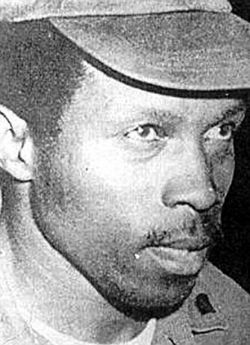
William Henry Hance was an American soldier and serial killer whose known crimes occurred primarily around Fort Benning, near Columbus, Georgia, during 1977 and 1978. Born on November 10, 1951, in Lexington, Virginia, Hance served first in the United States Marine Corps and later joined the United States Army. By the late 1970s he was stationed at Fort Benning, where he worked as a truck driver. His crimes became especially notorious because he attempted to disguise his responsibility by inventing a fictitious organization that he called the “Forces of Evil.”
At the time, Columbus was already frightened by a separate series of murders attributed to the so-called “Stocking Strangler.” Hance attempted to exploit that atmosphere. He sent letters to authorities claiming that a group of white men calling themselves the Forces of Evil had kidnapped a Black woman and intended to kill her unless the Stocking Strangler was captured. The supposed organization did not exist. Investigators eventually concluded that Hance himself had written the letters in an effort to confuse police and divert suspicion from his own crimes.
Known Victims
- Karen Ann Hickman — September 6, 1977 — Fort Benning, Georgia: Hickman was a 24-year-old U.S. Army private stationed at Fort Benning. Her body was discovered near the women's barracks on September 6, 1977. She had suffered severe blunt-force injuries and had also been struck or run over with a vehicle. Investigators believed she had been killed elsewhere before her body was moved to the location where it was discovered. Hance later confessed to killing Hickman. He was prosecuted for the crime through the military justice system.
- Brenda Gail Faison, also known as Gail Jackson and Gail Bogen — on or about February 28, 1978 — near Columbus and Fort Benning, Georgia: Faison was 21 years old. According to the evidence presented in Hance's Georgia murder case, Hance encountered her at the Sand Hill Bar near Fort Benning on or about February 28, 1978. He drove with her to a secluded area and attacked her. She was killed through severe blunt-force violence, and Hance concealed her remains in a wooded location. Her body was not recovered until March 30, 1978, after Hance anonymously telephoned military police and told them where to find it. This was the murder for which Hance received his civilian murder conviction and death sentence.
- Irene Thirkield — March 15, 1978 — Fort Benning, Georgia: Thirkield was 32 years old. Witnesses reported seeing her with Hance at Vice Mitchell's Tavern on March 15, 1978, and the two were seen leaving together. Hance subsequently killed her using extreme blunt-force violence and concealed her body behind logs on the Fort Benning military reservation, near a rifle-range area. As part of his Forces of Evil deception, Hance later incorporated Irene's name into his communications with authorities. He was prosecuted for Thirkield's death through the military justice system.
The Murder of Gail Faison
The murder of Brenda Gail Faison became the central case against Hance in Georgia state court. Evidence presented at trial established that Hance went to the Sand Hill Bar near Fort Benning on or about February 28, 1978. He left the establishment with Faison and drove to an isolated area. Hance attacked her and ultimately killed her with a tire tool or similar blunt instrument. The injuries were extensive, and he left her body concealed away from the main road.
Rather than immediately disappearing from the investigation, Hance began constructing an elaborate false story. He wrote letters to the Columbus police chief claiming that the Forces of Evil had abducted a woman named Gail Jackson. Gail Jackson was actually one of the names used by Brenda Gail Faison. Hance therefore presented his own murder victim as a supposedly living hostage being held by an imaginary group.
The “Forces of Evil” Letters
The letters were one of the most unusual features of the case. Hance claimed that the Forces of Evil consisted of seven white men who were threatening Black women in retaliation for the unsolved Stocking Strangler murders. The writer demanded that authorities communicate with the supposed group through television or radio broadcasts. A demand for $10,000 was eventually made in connection with the alleged hostage.
The story was fabricated. Gail Faison was already dead when Hance was representing her as a hostage. The messages apparently served several purposes: they created confusion, attempted to redirect the investigation toward imaginary white extremists, and allowed Hance to communicate with investigators while concealing his identity. Hance also made anonymous telephone calls. On March 30, 1978, one such call directed military police to the place where Faison's body had been hidden.
Irene Thirkield and the Collapse of the Hoax
Hance's second 1978 victim, Irene Thirkield, became especially important to investigators. She had last been seen on March 15 in the company of a soldier at Vice Mitchell's Tavern. Witnesses identified that soldier as Hance. Her body was subsequently discovered on the Fort Benning reservation after authorities received information directing them toward its location.
After Thirkield's murder, Hance incorporated the name “Irene” into his Forces of Evil communications, treating her as another supposed target of the fictitious organization. The growing connection between his letters, telephone calls, the victims, and Fort Benning increasingly suggested that the supposed organization was actually a single offender with detailed knowledge of the murders.
Investigation and Arrest
Military investigators learned that Hance had been the last known person seen with Irene Thirkield. On April 4, 1978, investigators questioned him after advising him of his rights. Evidence collected during the investigation included witness statements, information about his contact with the victims, handwriting evidence connected to the letters, recordings of telephone calls, and physical evidence associated with the crime scenes.
Hance eventually confessed to the murders of Faison and Thirkield and also admitted responsibility for the earlier killing of Karen Hickman. He provided investigators with information about evidence connected to the crimes. The supposed Forces of Evil organization was exposed as a fiction created by Hance himself.
Karen Hickman
The investigation also connected Hance to the September 1977 murder of Army private Karen Hickman. Hickman's death preceded the Forces of Evil letters by several months. Her body was discovered near the women's barracks at Fort Benning on September 6, 1977. Investigators determined that she had suffered a violent assault involving blunt-force injuries and a vehicle.
Hance's later confession placed the Hickman killing within the same short period of homicidal violence surrounding Fort Benning. Unlike the Gail Faison prosecution, which took place in Georgia civilian court, the Hickman case was handled within the military justice system. Hickman and Thirkield were both included in military proceedings against Hance.
Trial and Conviction
Hance was tried in the Superior Court of Muscogee County for the murder of Brenda Gail Faison and for attempted theft by extortion arising from his ransom scheme. On December 15, 1978, a jury convicted him of Faison's murder. He received a death sentence for the killing and an additional prison sentence for the attempted extortion.
Military proceedings were also brought concerning the killings of Karen Hickman and Irene Thirkield. Hance was found guilty in military court, although the military cases later became legally complicated and the convictions were eventually set aside rather than serving as the basis for his execution. His Georgia civilian conviction for murdering Faison remained the central judgment that kept him on death row.
A Possible Additional Victim
Hance has also been identified in later accounts as the principal suspect in the killing of an unidentified young Black woman associated with Fort Benjamin Harrison in Indiana. He was never prosecuted for that homicide. Because publicly available accounts do not establish the victim's identity and exact date of death with the same reliability as the three Georgia cases, those details cannot be responsibly presented as confirmed facts.
Appeals and Execution
Hance's death sentence produced years of appeals in state and federal courts. His original murder conviction survived, although a federal appeals court ordered a new sentencing proceeding after finding problems with the original penalty phase. A second jury again sentenced him to death. His later appeals raised additional issues concerning his mental abilities, the conduct of the trial, and allegations surrounding the jury that imposed the sentence.
After approximately fifteen years on Georgia's death row, William Henry Hance was executed in Georgia's electric chair on March 31, 1994. He was 42 years old. His execution ended a case remembered not only for the murders themselves but also for the strange campaign of letters and telephone calls through which Hance attempted to invent an imaginary group of killers and manipulate an already frightened community.
Legacy of the Case
Hance's crimes occurred during an exceptionally disturbing period in Columbus history. His murders overlapped with, but were separate from, the Stocking Strangler killings. Hance was not the Stocking Strangler, and investigators ultimately attributed those crimes to another offender. Instead, Hance exploited public fear surrounding that investigation to construct his Forces of Evil deception.
The confirmed cases involving Karen Hickman, Brenda Gail Faison and Irene Thirkield show a concentrated pattern of lethal violence surrounding Fort Benning between September 1977 and March 1978. The investigation also demonstrated how apparently threatening communications from an organized group could instead originate with a single offender attempting to manipulate police. Hance's letters, false ransom demand, anonymous calls, confessions and connection to his victims made his case one of the more unusual serial-murder investigations associated with an American military installation during the late twentieth century.