Howell Emanuel Donaldson III: The Seminole Heights Serial Killer
Overview
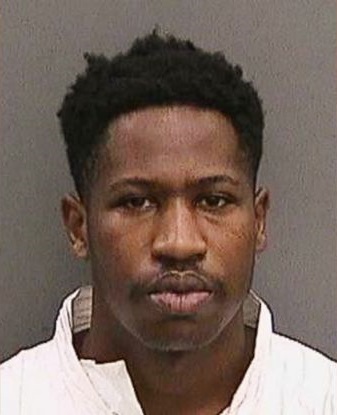
Howell Emanuel Donaldson III, also known as Howell "Trai" Donaldson III, is an American serial killer responsible for four seemingly random murders committed in Tampa, Florida, during the fall of 2017. His crimes became known as the Seminole Heights killings because all four victims were murdered in or around the Southeast Seminole Heights neighborhood. Between October 9 and November 14, 2017, Donaldson shot and killed Benjamin Edward Mitchell, Monica Caridad Hoffa, Anthony Naiboa, and Ronald Felton. The victims did not appear to know one another, and investigators found no meaningful personal connection between them and Donaldson.
The seemingly random nature of the attacks created extraordinary fear throughout Seminole Heights. Residents who normally walked through the neighborhood after dark changed their routines, police increased patrols, and investigators repeatedly warned people not to walk alone. Authorities eventually determined through ballistic evidence that the same firearm had been used in all four murders. Despite thousands of tips and extensive surveillance work, the killer's identity remained unknown until November 28, 2017, when Donaldson brought the murder weapon into the McDonald's restaurant where he worked.
The Beginning of the Seminole Heights Murders
The killing spree began on the evening of October 9, 2017. Twenty-two-year-old Benjamin Edward Mitchell was waiting at a HART bus stop on North 15th Street near East Frierson Avenue when he was attacked at approximately 9:00 p.m. Mitchell was shot four times and died from his injuries.
Investigators recovered .40-caliber cartridge casings from the scene. Surveillance footage from the neighborhood showed a person walking toward the area shortly before the shooting. Another recording showed an individual running away only seconds after Mitchell was attacked. At the time, police had no clear motive for Mitchell's murder and no obvious suspect.
The investigation became more alarming when another resident disappeared only two days later. On the evening of October 11, 2017, 32-year-old Monica Caridad Hoffa was supposed to meet a friend. At approximately 8:47 p.m., Tampa police received reports of gunfire near North 11th Street and East New Orleans Avenue. Hoffa never arrived to meet her friend and was not heard from again.
On October 13, a landscaping crew discovered Hoffa's body in an overgrown vacant lot near the southwest corner of East New Orleans Avenue and North 11th Street. Investigators determined that she had been shot multiple times. Evidence and the timing of the reported gunfire placed her killing on October 11. The location was only a short distance from the site of Mitchell's murder.
The Murder of Anthony Naiboa
On October 19, 2017, the killer struck for a third time. Anthony Naiboa, 20, had finished work and was trying to make his way home when he accidentally took the wrong bus. He eventually found himself walking through the Seminole Heights area. At approximately 7:57 p.m., Naiboa was walking north along the east side of the 5100 block of North 15th Street when he was shot and killed.
Police officers were already conducting increased patrols because of the two earlier murders. Officers in the area heard the gunfire and responded quickly, but Naiboa was dead when authorities reached him. Investigators recovered another .40-caliber cartridge casing. The similarities between the shootings strengthened the belief that Tampa was dealing with a single killer.
Naiboa's circumstances especially underscored the randomness of the attacks. He had not traveled to Seminole Heights to meet the killer and had no known dispute or connection with Donaldson. He had simply ended up in the neighborhood while attempting to get home.
The Murder of Ronald Felton
After Naiboa's murder, several weeks passed without another killing. Then, during the early morning of November 14, 2017, 60-year-old Ronald Felton became the fourth victim.
At approximately 4:50 a.m., Felton was crossing North Nebraska Avenue in the area of the 5100 block when he was approached and shot. A witness reported seeing a man shoot Felton and flee the area. Surveillance footage from a nearby business also recorded a suspect attacking Felton as he crossed the street.
Felton was on his way to New Seasons Apostolic Ministries, where he regularly volunteered to help prepare food for people in need. His murder shattered the relative calm that had followed the October killings and confirmed that the person terrorizing Seminole Heights had not simply disappeared.
Known Victims
- Benjamin Edward Mitchell, 22 - October 9, 2017 - North 15th Street near East Frierson Avenue, Tampa, Florida. Mitchell was waiting at a HART bus stop at approximately 9:00 p.m. when Donaldson shot him multiple times. Surveillance footage recorded a person in the neighborhood shortly before the murder and running from the area immediately afterward.
- Monica Caridad Hoffa, 32 - October 11, 2017 - East New Orleans Avenue near North 11th Street, Tampa, Florida. Hoffa was killed after setting out to meet a friend. Gunshots were reported in the area that evening. Her body was discovered in an overgrown lot on October 13. Investigators determined that she had been shot multiple times.
- Anthony Naiboa, 20 - October 19, 2017 - 5100 block of North 15th Street, Tampa, Florida. Naiboa had accidentally taken the wrong bus while returning home from work. At approximately 7:57 p.m., he was shot and killed while walking north along North 15th Street.
- Ronald Felton, 60 - November 14, 2017 - 5100 block of North Nebraska Avenue, Tampa, Florida. Felton was crossing the street at approximately 4:50 a.m. while heading to his church to help prepare food for people in need when Donaldson approached and fatally shot him.
Ballistics Link the Four Murders
One of the most important developments in the investigation was the ballistic connection among the crime scenes. Investigators from the Florida Department of Law Enforcement and federal authorities examined cartridge casings recovered from the murders and concluded that the four victims had been attacked with the same firearm. The weapon was identified as a Glock .40-caliber handgun, and the ammunition associated with the shootings was also significant to the eventual case against Donaldson.
Records showed that Donaldson purchased the Glock on October 3, 2017, and took possession of it on October 7 after the required waiting period. He also purchased a box of .40-caliber ammunition. Benjamin Mitchell was murdered two days after Donaldson picked up the firearm.
The ballistic evidence gave police confidence that they were pursuing one offender, but it did not immediately reveal his identity. Investigators received thousands of tips, reviewed surveillance recordings, conducted neighborhood searches, and maintained an increased police presence throughout Seminole Heights.
Cell Phone and Surveillance Evidence
After Donaldson was identified, investigators discovered evidence placing him close to the murder locations. Information stored on his cell phone showed activity in the vicinity of the first three killings during critical periods. On October 9, his phone contained location information between approximately 8:47 and 9:02 p.m., overlapping with the time Benjamin Mitchell was murdered. Similar information existed for October 11 between approximately 8:18 and 8:42 p.m., shortly before the gunfire associated with Monica Hoffa's murder, and for October 19 between approximately 7:51 and 7:58 p.m., when Anthony Naiboa was killed.
Investigators also obtained cellular records indicating that Donaldson's phone had been communicating with the cellular tower covering the murder area at relevant times. Police searched Donaldson's vehicle and found clothing resembling clothing worn by the person captured in surveillance footage associated with the Mitchell investigation.
Donaldson initially told detectives that he was unfamiliar with Seminole Heights and did not associate with anyone living there. The combination of his firearm, ammunition, cell phone information, and other physical and circumstantial evidence gave investigators an increasingly strong case against him.
The Break in the Case
The investigation changed dramatically on November 28, 2017. Donaldson was working at a McDonald's restaurant in Tampa's Ybor City area when he handed another employee a McDonald's bag containing a firearm. Donaldson then left the restaurant. The employee alerted a Tampa police officer who happened to be at the restaurant.
Inside the bag officers discovered a loaded Glock .40-caliber handgun and ammunition. Donaldson returned to the restaurant a short time later and was detained for questioning. The discovery immediately attracted investigators' attention because police had already determined that a Glock .40-caliber firearm had been used in the Seminole Heights murders.
Donaldson initially cooperated with investigators and acknowledged purchasing the weapon. According to the arrest investigation, he indicated that he had maintained control of the firearm after acquiring it. He allowed investigators to examine the gun as well as his vehicle and cell phone.
Firearms examination provided the crucial connection. The Glock recovered from Donaldson was matched to cartridge casings associated with the murders. Evidence from the fourth murder had previously been linked ballistically with the first three crime scenes, establishing the connection between the recovered weapon and the entire series.
Donaldson's Arrest
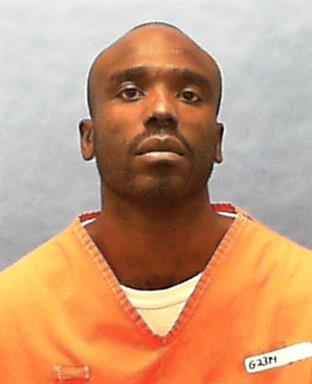
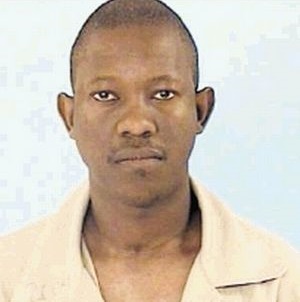
Police arrested Howell Emanuel Donaldson III on November 28, 2017, bringing an end to weeks of fear in Seminole Heights. He was 24 years old at the time. Authorities charged him with four counts of first-degree murder for the deaths of Mitchell, Hoffa, Naiboa, and Felton.
The arrest was unusual because investigators had not identified Donaldson through a traditional suspect investigation. He effectively brought the central piece of evidence into his workplace. Had the employee not notified police about the gun, investigators might have required considerably more time to connect Donaldson to the killings.
After detectives formally advised Donaldson of his rights and confronted him with evidence connecting him to the murders, he did not provide investigators with a motive. He requested an attorney. For years afterward, one of the most troubling unanswered questions surrounding the Seminole Heights murders remained why these particular people had been selected.
Charges and the Death Penalty Case
Donaldson was indicted on four counts of first-degree murder in December 2017. He originally pleaded not guilty, and prosecutors announced that they intended to seek the death penalty. The prosecution developed a case centered on the firearm evidence, ammunition, cellular information, surveillance footage, and other evidence connecting Donaldson to the four crime scenes.
The case remained in the court system for years as attorneys litigated numerous pretrial issues. Donaldson continued to face the possibility of execution if convicted at trial. A trial was eventually scheduled for 2023.
Guilty Plea and Four Life Sentences
On May 1, 2023, more than five years after the murders, Donaldson abandoned his previous claims of innocence and pleaded guilty to all four counts of first-degree murder. The plea resolved the case without a trial and removed the possibility that he would receive a death sentence.
Donaldson was sentenced to four consecutive terms of life imprisonment without the possibility of parole, one life sentence for each person he murdered. The consecutive sentences ensured that he would remain incarcerated for the rest of his life.
Although the guilty pleas conclusively established Donaldson's responsibility for the killings, they did not produce a detailed public explanation for his motive. The victims appeared to have been targeted opportunistically rather than because of personal relationships with him. There was no established connection tying Mitchell, Hoffa, Naiboa, and Felton together beyond the fact that each happened to encounter Donaldson in the same Tampa neighborhood.
Fear in Seminole Heights
The Seminole Heights murders had an impact far beyond the four crime scenes. During the investigation, residents feared that almost anyone walking alone could become the next victim. Police advised people to remain alert, travel in groups when possible, and report suspicious behavior. Officers saturated portions of the neighborhood, while residents organized community efforts and watched for unfamiliar people.
The geographic concentration of the murders intensified the fear. Three people were killed within ten days in October, and the lack of an obvious relationship among them suggested that ordinary activities such as waiting for a bus, walking home, crossing a street, or visiting a friend could place someone in the killer's path. The November murder of Ronald Felton, after several weeks without another attack, demonstrated that the danger had not ended.
Legacy of the Case
Howell Emanuel Donaldson III became known as the Seminole Heights serial killer because of a compact but terrifying series of four murders committed in one Tampa community. Unlike serial murder cases that remain unresolved for decades, Donaldson's crimes occurred during a period of only several weeks and ended with an unexpected break in the investigation.
The case is particularly notable for the convergence of traditional and modern investigative evidence. Ballistic examination established that the shootings were connected, neighborhood cameras documented movements surrounding the crimes, cellular information helped place Donaldson near murder locations, and the recovery of his Glock ultimately gave investigators the physical evidence they needed to identify and prosecute him.
Donaldson's eventual guilty pleas ended any legal uncertainty about who committed the murders. What has remained far less clear is why he chose to kill Benjamin Mitchell, Monica Hoffa, Anthony Naiboa, and Ronald Felton. No established personal relationship or dispute connected him to the four victims. They were individuals going about ordinary parts of their lives when they encountered a killer who, for reasons he has never publicly explained in detail, chose to take their lives.
The Seminole Heights case is therefore remembered not only for Donaldson's crimes but also for the four people whose deaths transformed an ordinary Tampa neighborhood into the center of a major serial murder investigation. Benjamin Mitchell, Monica Hoffa, Anthony Naiboa, and Ronald Felton remain the four confirmed victims of Howell Emanuel Donaldson III.