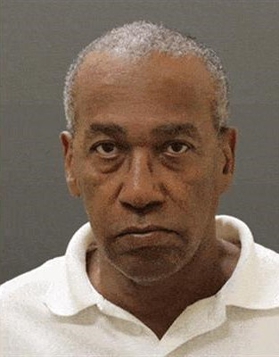
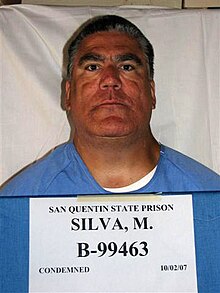
Malik Samartaney: A History of Murder and Domestic Violence
Background
Malik Samartaney, born Lawrence Banks on June 7, 1953, is an American serial killer whose documented violence stretched across more than four decades in Maryland. Before adopting the name Malik Samartaney, he was commonly known as Lawrence “Marty” Banks. His criminal history was marked by repeated attacks against relatives, intimate partners, acquaintances and even his own children. He was ultimately convicted of three murders, while investigators also considered him a suspect in three additional deaths.
Samartaney’s violence was not limited to isolated confrontations. Records from different periods of his life describe threats, assaults, shootings and allegations of abuse occurring whenever family members or other people challenged him. His confirmed victims included a drinking companion, his teenage son and his adult daughter. The long intervals between his convictions were largely caused by years spent in prison, rather than by a permanent end to his violent behavior.
Early Violence Against His Family
On July 3, 1975, Samartaney, then known as Lawrence Banks, reportedly placed a knife against the throat of his wife, Vivian Banks, and dragged her through their home. Vivian told police that her husband had threatened to kill her, but she later requested that the charges be dropped. The incident became an early warning of the violence that would continue to surround the family.
On December 27, 1975, during another argument with Vivian, Banks attacked their seven-month-old daughter, Dominique. According to the prosecution, he threatened to do something to the infant that both mother and child would regret before throwing Dominique through a glass door. The baby suffered severe cuts and required approximately 22 stitches. Banks claimed the injury was accidental, but he was convicted of assault with intent to disfigure and received a 15-year prison sentence.
While Banks was free on bail in that assault case, Vivian disappeared from public view. Her badly decomposed body was later discovered inside a closet in the apartment where she had been staying. Investigators suspected Banks, particularly because of his prior threats and violence against her. However, decomposition prevented medical examiners from establishing a definitive cause of death, and he was never charged with killing Vivian.
The Murders of Michael Chisholm and Lawrence Banks Jr.
After serving years in prison for the attack on Dominique, Banks was released in December 1988. By the fall of 1991, his children were again reporting abuse. Seventeen-year-old Lawrence Banks Jr. and Dominique accused their father of physically beating them. Dominique also alleged that he had sexually assaulted her while intoxicated. Authorities were investigating those accusations when Banks committed two murders on the same day.
On November 19, 1991, Banks was drinking with Michael Chisholm and another companion in the Pasadena area of Anne Arundel County. During the outing, Banks shot the 36-year-old Chisholm in the head and abandoned him beside a road. The surviving companion later told investigators that he feared Banks might kill him as well.
Several hours after Chisholm was shot, Banks traveled to the foster home on Northern Parkway in Baltimore where his son was living. Lawrence Jr. reportedly attempted to retreat into a kitchen corner, but his father shot and killed him. Prosecutors believed the teenager was murdered after he and his sister reported their father’s abuse.
Problems involving evidence and witnesses prevented prosecutors from obtaining first-degree murder convictions. Banks pleaded guilty to second-degree murder in Chisholm’s death and entered a no-contest plea to second-degree murder in the death of his son. He received two concurrent 20-year prison sentences. Because the sentences ran at the same time rather than consecutively, he was eventually released in October 2002.
Violence After His Release
After leaving prison, Banks changed his name to Malik Samartaney. The new identity did not mark a change in his behavior. In 2004, his second wife, Patricia, accused him of choking her and threatening to kill her. Samartaney spent approximately nine months in jail while awaiting trial but was eventually acquitted.
Samartaney later began a relationship with a woman whose adult daughter was Lisa Laverne Brown. On December 1, 2006, Brown obtained a protective order against him following a dispute involving money he had borrowed. Eleven days later, Brown and her nine-month-old daughter, Labria Fogle, were shot to death inside a residence on Engleman Drive in Laurel, Maryland.
There were reportedly no obvious signs of forced entry, suggesting that the killer may have been known to the victims or allowed into the home. Because of the recent protective order and Samartaney’s violent history, investigators viewed him as a suspect. However, the available evidence was not sufficient to charge him with either murder. In 2007, his parole was revoked after he failed to report that he had changed residences and was accused of slapping another woman. He returned to prison and remained incarcerated until completing his sentence in 2014.
The Murder and Dismemberment of Dominique Foster
Dominique survived the violent attack inflicted upon her as an infant and eventually became a mother of six. In early 2019, she began spending time with Samartaney again after years of separation. Family members later described a deeply troubled relationship. Samartaney strongly disapproved of Dominique’s struggle with drug addiction and reportedly made angry and threatening remarks about her contact with her children and grandchildren.
On the evening of May 10, 2019, surveillance footage recorded a male figure pushing a shopping cart from the direction of Samartaney’s apartment toward a dumpster near the 4000 block of Clarks Lane in northwest Baltimore. The person left the cart near the overflowing trash area and then walked back toward the apartment buildings.
On May 12, 2019, which was Mother’s Day, Dominique’s dismembered remains were discovered inside black plastic bags in the shopping cart. Investigators found portions of her torso and limbs, but several parts of her body, including her head, hands and feet, were never recovered. The bags were reportedly leaking blood when they were examined. The condition of the remains made it difficult for investigators to determine the precise method used to kill her.
Suspicion quickly focused on Samartaney. He lived only a short distance from the place where the remains had been abandoned. His former fiancée testified that he disappeared for approximately 11 hours around the time of the killing and returned with scratches or injuries on his arms and neck. He claimed the marks were burns caused by antifreeze after his vehicle overheated.
Police searched Samartaney’s apartment and recovered blood evidence, electronic devices, clothing and a handgun hidden inside a trash container. Because he was prohibited from possessing a firearm due to his previous felony convictions, officers initially arrested him on weapons charges. In July 2019, prosecutors charged him with Dominique’s murder and the unlawful disposal of her body.
Samartaney’s defense attorneys argued that Dominique could have been killed by people connected to Baltimore’s drug trade. They also questioned whether men reportedly seen near the dumpster or graffiti in the area could have suggested gang involvement. Prosecutors, however, emphasized Samartaney’s history of violence against Dominique, his threatening statements, his unexplained absence and the surveillance footage showing the shopping cart traveling from the direction of his residence.
Conviction and Sentencing
In October 2021, a Baltimore jury found Samartaney guilty of second-degree murder and unauthorized disposal of a body. The jury acquitted him of first-degree murder, meaning prosecutors had not proven beyond a reasonable doubt that the killing was premeditated. Nevertheless, the verdict established that Samartaney had murdered the daughter he had first seriously injured when she was only seven months old.
On February 28, 2022, Samartaney appeared for sentencing. He continued to deny killing Dominique and asked the court for mercy. Members of Dominique’s family submitted statements describing her as a loving mother, grandmother and sister whose death had left a permanent absence in their lives. The judge emphasized Samartaney’s lengthy record of violence and the need to protect the public.
Samartaney received the maximum sentence of 40 years for second-degree murder and an additional year for illegally disposing of Dominique’s remains, for a total of 41 years in prison. He later received a separate 15-year sentence for illegally possessing a regulated firearm, with the sentences ordered to run concurrently. Given his age at sentencing and the length of the punishment, the sentence was expected to keep him imprisoned for most or all of the remainder of his life.
Confirmed Victims
- Michael Chisholm, 36 — Killed on November 19, 1991, near Pasadena in Anne Arundel County, Maryland. Samartaney shot Chisholm in the head during an outing involving alcohol and left his body beside a road. He pleaded guilty to second-degree murder.
- Lawrence Banks Jr., 17 — Killed on November 19, 1991, at his foster home on Northern Parkway in Baltimore, Maryland. Samartaney shot his son several hours after killing Michael Chisholm. He entered a no-contest plea to second-degree murder.
- Dominique Banks Foster, 43 — Killed in May 2019 in Baltimore, Maryland. Surveillance footage showed a man pushing a shopping cart toward the location where portions of her dismembered body were discovered on May 12, 2019. Samartaney was convicted of second-degree murder and unauthorized disposal of a body.
Suspected Victims
- Vivian Banks, 22 — Found dead in 1976 inside a closet in a Baltimore apartment. Her body had decomposed to the point that a cause of death could not be determined. Samartaney had previously threatened her with a knife and was considered a suspect, but he was never charged.
- Lisa Laverne Brown, 22 — Shot to death on December 12, 2006, inside a residence on Engleman Drive in Laurel, Maryland. Brown had obtained a protective order against Samartaney 11 days earlier. He was investigated but never charged.
- Labria N. Fogle, nine months old — Shot to death with her mother, Lisa Brown, on December 12, 2006, in Laurel, Maryland. Samartaney was considered a suspect in the double homicide, but prosecutors did not have enough evidence to file charges.
Legacy of the Case
Malik Samartaney’s history illustrates how repeated domestic violence and abuse can escalate into lethal violence. His known conduct began with threats against his wife and a brutal assault on his infant daughter. It later expanded into the shootings of a friend and his teenage son, followed decades later by the murder and dismemberment of the same daughter who had survived his attack as a baby.
Although Samartaney was convicted of three murders, the unresolved deaths of Vivian Banks, Lisa Brown and Labria Fogle have continued to surround his name. No court found him guilty of those killings, and they must therefore remain classified as suspected crimes rather than confirmed victims. His convictions, allegations and repeated returns to violence nevertheless reveal a pattern that persisted whenever he was outside prison. The 41-year sentence imposed for Dominique Foster’s murder finally removed him from the community after a violent criminal history spanning more than 40 years.