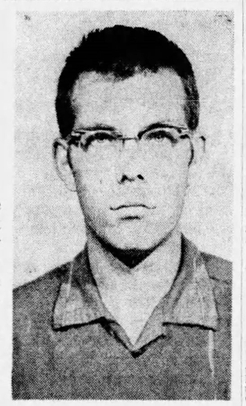
Yves Trudeau: The Mad Bumper
Overview
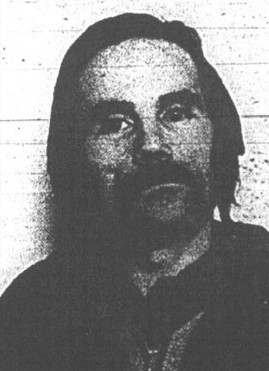
Yves "Apache" Trudeau was one of Canada's most prolific serial killers and a feared contract killer for the Hells Angels motorcycle club. Standing at just five-foot-six, his unassuming stature belied a capacity for extreme violence that saw him confess to 43 murders between 1973 and 1985. Known also as "The Mad Bumper" or "The Mad Bomber" for his expertise with explosives, Trudeau was a key figure in Quebec's violent biker wars. His career as a hitman came to an abrupt end when he narrowly escaped being murdered by his own gang, prompting him to become a police informant. In a controversial deal, he pleaded guilty to 43 counts of manslaughter and received a lenient sentence in exchange for his testimony, which ultimately proved to be of limited use to prosecutors. After his release, he was later convicted of sexual assault and died of cancer in 2008.
Early Life and Background
Yves Trudeau was born in Quebec, Canada, on February 4, 1946. His childhood was reportedly marked by an abusive father. As a teenager in the early 1960s, he took a job at Canadian Industries Limited (CIL), an explosives company, where he gained the knowledge of explosives that would become his deadly trademark.
In the late 1960s, Trudeau joined the Popeye Moto Club, a prominent outlaw biker gang in Quebec. The Popeyes were known for their violence and were often employed as muscle by other organized crime factions in Montreal. Trudeau quickly rose through the ranks, establishing himself as the club's top assassin. His slight build, standing five-foot-six and weighing around 135 pounds, was deceptive; he was known for his ruthlessness and efficiency.
In December 1977, the Popeyes were "patched over" by the Hells Angels, becoming the first Canadian chapter of the notorious international motorcycle club. Trudeau became a founding member of the Hells Angels in Canada. In September 1979, due to the growing size of the Montreal chapter, it was split into two. Trudeau was assigned to the new North chapter, based in Laval. He would become the first Canadian Hells Angel to earn the "Filthy Few" patch, an award allegedly given to members who have killed for the club.
A Career of Murder
Between September 1973 and July 1985, Yves Trudeau embarked on a killing spree that made him one of the most feared men in the Canadian underworld. He acted as a contract killer for the Hells Angels and was also loaned out to other criminal organizations, including Montreal's Irish Mafia, the West End Gang. His methods were varied and brutal: of the 43 murders he confessed to, 29 were by shooting, 10 by bombs, three by beatings, and one by strangulation.
Trudeau was a central figure in the violent biker wars that plagued Quebec. During the conflict between the Hells Angels and the rival Outlaws gang from 1978 to 1983, Trudeau was personally responsible for killing 18 of the 23 Outlaws members who died.
His victims were primarily rival gang members, but his violence extended to members of his own club, their family members, and anyone deemed a threat or an inconvenience. In one particularly brutal incident in February 1980, he beat to death Jeanne Desjardins, the mother of a former Hells Angel she was trying to help. He then murdered her son, Andre Desjardins, and his girlfriend, Berthe, dumping their bodies in the St. Lawrence River. The river became known as the "Hells Angels' graveyard" due to the number of bodies discarded there.
Trudeau's expertise in explosives earned him the moniker "The Mad Bomber." On March 21, 1978, he assassinated Gilles Cadorette, the president of the Montreal Outlaws chapter, with a car bomb. In another high-profile bombing on November 24, 1984, Trudeau was hired to avenge the murder of West End Gang leader Frank "Dunie" Ryan. Working with an accomplice, Michel Blass, Trudeau planted a bomb inside a television set that was delivered to the apartment of Ryan's killers, Paul April and Robert Lelièvre. The resulting explosion killed both men, as well as two other individuals in the apartment, Louis Charles Paquette and Gilles Paquette.
The Victims
Yves Trudeau confessed to the murders of 43 people. While a complete list of his victims is not publicly available, some have been identified through court records and news reports. They include:
- Jean-Marie Viel — 1970, Trois-Rivières. Shot to death for stealing a motorcycle from the Popeyes gang.
- Robert Côté — February 15, 1978, Montreal. An Outlaws MC member shot and killed outside a brewery, an act that ignited a biker war.
- Gilles Cadorette — March 21, 1978, Montreal. President of the Montreal chapter of the Outlaws, killed by a car bomb.
- Brian Powers, 34 — November 10, 1978, Sainte-Geneviève. An Outlaw leader shot nine times in the head after answering the door to his home.
- Donald McLean, 30 — May 9, 1979, Verdun. A member of the Outlaws gang killed by a bomb attached to his motorcycle.
- Carmen Piche — May 9, 1979, Verdun. McLean's girlfriend, who was killed in the same explosion.
- Jeanne Desjardins — February 11, 1980. The mother of an ex-Hells Angel, beaten to death by Trudeau.
- Andre Desjardins — February 11, 1980. An ex-Hells Angel killed along with his girlfriend. Their bodies were dumped in the St. Lawrence River.
- Berthe Desjardins — February 11, 1980. Andre Desjardins' girlfriend, killed alongside him. Her skeleton was found by police divers in the St. Lawrence River in 1985.
- Robert Morin — March 14, 1981. Killed by a bomb planted under his car.
- Donat Lemieux — May 9, 1981, Rosemont. Killed with his girlfriend on their porch.
- Lucie Vallières — May 9, 1981, Rosemont. Killed alongside her boyfriend, Donat Lemieux.
- Hugh McCurnagan — October 27, 1981, Westmount. A reputed West End Gang member killed when a bomb in his Mercedes-Benz detonated. Trudeau was hired for the hit by gang leader Frank "Dunie" Ryan.
- Charlie Hachez — January 1982. A fellow Hells Angel from the North Chapter killed over a drug problem and a large debt owed to Dunie Ryan.
- Michel Desormiers — July 1983. A brother-in-law of a mob boss, gunned down by Trudeau.
- Paul April — November 24, 1984, Montreal. One of the killers of Dunie Ryan, he was killed by a bomb hidden in a television set.
- Robert Lelièvre — November 24, 1984, Montreal. The other man responsible for Ryan's death, killed in the same television bomb explosion.
- Louis Charles Paquette and Gilles Paquette — November 24, 1984, Montreal. Two other men present in the apartment who were killed by the bomb.
- Jean-Marc Deniger — May 1985. Killed by Trudeau on orders from the Hells Angels after Trudeau had been expelled from the club.
The Lennoxville Massacre and Becoming an Informant
By the mid-1980s, Trudeau's North chapter of the Hells Angels had developed a reputation for excessive drug use and unreliability, consuming much of the cocaine they were supposed to be selling. This caused tension with other Hells Angels chapters. In March 1985, the leadership of the Hells Angels in Quebec secretly declared the North chapter to be in "bad standing" and marked its members for death.
On March 24, 1985, members of the North chapter were lured to the Hells Angels' clubhouse in Sherbrooke for what they believed was a party. Inside, five of them were shot and killed by their fellow gang members. Their bodies were wrapped in sleeping bags, weighed down, and dumped in the St. Lawrence River. This event became known as the Lennoxville Massacre.
Trudeau was a primary target of the purge, but he escaped death by a stroke of luck. At the time of the massacre, he was in a detox center for his severe cocaine addiction. After his release, he discovered that the Hells Angels had taken his motorcycle and money. He was told he could earn his bike back by carrying out another murder for the club, which he did. However, Trudeau knew he was living on borrowed time and that there was a $50,000 contract on his life. In August 1985, he made the unprecedented decision for a full-patch Hells Angel to turn to the police and become a Crown witness.
Trial and Sentence
In exchange for his testimony against his former Hells Angels brethren, Yves Trudeau struck a deal with the Crown that sparked public outrage. He pleaded guilty to 43 counts of manslaughter, and in 1986 was sentenced to life in prison. The controversial part of the deal was that he would be eligible for parole in just seven years. The government also reportedly paid him and provided for him in prison.
Trudeau provided police with information on numerous other murders and criminal activities. However, as a witness in court, he was largely a failure. His testimony was often inconsistent and unreliable, leading to acquittals for many of the bikers he testified against. Despite the lenient sentence for his 43 killings, his cooperation did lead to some convictions and significantly disrupted the Hells Angels' operations in Quebec at the time.
Aftermath and Final Years
True to the terms of his deal, Yves Trudeau was granted parole in 1994 after serving about seven years of his life sentence. He was given a new identity, Denis Côté, and resettled under the witness protection program. For a time, he worked menial jobs, including driving a bus for people with disabilities.
His freedom, however, was not permanent. In March 2004, at the age of 57, he was arrested and charged with sexually assaulting a young boy over a period of four years. He pleaded guilty to six counts, including sexual exploitation and sexual interference. During his sentencing, the judge remarked, "In your lifetime, you have killed more people than the Canadian military did in the Gulf War." Trudeau was sentenced to an additional four years in prison.
In 2006, while incarcerated, Trudeau was diagnosed with bone-marrow cancer. He was transferred to the Archambault Penitentiary, which had a medical facility. In July 2008, the National Parole Board granted him compassionate parole, deeming him a low risk to reoffend with only months to live. He was released to an outside medical facility, where he died that same month at the age of 62.