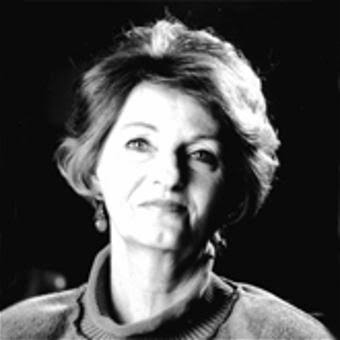
On a spring evening in Montreal, the life of Lucie Vallières was violently extinguished, reducing her story in the public record to a footnote in the bloody saga of one of Canada’s most prolific killers. On May 9, 1981, Lucie and her boyfriend, Donat Lemieux, were on their porch in the Rosemont neighbourhood when they were murdered. Their deaths were not the result of a random act but a targeted killing by a man who had perfected the craft of murder over many years.
The person
responsible for ending Lucie's life was Yves "Apache" Trudeau, a notorious contract killer and member of the Hells Angels motorcycle club. Known also as "The Mad Bumper" and "The Mad Bomber," Trudeau was a diminutive but feared figure in Quebec's underworld, having started his own biker gang, the Popeyes, in the late 1960s before they were absorbed by the Hells Angels in 1977. He was the first Canadian member to earn the "Filthy Few" patch, an internal award for those who have killed for the club. His expertise with explosives, gained from a job in his youth, made him a particularly deadly assassin.
Trudeau's reign of terror spanned from September 1973 to July 1985, a period during which he was responsible for at least 43 proven killings. His methods were varied and brutal, including shootings, beatings, strangulation, and bombings. The victims were often rival gang members or figures within the organized crime world, but his violence could be indiscriminate, claiming the lives of people like Lucie Vallières, whose connection to the biker wars, if any, is not publicly known. The motive for her and Donat Lemieux's murder was never fully clarified beyond being another contract fulfilled by Trudeau.
The investigation into their deaths, like many of Trudeau's crimes, remained unsolved for years. The breakthrough came not from police work but from Trudeau himself. In 1985, after the Lennoxville massacre where five of his fellow Hells Angels members were executed, Trudeau feared he was next on the hit list. Facing a $50,000 contract on his own life and battling a cocaine addiction, he made an unprecedented move: he turned himself in and became a Crown witness, the first Hells Angel in Canada to become an informant.
In exchange for his testimony against his former associates, Trudeau struck a deal that sparked public outrage. He confessed to 43 murders, and in 1985, pleaded guilty to 43 counts of the lesser charge of manslaughter. His sentence was life imprisonment, but with parole eligibility after just seven years. He also later faced charges for sexual assault, receiving a four-year sentence in 2004 after he was found to have sexually assaulted a young boy.
Yves Trudeau was granted parole in 1994 and given a new identity. His cooperation as a witness proved to be a disaster for prosecutors, with his testimony leading to numerous acquittals. After his subsequent conviction for sexual assault, he was diagnosed with cancer while in prison. He was granted medical parole in 2008 and died shortly after in a medical facility. For the families of his many victims, including the loved ones of Lucie Vallières, the legal outcome was a bitter pill, a "sweetheart deal" that allowed a mass murderer to walk free after only a few years. Today, the case is officially closed, but the memory of Lucie's life is largely lost, overshadowed by the infamy of the man who took it.