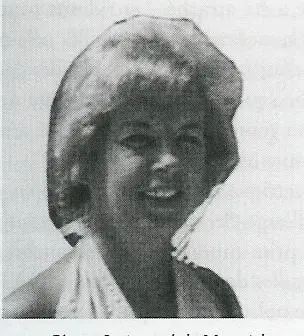
Monique Gaudreau, a 46-year-old female nurse, was known to be friendly, caring, and conscientious. She was always on time for her shifts at a hospital in the Laurentians region of Quebec. Her reliability was one of the many qualities that defined her, which made her absence from work on October 29, 1999, all the more alarming. When she could not be reached, a check on her home in the peaceful town of Sainte-Agathe-des-Monts revealed a scene of unimaginable horror.
Inside her own bedroom,
Monique had been the victim of a frenzied and brutal attack. She was found beaten, sexually assaulted, and stabbed more than 50 times. The violence of the act sent shockwaves through the community, leaving friends and family to grapple with the sudden and horrific loss of a woman dedicated to caring for others. She was survived by her mother, Cécile Hawkins, her sisters, Nicole, Lise, and Ghislaine, and her brothers, Pierre and François.
The investigation into Monique’s murder soon connected with other violent crimes against women in the greater Montreal area. Just two weeks prior, 59-year-old Anna Yarnold had been killed in Senneville. A few weeks later, 55-year-old Teresa Shanahan would be found murdered in Laval, followed by 50-year-old Mary Glenn in Baie-D'Urfé in December. The pattern of violence pointed to a serial predator.
The man responsible was William Patrick Fyfe, a handyman who used his trade as a cover to gain access to his victims' homes. Known as "The Killer Handyman" and "The Plumber," Fyfe’s violent spree spanned two decades, from 1979 to 1999. He committed at least five murders for which he was convicted and confessed to four others. His method was consistently savage, involving bludgeoning, strangulation, and stabbing.
A crucial piece of evidence linking Fyfe to Monique’s murder came from the crime scene itself. Investigators recovered a shoeprint left in her room. This detail became pivotal months later. On December 21, 1999, police in Ontario were tailing Fyfe, who was by then a prime suspect in Mary Glenn's murder after his fingerprint was found at her home. Officers watched him drop off three pairs of running shoes at a church clothing bin. They retrieved the shoes, and forensic analysis confirmed the tread on one pair matched the print left in Monique Gaudreau's bedroom.
Fyfe was arrested the next day, on December 22, 1999. The web of evidence, including DNA, the shoeprint, and the fingerprint from another scene, was overwhelming. In September 2001, to avoid a lengthy trial, Fyfe pleaded guilty to five counts of first-degree murder, including the killing of Monique Gaudreau. He also admitted to the murders of Hazel Scattolon in 1981, Anna Yarnold, Teresa Shanahan, and Mary Glenn.
For his crimes, William Patrick Fyfe was sentenced to life in prison with no possibility of parole for 25 years. The legal proceedings brought a measure of justice, but they could not erase the pain and trauma inflicted on the families of his many victims. The case of Monique Gaudreau remains a stark reminder of the random violence that ended the life of a dedicated caregiver. Her story is not just one of a victim in a series of horrific crimes, but of a life of service and care cut tragically short.